


What colour should I paint my house exterior? A step-by-step way to choose, without guessing
You don't choose an exterior colour from a colour chart. You choose it from the roof, the sun, the rain and the house next door. Work through these six steps, then open the paint.
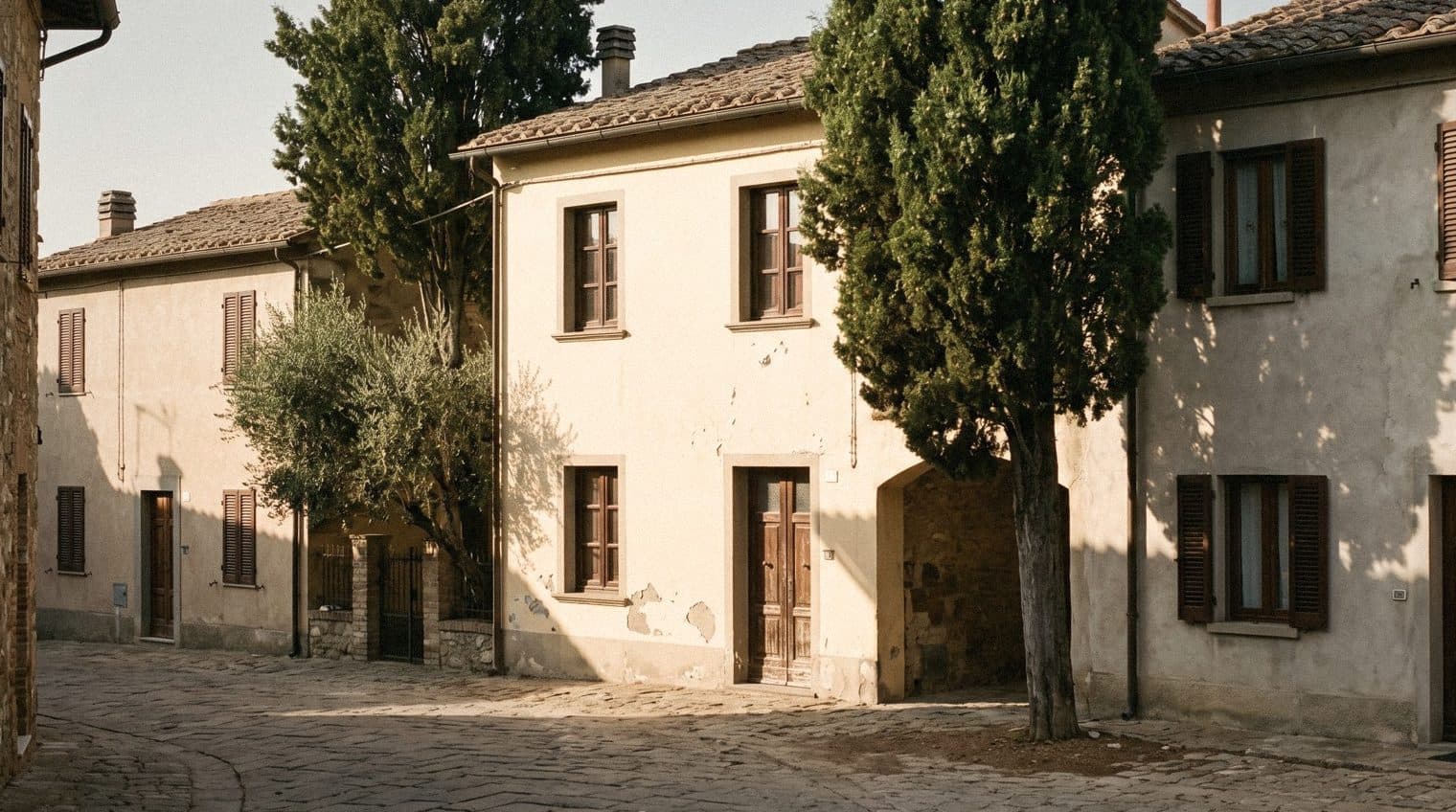
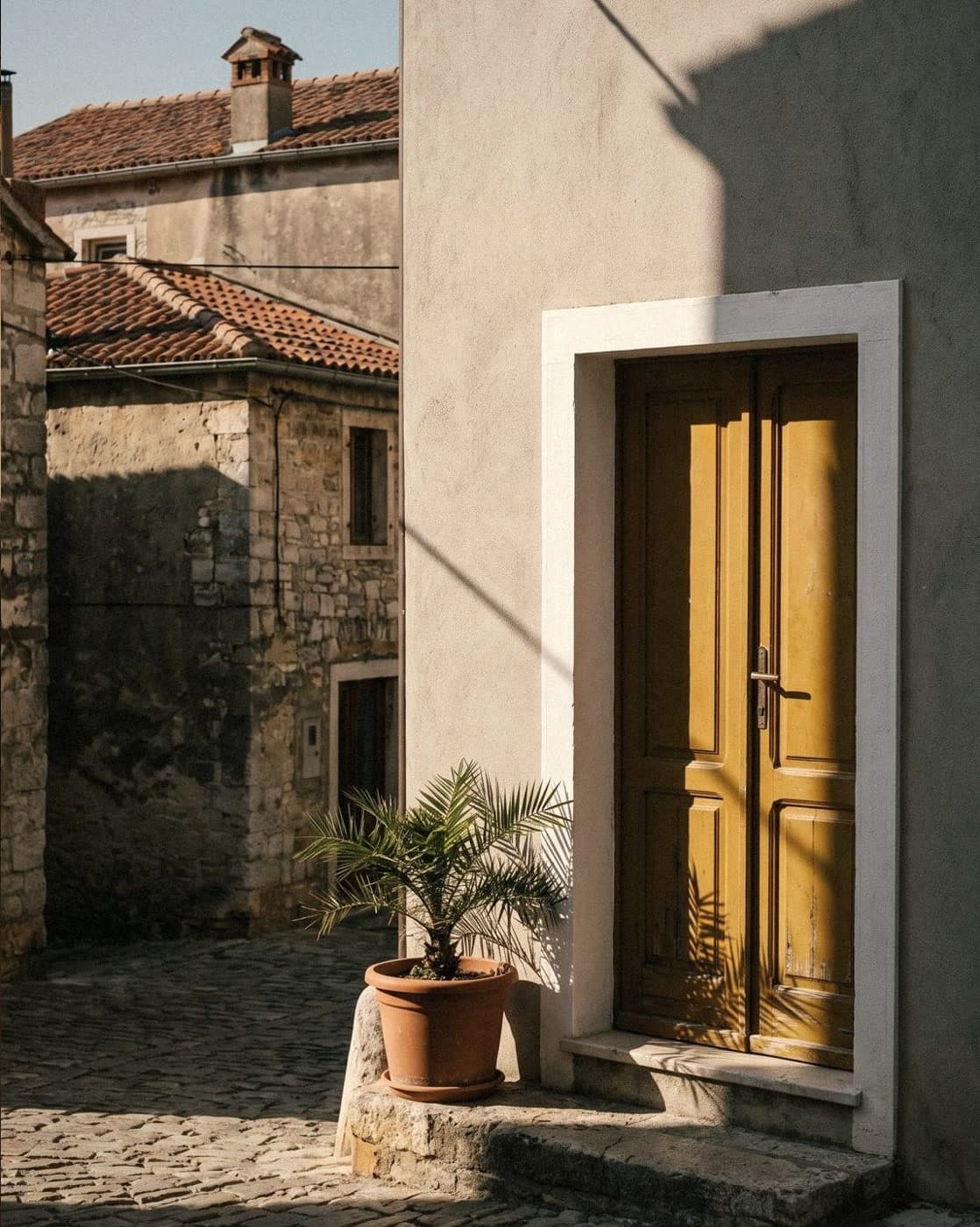
To choose what colour to paint the outside of your house, start with the roof colour and the materials you can't change. Then look at the surroundings, which way the sun falls, heat and rain streaks, before setting the proportions of the main wall colour, trim and accent. Finally, paint large sample patches on the north-facing and west-facing walls and look at them at several times of day before you decide.
Step 1: Start with what you can't change
The most common mistake is choosing a wall colour from a photo of someone else's house, then realising your own roof is brick orange, or your window frames are bronze aluminium. Exterior colour has to start with the things that were there first and will stay, and then you choose a wall colour to go with them. It's like getting dressed starting from the one pair of shoes you definitely have to wear.
Walk around the house and note down everything that won't change, and take photos in daylight too. The roof is usually the largest area of colour after the walls, and it decides whether the house should lean warm or cool.
- Roof colour and material
- Window and door frames (black, white, bronze or wood)
- Stone, exposed brick or tiles on the walls and the ground at the front
- Fences and gates that won't be repainted
- The colour of the driveway and carport floor
Step 2: Look at the houses next door, and the estate rules
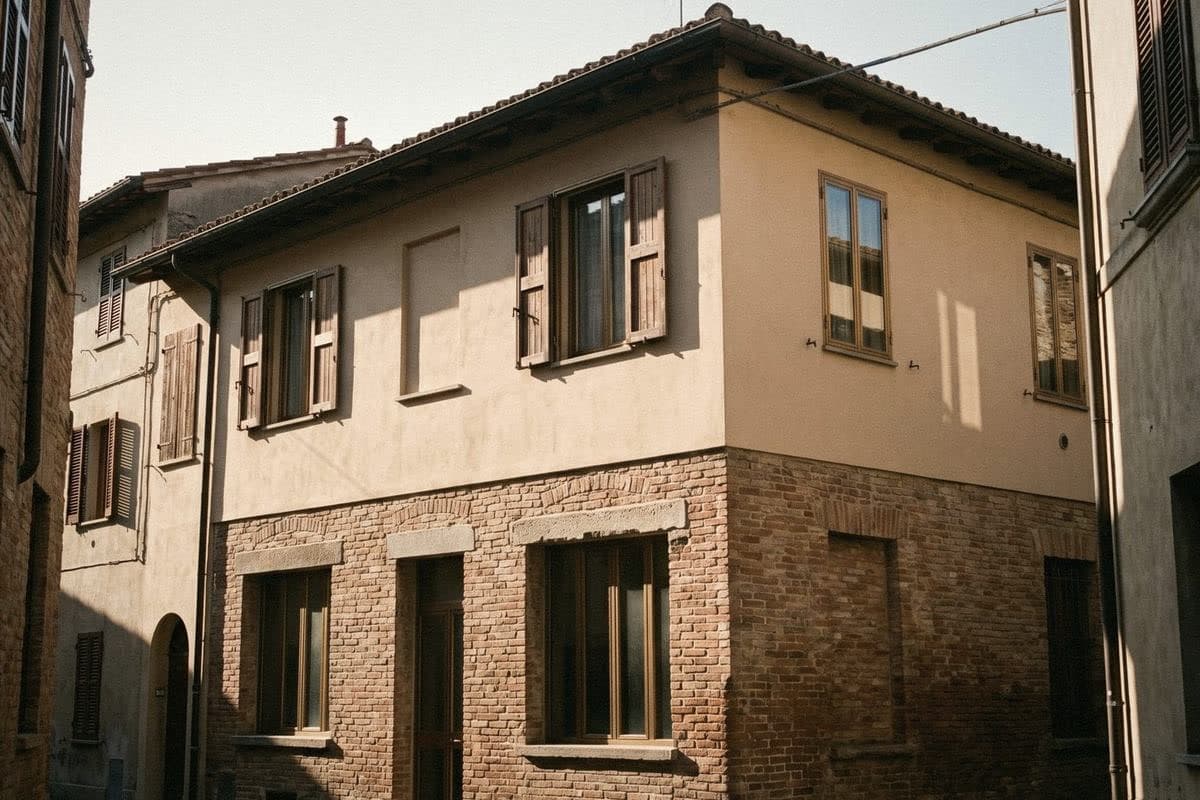
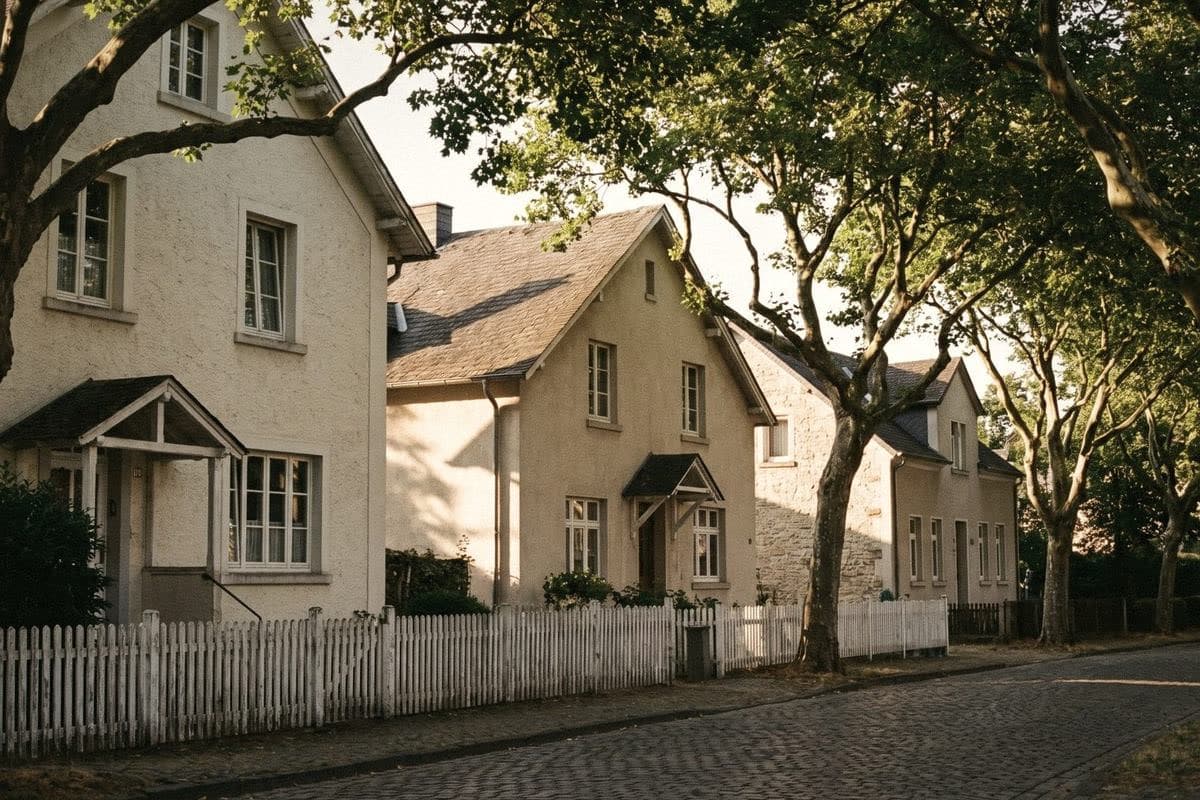
A house doesn't stand alone. Stand in the street in front of it and look left and right. A colour that fits the neighbourhood looks better than one trying to compete with every other house. That doesn't mean painting it the same as the neighbours, but it should be in a tone that gets along with theirs. If the whole soi is warm-toned houses, for example, a very cool grey house will stick out.
If you live on a housing estate or in a development, ask the management office first whether there are rules about exterior colours. Some developments set a colour palette or require you to apply for approval before you change it. Asking first is cheaper than painting twice. Big trees and the garden around the house are part of the picture too. A house among trees goes easily with earth tones, cream and muted greens.
- Take a photo of your house with the houses on both sides in the same frame.
- Ask the management office about rules on exterior colours.
- Look at the dominant colours in the soi, then choose one that gets along with them, not one that matches.
- If you have a garden or big trees, count green as one of the house's colours.
Step 3: Sun direction and heat, which a Thai house has to think about before looks
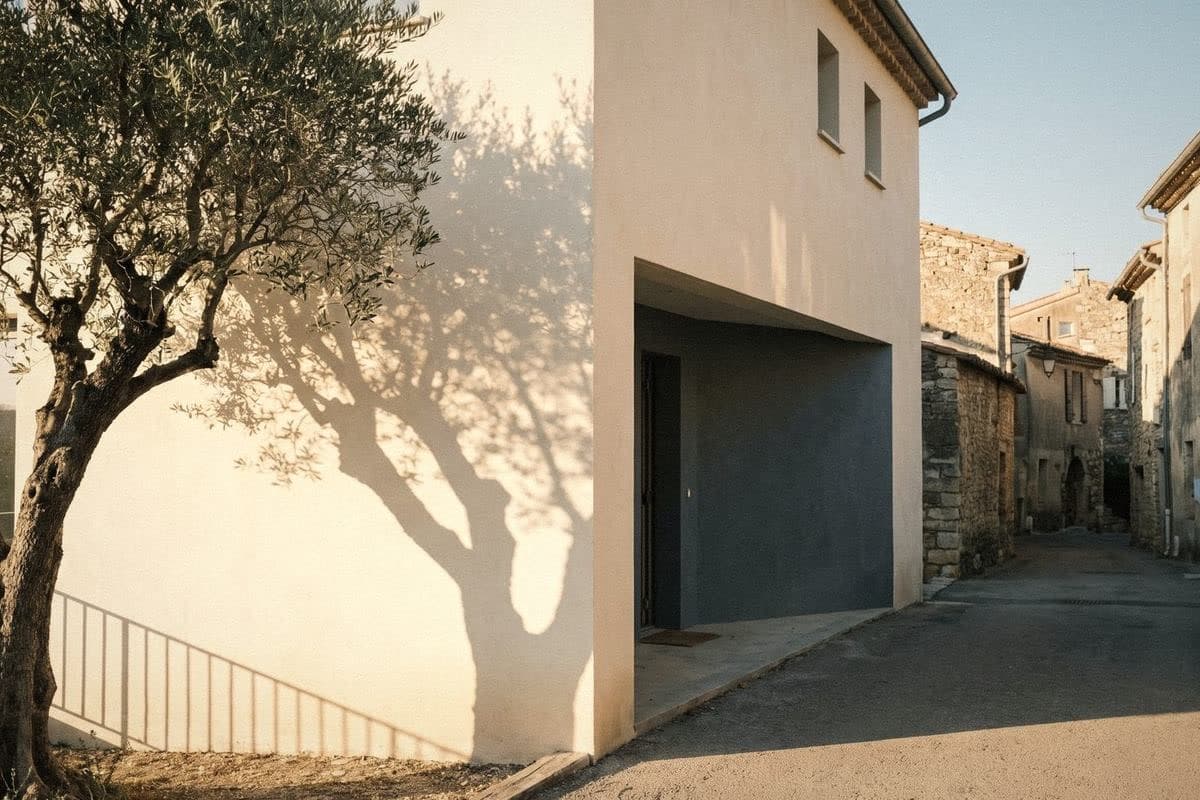
Light colours reflect more light and heat than dark colours, and that matters a great deal in Thailand. A west-facing wall that takes the afternoon sun builds up heat until the rooms inside stay warm into the evening. If that wall is a dark colour, the heat is even greater, and dark colours on walls in strong sun usually show fading more clearly than light ones.
That doesn't mean you have to paint the whole house white. Dark colours work in shaded spots, such as under long eaves, on walls shaded by trees, or on parts that aren't bedroom walls. And remember that strong sun makes colours look lighter, so a colour chosen in the shop usually looks paler than you expected out in the sun.
- If the main wall faces west or gets the full afternoon sun, make the main walls a light colour.
- If the house has long eaves or is shaded by trees, you can use more mid to dark colours.
- If you love dark colours, use them for bands, boxes or the door rather than the whole house.
- If the house stands in the open with no shade at all, avoid dark colours on bedroom walls.
Step 4: Think about rain, dust and marks from the day you choose the colour
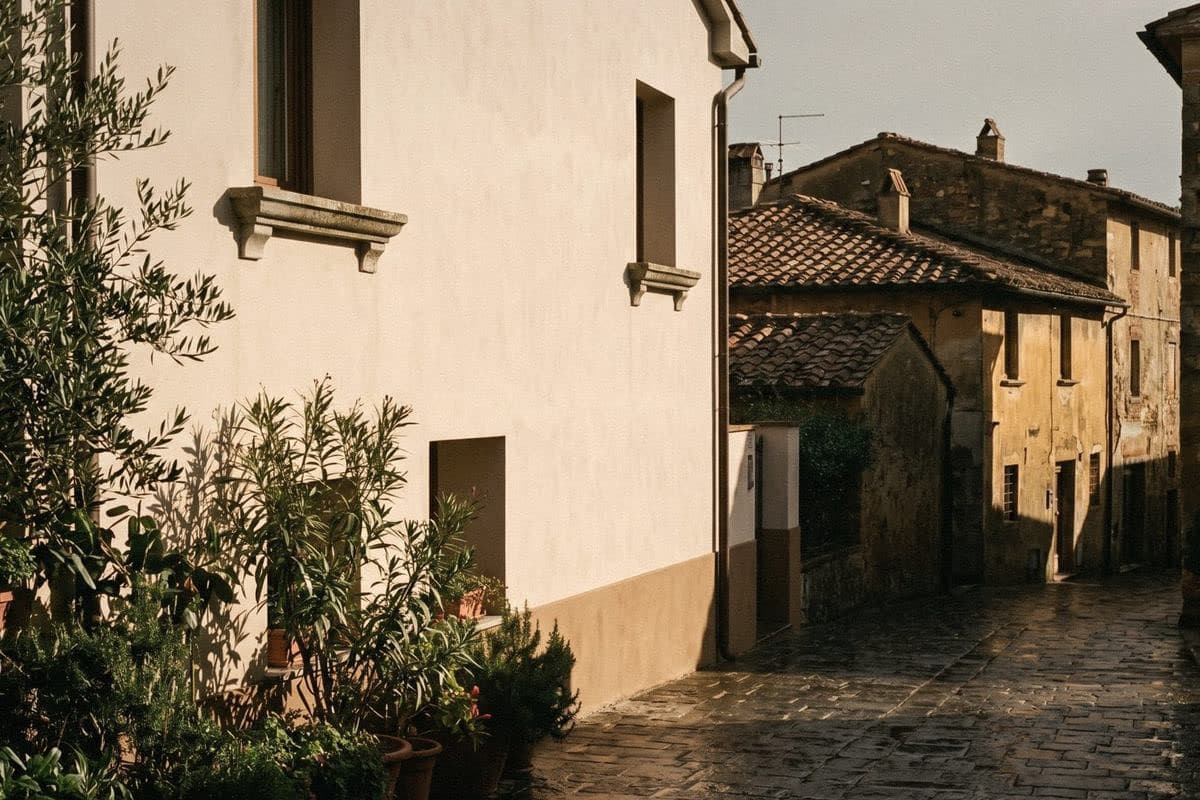
The rainy season is the real test of a house colour. Rain running off window ledges and awnings leaves streaks, mud splashing up from the ground stains the lower wall, and walls that get little sun often stay damp for a long time, so moss or mould grows on them more easily.
Mid tones like beige, sand, warm grey and muted cream hide marks better than pure white or pure black. If you want a very light house, use a darker colour on the lower wall, and look after the drip edges, gutters and eaves. Walls that already have moss or mould must be cleaned and the damp fixed every time before you repaint. New paint doesn't cover up an old problem.
- Pure white: shows rain streaks and mud fastest
- Black or very dark grey: shows pale dust and fading clearly
- Beige, sand, warm grey, muted cream: hide marks well and are easy to look after
- A darker lower wall: helps hide splashed mud
Step 5: Set the proportions of wall colour, trim and accent, and choose the sheen
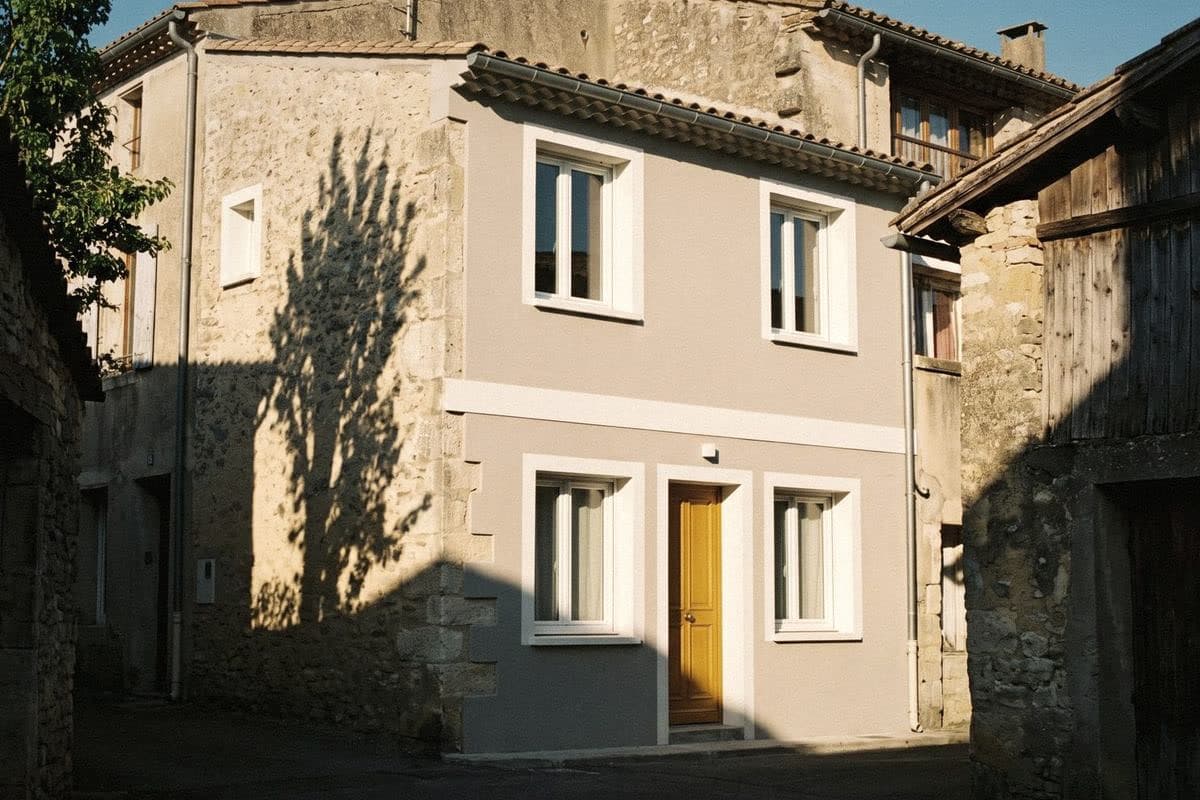
Most good-looking houses use no more than three main colours. The main wall colour covers the largest area, the secondary colour goes on window trim, mouldings, columns or bands, and the accent goes on the front door or a small spot you want people to look at, not counting real materials like wood and stone.
Sheen matters too. A matt or low-sheen finish disguises unevenness in rendered walls well, so it suits the main walls. A glossier finish is easier to wipe clean and stands up to scrubbing better, so it suits trim, doors and places hands touch often, but it shows unevenness in the wall more clearly.
- Main wall colour: about 60–70% of the walls
- Secondary colour: about 20–30%, for trim, mouldings and bands
- Accent colour: no more than about 10%, such as the front door
- Main walls: matt or low-sheen finish
- Trim, doors and places touched often: a glossier finish that's easy to wipe
Step 6: Test the colour on the actual wall, north-facing and west-facing
Don't decide from a thumbnail-sized colour chip. Paint a large sample patch, at least about 50 x 50 cm, or paint a board and lean it against the wall. Apply two coats, as you would for real, then put it on two walls: the north-facing side, where the light is softest, and the west-facing side, which gets the strongest afternoon sun. The same colour will look surprisingly different.
Look at it at all four times: morning, noon, evening sun and night under the outdoor lights. Then walk out and look from the street, because that's the distance most people see your house from. If you want to try several colours at once, Voqe has 100 ml sample pots so you can try them on the actual wall before ordering for the whole house.
- 1. Pick two or three colours that passed Steps 1–5.
- 2. Paint large sample patches in two coats, on the wall or on a board.
- 3. Place them on the north-facing and west-facing walls.
- 4. Look in the morning, at noon, in the evening sun and at night.
- 5. Look from the street in front of the house, not standing right up against the wall.
- 6. Leave them for two or three days. The one you still like is the one.
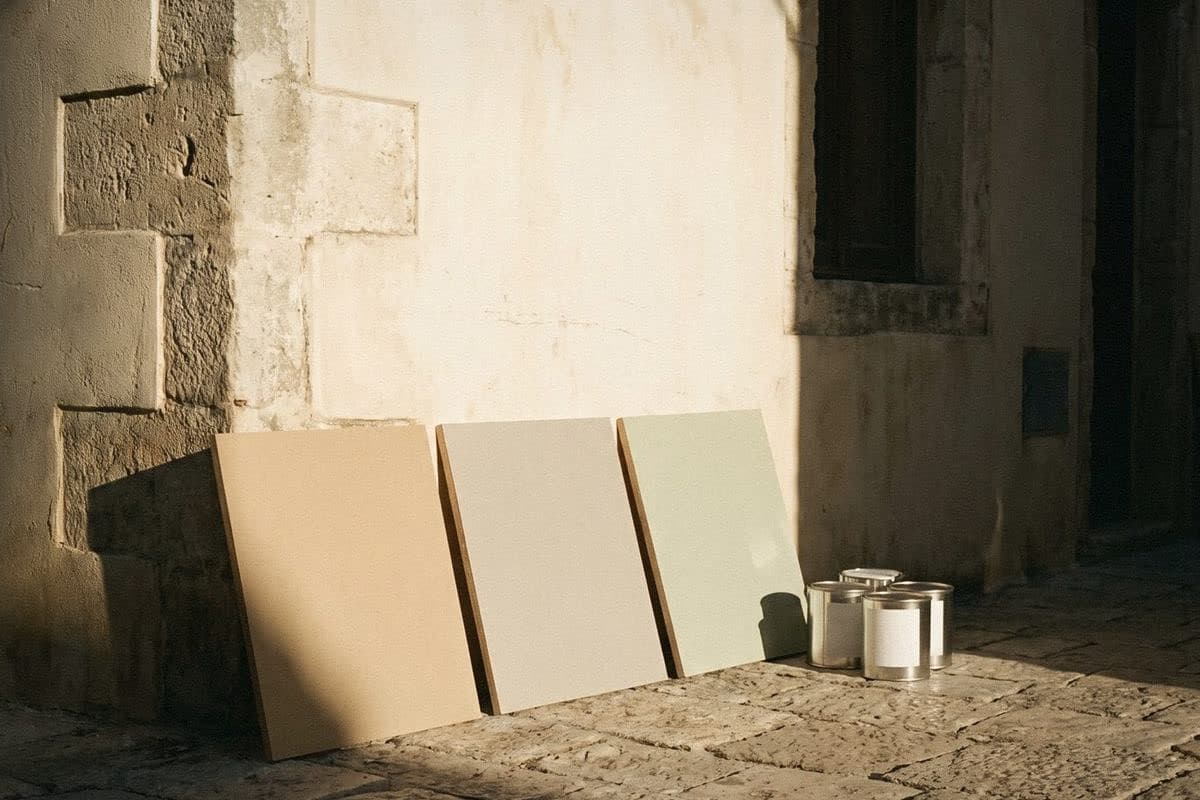
“A good house colour doesn't only look beautiful the day the painting's done. It still looks good after many more rainy seasons.”
Frequently asked questions
What exterior house colour won't make the house hot?
Light colours such as soft white, cream, light beige and light grey reflect light and heat better than dark colours, and suit walls that get the afternoon sun. If you love dark colours, use them for bands or the door, or on walls protected by eaves and shaded by trees.
Which exterior colours don't get dirty easily?
Mid tones like beige, sand, warm grey and muted cream hide dust and rain streaks better than pure white or pure black. Making the lower wall darker also helps hide splashed mud.
Should exterior paint be matt or gloss?
Main walls usually get a matt or low-sheen finish, because it disguises unevenness in the wall well. Trim, doors and places touched often usually get a glossier finish, because it's easier to wipe clean.
How many colours should I paint the outside of my house?
Usually no more than three main colours: the main wall colour, a secondary colour for trim or bands, and an accent colour for the door, not counting real materials like wood and stone.
How do I test an exterior colour before painting?
Paint a large sample patch of about 50 x 50 cm in two coats on the north-facing and west-facing walls, then look at it in the morning, at noon, in the evening and at night, and from the street in front of the house, before you decide.

Colour on a screen never matches colour on a wall
Order a sample to paint at home, or come and see the full shade library at Voqe Studio, Bang Phli.
Send the team a photo of your house for colour helpRead next
Exterior house paint: pairing colours that look good and stand up to Thai sun and rain
Your house is the biggest shirt you wear every day. Thai sun is strong and Thai rain is heavy, so choose a colour that looks good and one that lasts.
Read article
Beautiful exterior house colours: 12 modern two-tone pairings, from soft cream to cool grey
A beautiful house doesn't need ten colours, just three that get along: the walls, the trim and the door. Here are 12 combinations we love.
Read article
How to pair colours at home: the colour wheel, warm and cool tones, and the 60-30-10 rule
You don't need art school to put together beautiful colours at home. Just understand the colour wheel, warm and cool tones, the 60-30-10 rule, and the light in your own room.
Read article