


Decorating a small 25-35 m² condo so it looks bigger, lives better and stays within the building rules
A 30 sq m condo isn't too small. It just has no room for things you don't need. Start with the building rules, divide the room into zones, then let colour and light make it feel bigger.
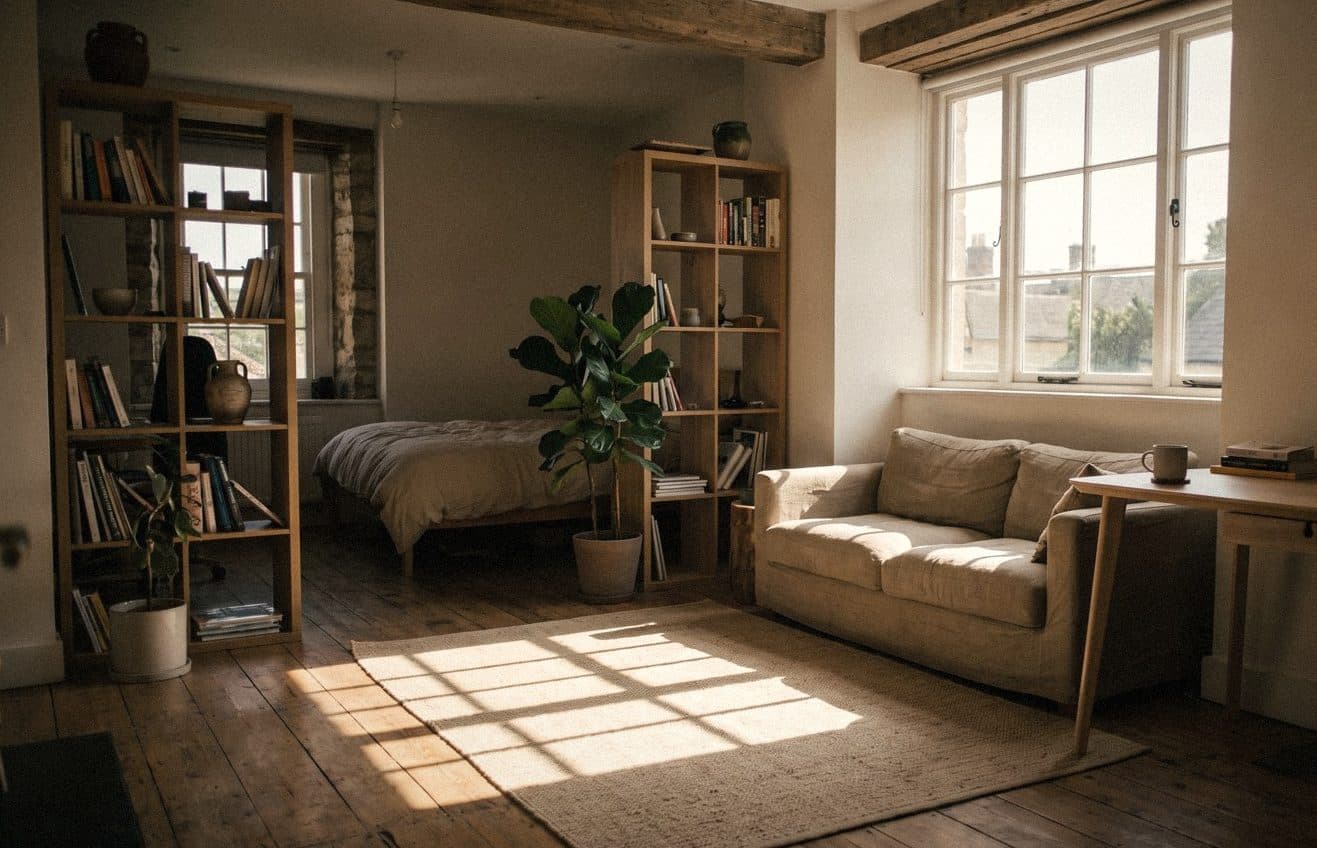
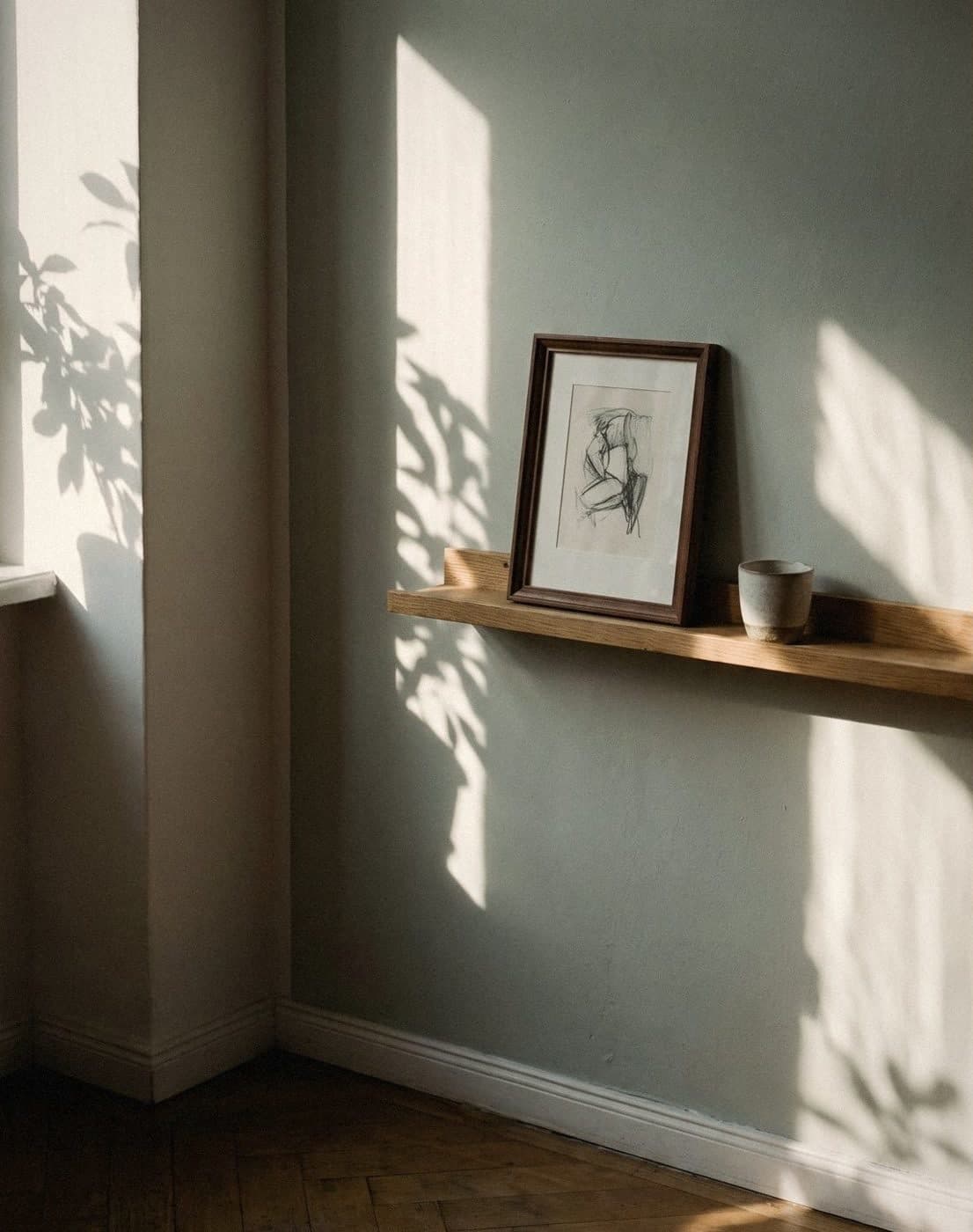

To decorate a small 25–35 sq m condo, start by checking the building management's rules and the conditions of the developer's warranty before you drill or paint. Then divide the room into clear zones for sleeping, sitting, working and cooking. Use one light wall colour throughout so the room looks bigger, choose furniture on open legs that does more than one job, and use several light sources instead of a single ceiling light. Spend your budget on the mattress, storage and lighting before decorations.
Before you decorate a condo: what you can change and what you mustn't touch
A condo isn't like a detached house. You own the unit, but not everything in it. The wall shared with next door, the communal pipes, the fire system in the ceiling and the look of the balcony usually fall under the rules of the building's management (the juristic person). Before you buy paint or call a contractor, ask management for a copy of the renovation rules. Ten minutes of reading can save months of trouble.
The most common mistake is drilling into walls. Condo walls come in several types: some are thick poured concrete, some are lightweight concrete block, and some are gypsum board on a steel frame, and they don't carry anywhere near the same weight. A heavy bookshelf on a gypsum wall needs special anchors or has to be fixed into the frame, and there may be water pipes or electrical cables running inside the wall. Ask management or the developer for the unit's plans, and check every time.
If the unit is still under the developer's warranty, painting over, drilling or repairing cracks yourself can make a claim harder, because the developer's technicians can't see the original condition. If there are cracks along gypsum joints or where a wall meets a beam, tell management or the developer first, take photos, then carry on decorating.
- Ask management for the renovation rules: permitted working hours, advance notice, moving things in and out
- Ask whether each wall is concrete, lightweight block or gypsum
- Check whether the unit is still under the developer's warranty, and its conditions on drilling or painting
- Don't touch: the fire system in the ceiling, communal pipes, party walls that management specifies, the look of the balcony
- Usually allowed: painting walls inside the unit, changing light fittings, hanging curtains, freestanding furniture
Zoning a 30 sq m condo so it feels like several rooms
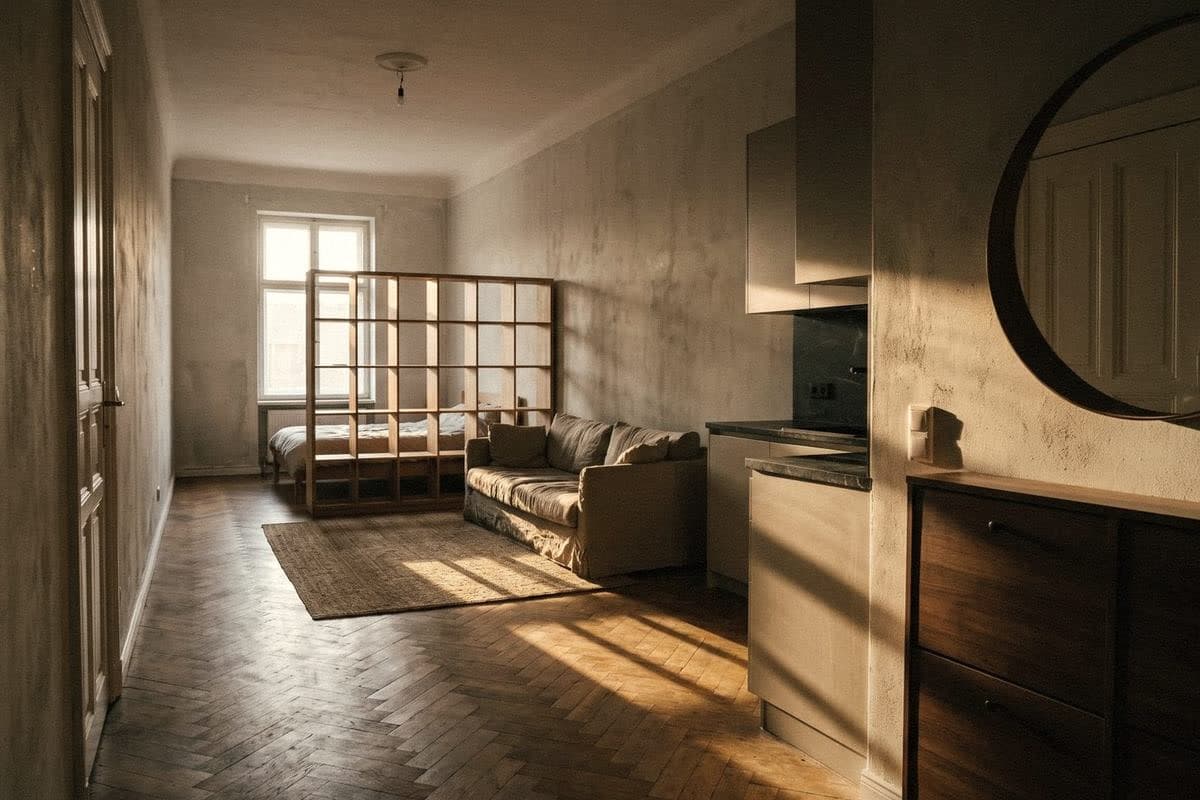
Most 30 sq m condos are one long room, with the entrance door at one end and a window or balcony at the other. The secret is to divide that length into clear zones without building extra walls. Use a rug, open shelving, a curtain, or even a slightly different wall colour to signal what each zone is for.
A rule that works for most rooms: put the zones that need daylight near the window, such as the desk or the seating corner, and set the sleeping zone a little further in, so the bed isn't the first thing a guest sees when the door opens. Keep the main walkway clear and continuous from the door to the window, and the room will look longer and have room to breathe.
- Entrance zone: a shallow shoe cabinet and a single mirror
- Kitchen zone: store things up high and keep as much counter clear as you can
- Living or work zone: near the window, with one rug to mark its edges
- Sleeping zone: screened with open shelving, a sheer curtain or a headboard wall in a different colour
Colours that make a small condo look bigger
Small rooms like light colours, because pale colours reflect more light back into the room, so the corners don't sink into shadow. But light alone isn't enough; it also has to be continuous. Paint three walls in three colours and the room is cut into pieces and immediately looks smaller. The safe approach is to choose one main colour for the whole room, and let the wall behind the bed or the living-zone wall be the only one that's different.
Soft white, pale cream, pale beige and pale warm grey are main colours that work in almost any condo. In a west-facing room that gets strong afternoon sun, soft white or pale grey helps the room feel cooler on the eye. In a room with little light, or one that faces the next building, a warm cream keeps it from looking gloomy. For the feature wall, try a tea-leaf grey-green or a plaster-textured beige for depth without closing the room in.
Another technique that works is painting the skirting and door frames the same colour as the wall. The edges disappear and the walls look taller. And if you want the ceiling to look higher, use a white one shade lighter than the walls on the ceiling.
- One main colour for the whole room
- One feature wall: behind the bed or behind the sofa
- Skirting and door frames painted the same colour as the wall
- A ceiling white slightly lighter than the walls
- Test the colour on the real wall first, and look at it in the morning and at night
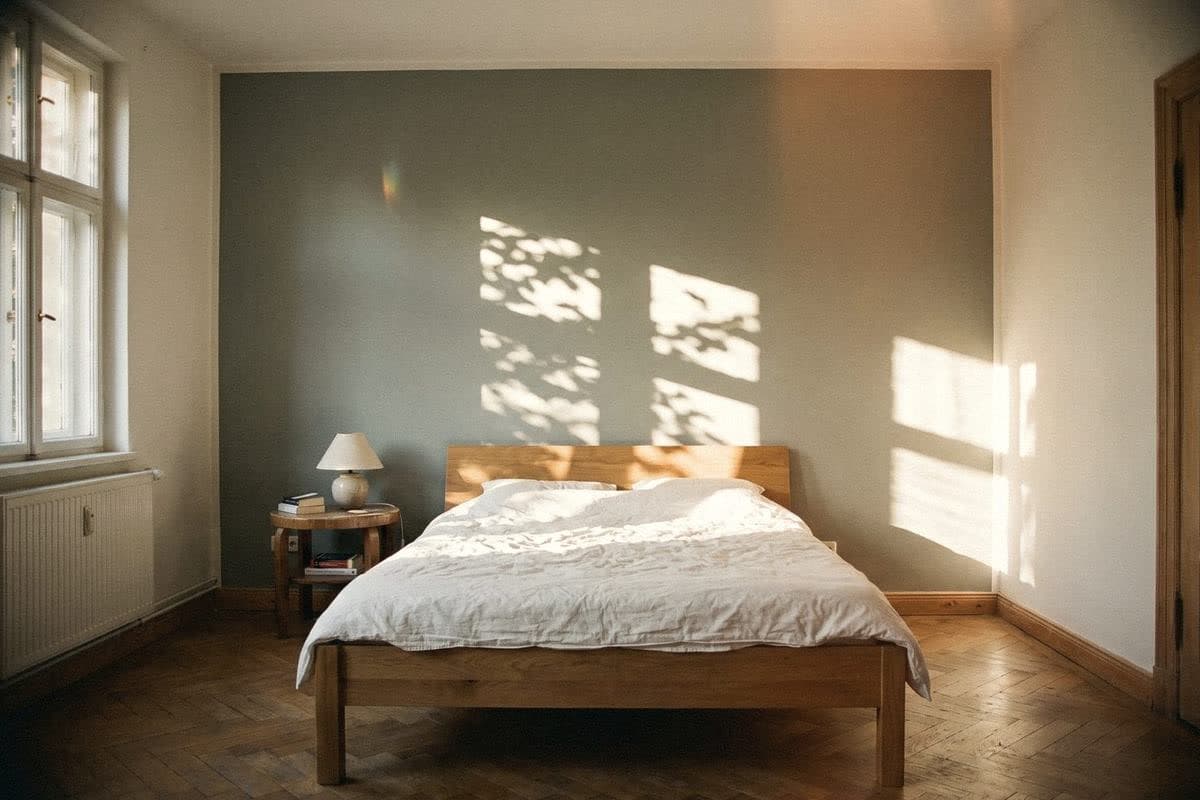
Built-in or freestanding furniture: which is better value in a condo?
Built-ins suit awkwardly sized spots, or places where every centimetre counts, such as a full-height wardrobe or a shelf above the door, because they're made to fit the room and store more. But they cost more, you can't take them to your next home, and if they're fixed to a wall that isn't strong enough, problems follow.
Freestanding furniture is more flexible: you can move it, sell it on, and you don't have to drill much. The advice for a small room is to choose pieces on legs so you can see the floor underneath; the room will look airier than with solid pieces sitting on the floor. And choose pieces that do two jobs: a bed with drawers, a folding table, a bench that opens for storage.
A formula that works for many people: built-in only for the wardrobe and the kitchen, freestanding for everything else. You get serious storage and the flexibility to change the mood when you want.
- If you're renting or will sell within 2–3 years: mostly freestanding furniture
- If you're staying long and own a lot: a built-in wardrobe up to the ceiling
- If the room is very narrow: a fold-down wall table and a bed with drawers
- If you want the room to feel airy: choose a sofa and cabinets on legs

Condo lighting: a single light in the middle of the room is the enemy
Many new condos come with rows of cool white downlights. Switch them on and it's as bright as a convenience store. Handy for cleaning, but no help in making the room a nice place to be. A small room needs several layers of light: main light for everyday tasks, focused light for reading or cooking, and low ambient light for the evening.
The way to do it without tearing out the ceiling is to change the bulbs to warm white, then add one floor lamp in a corner, a bedside lamp and a strip light under the kitchen cabinets. That's enough to get rid of the dark corners that make the room look small, and the wall colour will look softer at night.
- Change to warm white bulbs in the living and sleeping zones
- Add a floor lamp in the darkest corner of the room
- A strip light under the kitchen wall cabinets
- Two layers of curtains: sheer for the day, blackout for the night
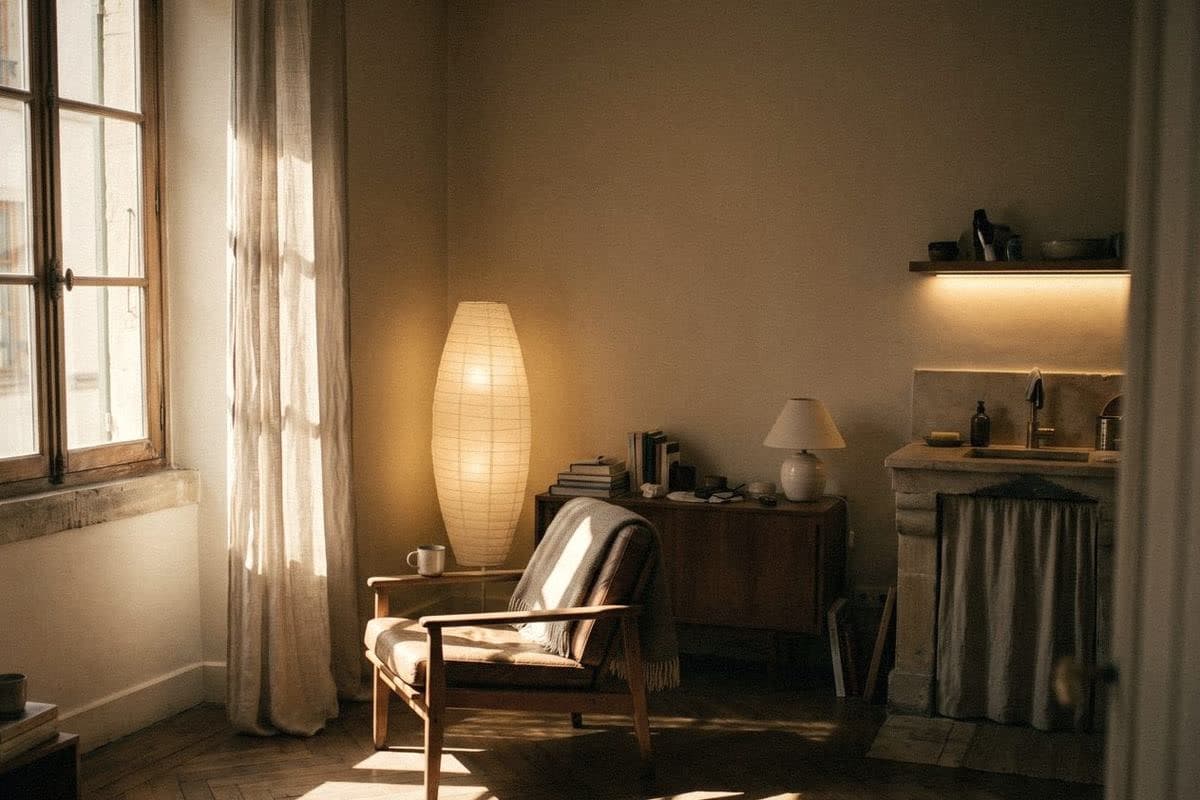
Budgeting a condo makeover: what to buy first and what can wait
A condo decorating budget disappears fastest on the first day at the shopping mall: pretty cushions, a cute vase, and once you get them home there's nowhere to put them. Get the order right, and the money goes to the things you use every day.
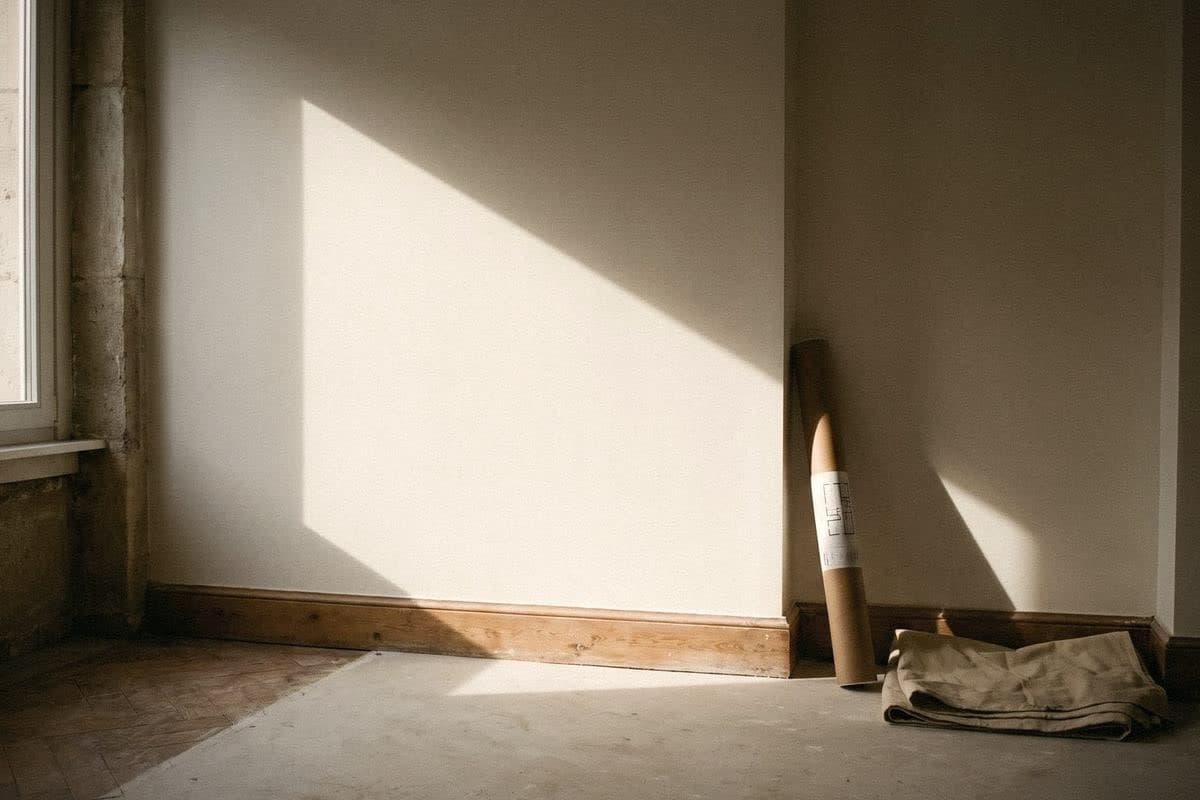
Painting should be done before the furniture comes in, because an empty room is the easiest to paint. If you're living in the room while it's being painted, choose a low-odour acrylic water-based paint, open the windows for ventilation, and leave the room for one to two days before you sleep in it. Voqe Wall Paint is a low VOC, low-odour acrylic, so it suits a room you need to move back into quickly.
- 1. Check the building rules and warranty, and give notice of the work
- 2. Paint and repair the wall surfaces while the room is still empty
- 3. Mattress and bed: the things you use every night
- 4. Storage: give your things a home before you buy more
- 5. Curtains and lighting
- 6. Sofa, table, chairs
- 7. Rugs, art, plants, decorations
“A small condo isn't short of space. It just has too many uninvited things.”
Frequently asked questions
Can I paint my condo myself?
Generally you can paint the walls inside your unit, but tell the building management first, work within the permitted hours, and check the developer's warranty conditions, because painting over cracks or the original walls can make a claim harder.
How do I make a 30 sq m condo look bigger?
Use one light wall colour throughout, with just one feature wall. Divide zones with rugs or open shelving instead of solid walls, choose furniture on legs, store things vertically, and add several light sources so the corners aren't dark.
Can I drill into condo walls?
It depends on the building rules and the type of wall. Concrete, lightweight block and gypsum walls each need different anchors, and there may be pipes or cables inside the wall. Ask for the unit's plans and check with management before you drill, every time.
What colour should I paint a small condo?
Soft white, pale cream, pale beige or pale warm grey are safe main colours. Use soft white or pale grey in rooms that get afternoon sun and warm cream in rooms with little light, then pick a slightly darker colour for one feature wall.
Are built-ins worth it in a condo?
They're worth it for the wardrobe and the kitchen, where every centimetre counts. If you won't stay long or you're renting, freestanding furniture is more flexible and moves with you.

Colour on a screen never matches colour on a wall
Order a sample to paint at home, or come and see the full shade library at Voqe Studio, Bang Phli.
Send the team photos of your condo for a free colour consultRead next
Light interior paint colours that make small rooms look bigger and condos instantly airier
A small room doesn't always need less furniture. Sometimes it just needs walls that are better at passing the light along.
Read article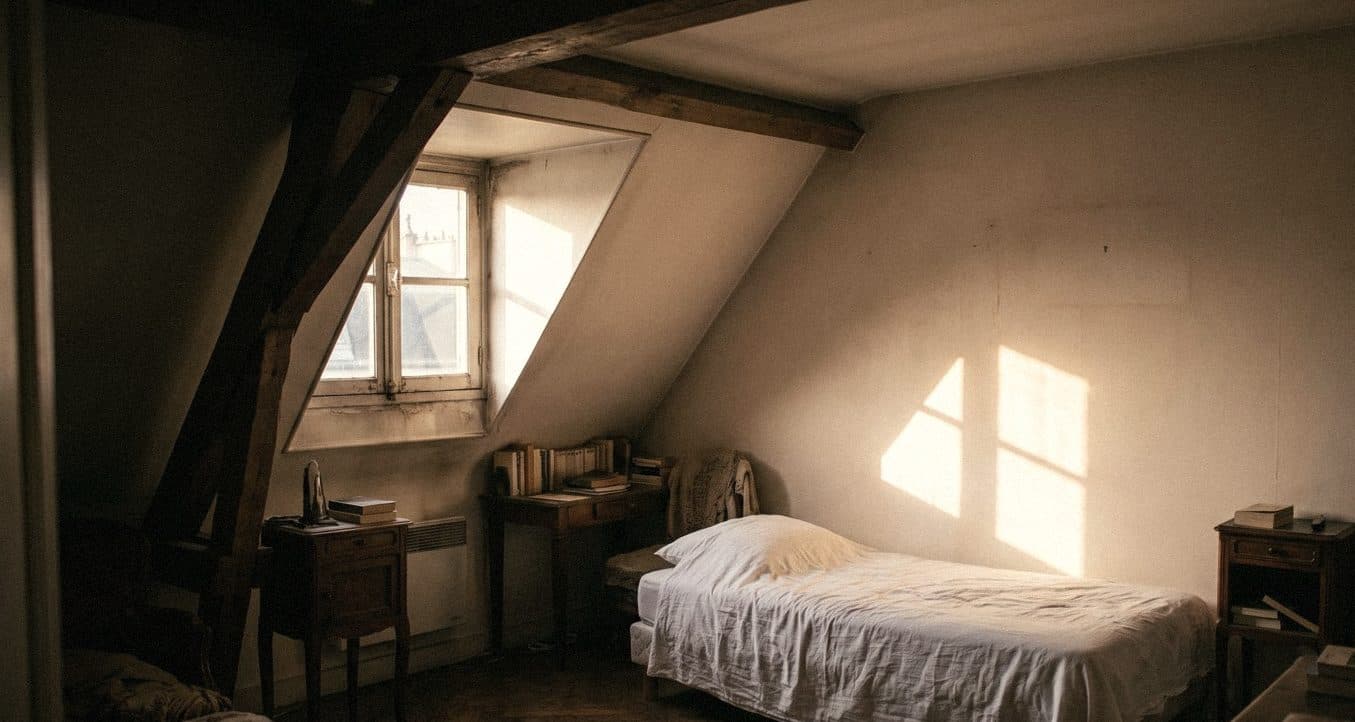
Arranging a small bedroom on a small budget so it looks bigger and feels comfortable
A small bedroom doesn't have to feel cramped. Rethink the layout, use colour to blur the room's edges, store things up the walls and choose a single feature wall. Most of it costs less than you'd think.
Read article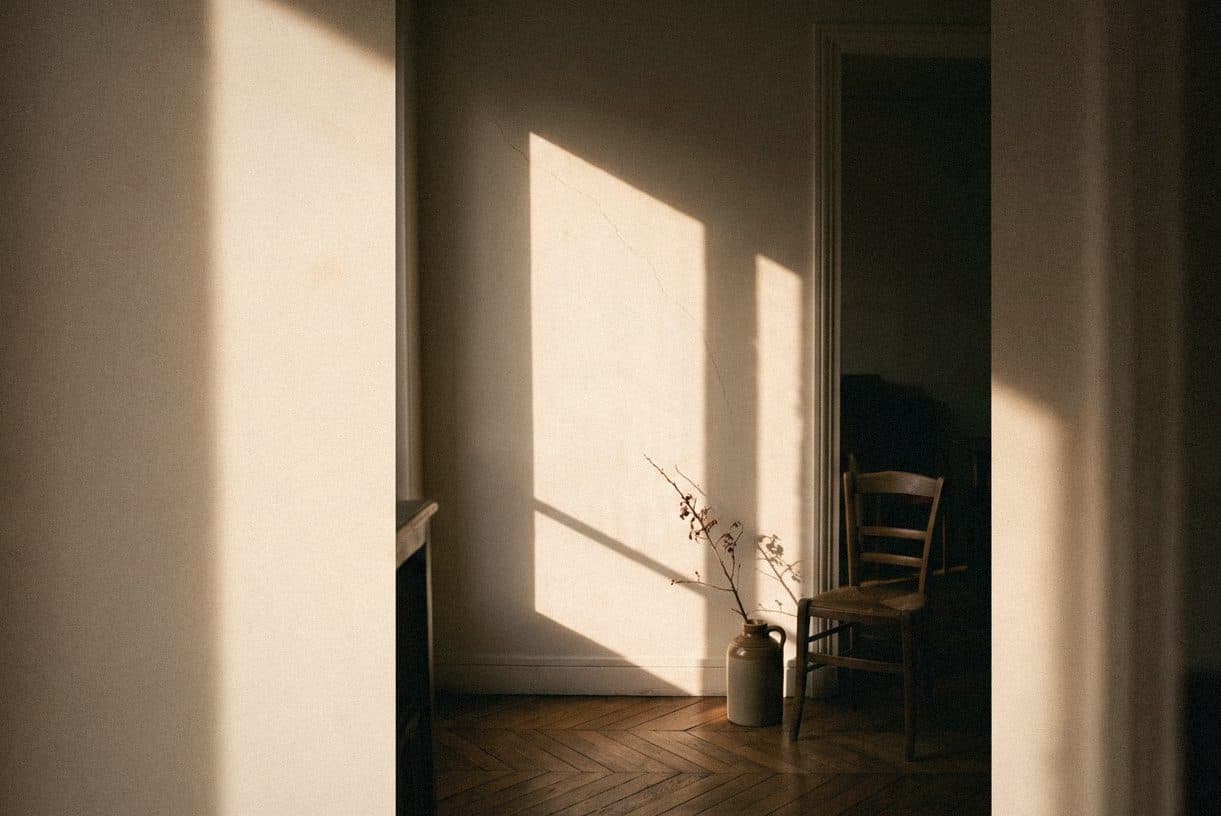
Cracked condo walls, cracked house walls: which cracks are only skin-deep, which need an engineer, and how to repair wall cracks
Most cracks just tell you how old the house is. But some are telling you something is going on inside. Learn to tell them apart first, then repair them the right way.
Read article