


Cracked condo walls, cracked house walls: which cracks are only skin-deep, which need an engineer, and how to repair wall cracks
Most cracks just tell you how old the house is. But some are telling you something is going on inside. Learn to tell them apart first, then repair them the right way.



Most wall cracks in houses and condos are hairline cracks less than about 1 mm wide, caused by the render shrinking or materials moving. You can repair this kind of crack yourself: cut a groove, fill it with acrylic filler, sand, prime, then repaint. Diagonal cracks from the corners of doors and windows, cracks several millimetres wide, or cracks that keep growing should be checked by an engineer first. If it's a cracked condo wall, check your warranty and tell the building management before repairing it yourself.
What kinds of wall crack are there, and how can you tell it's only in the render?
Cracks in a wall are like lines on a face. Some just show age; some tell you something is going on inside. To tell them apart, look at three things: the width, the direction, and whether it's getting bigger.
The most common crack in Thai homes is the hairline crack, less than about 1 mm wide. It usually comes from the render shrinking as it dries, or from the house moving slightly with heat and cool. Some walls develop a fine network of cracks over the whole surface, which builders call crazing. This is a cosmetic issue, not a safety one.
Another common type is the crack along a joint, such as where a brick wall meets a column, where a wall meets the underside of a beam, or at the joints of plasterboard sheets. The two materials expand by different amounts, so the joint opens up into a long straight line. Most aren't dangerous, but they'll crack again every time if you repair them with a material that's too rigid.
- Hairline cracks less than about 1 mm wide: render shrinkage; you can repair them yourself
- Crazing, a fine network across the wall: render shrinkage; repair the surface and repaint
- Cracks along column, beam or plasterboard joints: the materials move by different amounts; use a flexible material
- Diagonal cracks running out from the corners of doors and windows: may come from settlement; have an engineer look
- Cracks several millimetres wide, or cracks in columns and beams: have an engineer look before repairing
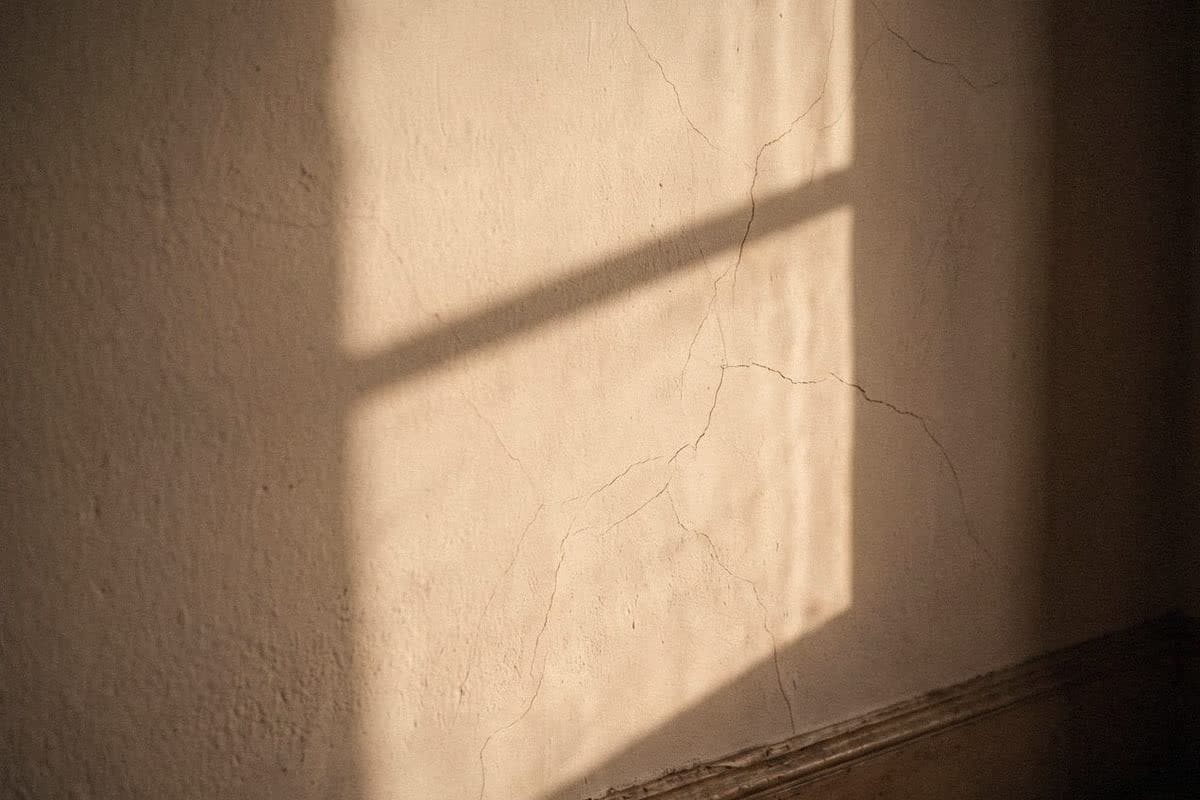
Which cracks need an engineer?
The simple rule: if a crack shows the direction of a force, listen to it. A diagonal crack running out from the corner of a door or window usually means part of the house is settling unevenly. Cracks wider than a few millimetres, cracks that get longer every month, or cracks that come with sticking doors and windows that won't close are all signs a civil engineer should take a look.
Cracks in columns or beams need even more care, especially if you see rust stains seeping out, or the concrete has spalled until the reinforcing steel shows. This isn't a fill-and-paint job any more. Covering the crack neatly without fixing the cause is like putting a plaster on a broken bone: it looks fine for a few days.
To find out whether a crack is still growing, draw a pencil line across each end of it, write the date, and take a photo with a ruler beside it. Then come back every two or three weeks. If the crack keeps running past the pencil lines, don't repair it yet. Have a specialist look first.
- A diagonal crack running at an angle from the corner of a door or window
- Wider than a few millimetres, or you can see light through to the other side
- Getting longer or wider over time
- Doors and windows starting to stick or not close properly at the same time
- Cracks in columns, beams or floors, with rust stains or spalled concrete showing the steel

Cracked condo walls: check your warranty and the building management before you start
Cracked condo walls are very common, especially in the first few years after handover. The usual places are plasterboard joints, the line where a wall meets a beam or the ceiling, and the corners of door frames. Tall buildings move with wind, sun and the extra weight as people move in, so the joints between materials open up into visible lines.
Before you pick up a scraper or a drill, open your sale contract and the development's warranty terms. In many cases cracks like these are the developer's responsibility under the warranty. Repair it yourself first and you may lose that right, or make it harder for the developer's technicians to find the cause. Take photos, measure the length, then report it to the building management in writing.
If the warranty period is over, you still need to check the building's rules. Many buildings set hours for noisy work, require advance notice, and ban drilling or altering certain walls, such as walls with services embedded in them or walls shared with the unit next door.
- Photograph the crack next to a tape measure, with the date.
- Check the contract and the development's warranty period.
- Report it to the building management in writing, and keep the evidence.
- Ask about the rules on working hours, drilling and bringing in materials.
- For cracks in plasterboard walls, use tape and filler made for plasterboard, not cement render.

Repairing a hairline crack yourself, step by step
Filling a hairline crack in a rendered wall is a job a homeowner really can do in a day off. The key is not to just paint over it. A thin coat of paint hides the crack for a few months, then the same crack reappears looking exactly as before. You have to open up the crack first so the filler has something to grip.
The right material for a hairline crack is a paintable acrylic filler. It's slightly flexible and can move with the wall, unlike cement, which sets hard and often cracks again at the edges of the repair.
The primer step matters more than you'd think. A freshly filled spot absorbs paint differently from the wall around it. Skip this step and the repair dries flatter or shinier than the rest, leaving a visible patch. On an old wall repaired like this, one coat of Voqe Primer old concrete before the finish paint is enough.
- 1. Scrape off any flaking paint around the crack, then use a pointed scraper or a craft knife to cut a V-shaped groove along the crack.
- 2. Brush out all the dust. The wall must be dry and clean.
- 3. Press acrylic filler firmly into the groove until it's full, and smooth it off, leaving it slightly proud because it shrinks back as it dries.
- 4. Leave it to dry as the label says, then sand with fine sandpaper until it's flush with the wall.
- 5. Prime over the repair, so the whole wall absorbs paint evenly.
- 6. Apply two coats of finish paint over the whole wall, from corner to corner, not just the one spot.

Cracks bigger than a hairline: how to repair cracked render, and roughly what it costs
Cracks along the joint between a column and a wall, or between a wall and the underside of a beam, often crack again because the two sides move by different amounts. What works is a material that can stretch, such as a paintable acrylic sealant, or fibreglass mesh tape laid across the crack and skimmed over thinly. The mesh spreads the stress, so the crack doesn't come back as the same straight line.
If the render is spalling, sounds hollow when you tap it, or is coming away in sheets, filling won't be enough. The loose render has to be chipped off and the whole area re-rendered. This takes skill to get the surface flush with the existing wall, so it's usually a job for a plasterer.
On price: going by the Thai government's reference prices from the Comptroller General's Department, labour for rendering interior walls is about ฿96 per sq m, and for exterior walls about ฿109 per sq m. That's labour only, not including materials, chipping off the old render, scaffolding or painting to finish. Actual prices vary from builder to builder with the location, the size of the job and how difficult it is. Use these figures as a starting point when comparing quotes.
- Cracks along joints between materials: paintable acrylic sealant, or fibreglass mesh with a thin skim coat over it
- Spalling render that sounds hollow when tapped: chip it off and re-render; have a plasterer do it
- Diagonal cracks, wide cracks, structural cracks: have an engineer find the cause first, then repair the surface
- Ask for quotes that separate rendering labour, materials and painting, so you can compare them more accurately

“A hairline crack is a wrinkle on the house. A diagonal crack is the house talking to you.”
Frequently asked questions
My condo wall is cracked. What should I do?
Photograph and measure the crack, check your contract and the development's warranty terms, then report it to the building management in writing before repairing it yourself. In many cases, cracks along plasterboard joints or where a wall meets a beam are covered by the developer's warranty.
Which wall cracks are dangerous?
Diagonal cracks from the corners of doors and windows, cracks wider than a few millimetres, cracks that keep getting longer, cracks in columns or beams, and cracks that come with sticking doors and windows should be checked by a civil engineer.
What should I use to fill a crack in a rendered wall?
For hairline cracks, use a paintable acrylic filler. Cut a V-shaped groove before filling, sand it smooth, prime, then paint the whole wall. For cracks along joints between materials, use an acrylic sealant, or fibreglass mesh with a skim coat over it.
How much does it cost to repair cracked render?
The government reference price for rendering labour is about ฿96 per sq m for interior walls and ฿109 per sq m for exterior walls, not including materials, chipping off old render or painting. Actual prices depend on the builder, the location and the size of the job.
Can I just paint over a crack?
You shouldn't. Paint only covers the crack temporarily, and before long it reappears. Open up the crack, fill it with a flexible material, sand, prime, and then paint the whole wall.

Colour on a screen never matches colour on a wall
Order a sample to paint at home, or come and see the full shade library at Voqe Studio, Bang Phli.
Send the team a photo of your wallRead next
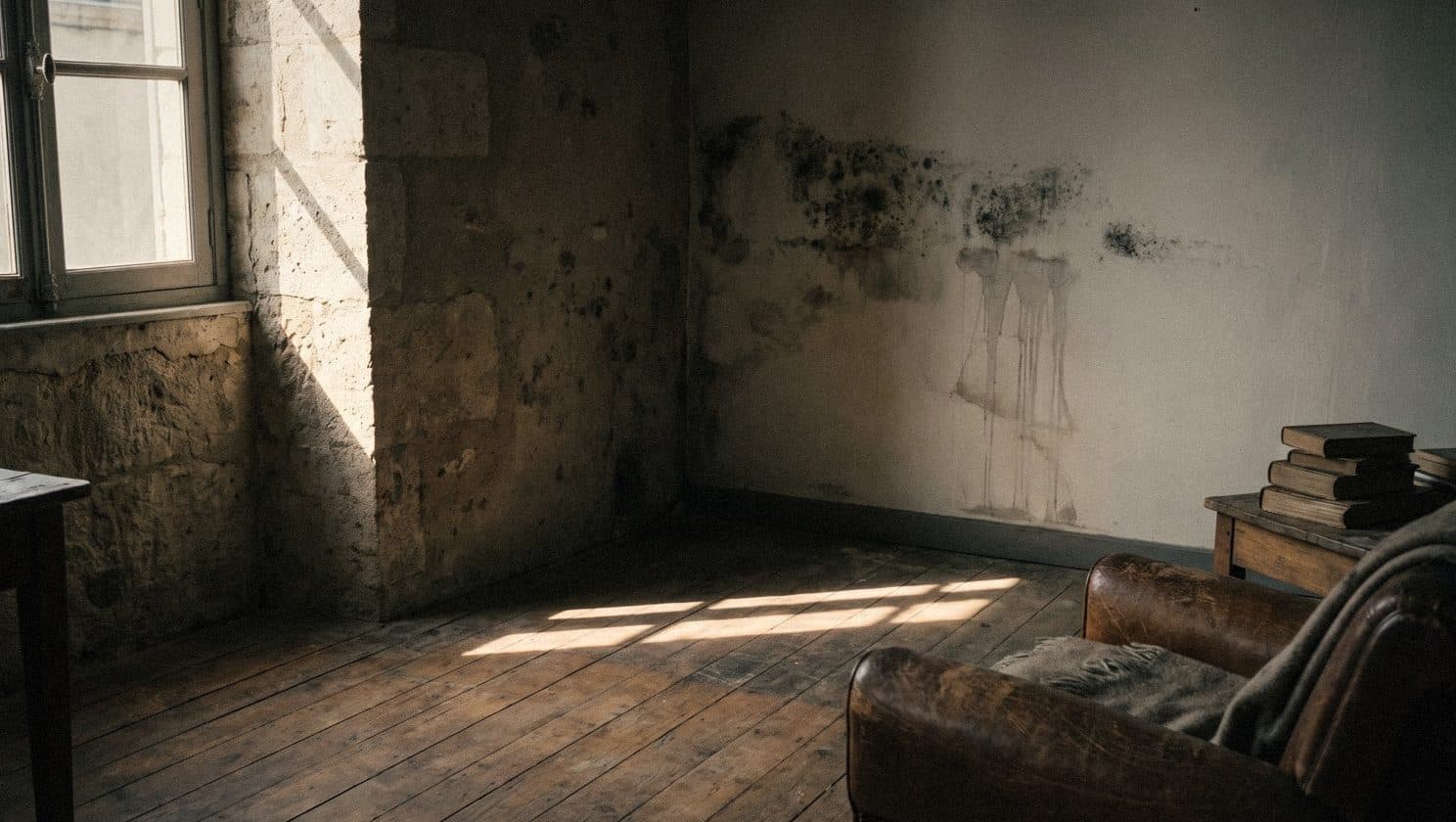
Mouldy walls: what causes them, how to clean them, and how to stop the mould coming back
Mould on a wall isn't a paint problem. It's a water problem. You can wipe it off in a day, but if you don't find the water, it'll be back to say hello every rainy season.
Read article
Water seeping into house walls, bubbling paint, peeling paint: find the cause first, then repaint once and for all
Blistering paint doesn't mean bad paint. Almost every time there is water hiding behind it. Find where it comes from, and your next coat of paint will be the last.
Read article
Primer for old plaster vs primer for new plaster: how they differ and which to choose
Primer is your wall's make-up base. You can skip it, but the paint on top won't last. Find out whether your walls are old or new concrete, then choose the right one.
Read article