


Cool-tone bedroom colours: 6 shades that make a room calm without feeling cold
Blue, green, grey and soft purple make a bedroom in a hot city look cooler at once. Just know how to pair them with wood and light, and the room won't end up looking like a clinic.

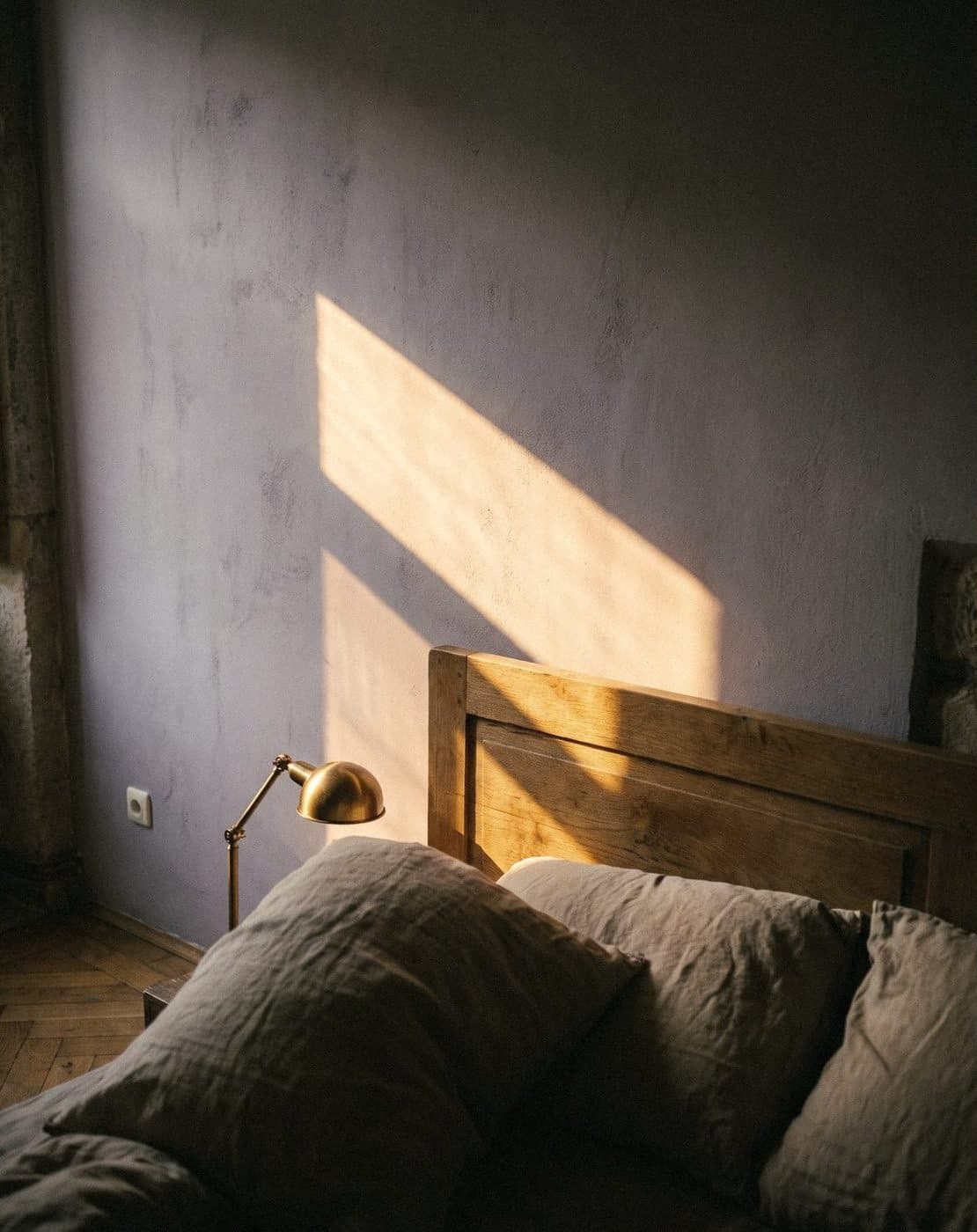
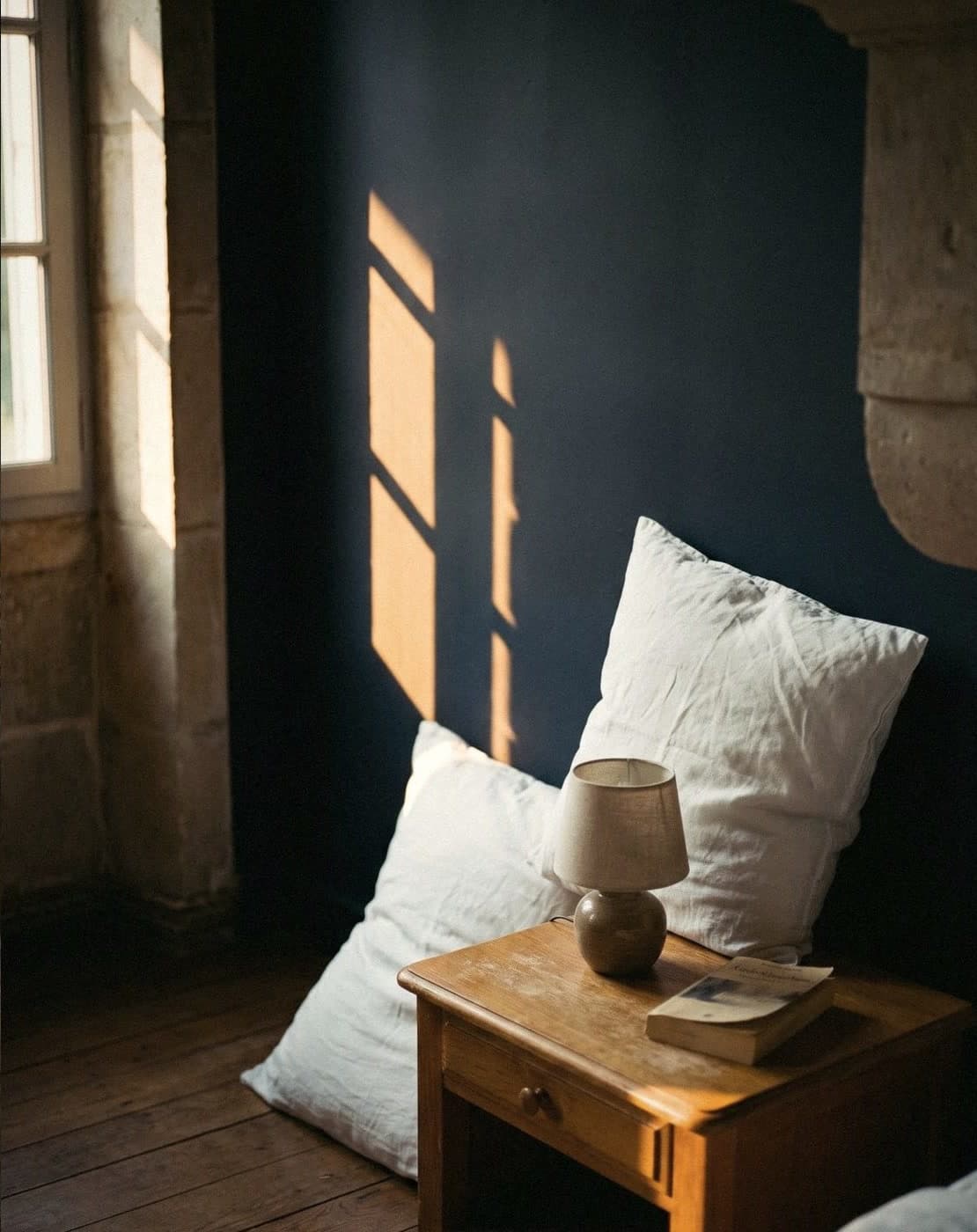
Cool-toned bedroom colours are the colours on the blue, green and purple side of the colour wheel, plus greys with a hint of blue or green: for example pale blue, sage green, grey-green, cool grey, lavender and navy. These colours make a room feel calm and cool to the eye in a home that is hot all year. To keep the room from feeling cold, pair them with warm-toned wood, linen and warm white bulbs.
What cool-toned bedroom colours are, and why they suit a hot-climate home
Think of a swimming pool at two in the afternoon, fresh banana leaves, or the sky after rain. These are cool tones, on the blue, green and purple side of the colour wheel. Cool tones don't actually lower the temperature in a room, but they make it feel cooler to the eye and more relaxing. For a bedroom in a city that is hot almost all year, that feeling is worth a lot.
Cool tones also seem to recede from the eye, so the walls look slightly further away. That's why a small condo bedroom painted pale blue or a light grey-green often feels airier than one painted in deep warm colours.
Another group people often forget is cool greys. A grey with a hint of blue or green looks clean and modern, and makes a good backdrop for white bedding and honey-coloured wood.
- Blue: calm and airy, like the morning sky
- Green: shady and natural, at home with plants
- Soft purple: soft, dreamy and distinctive
- Blue-grey or green-grey: understated, modern, not sweet
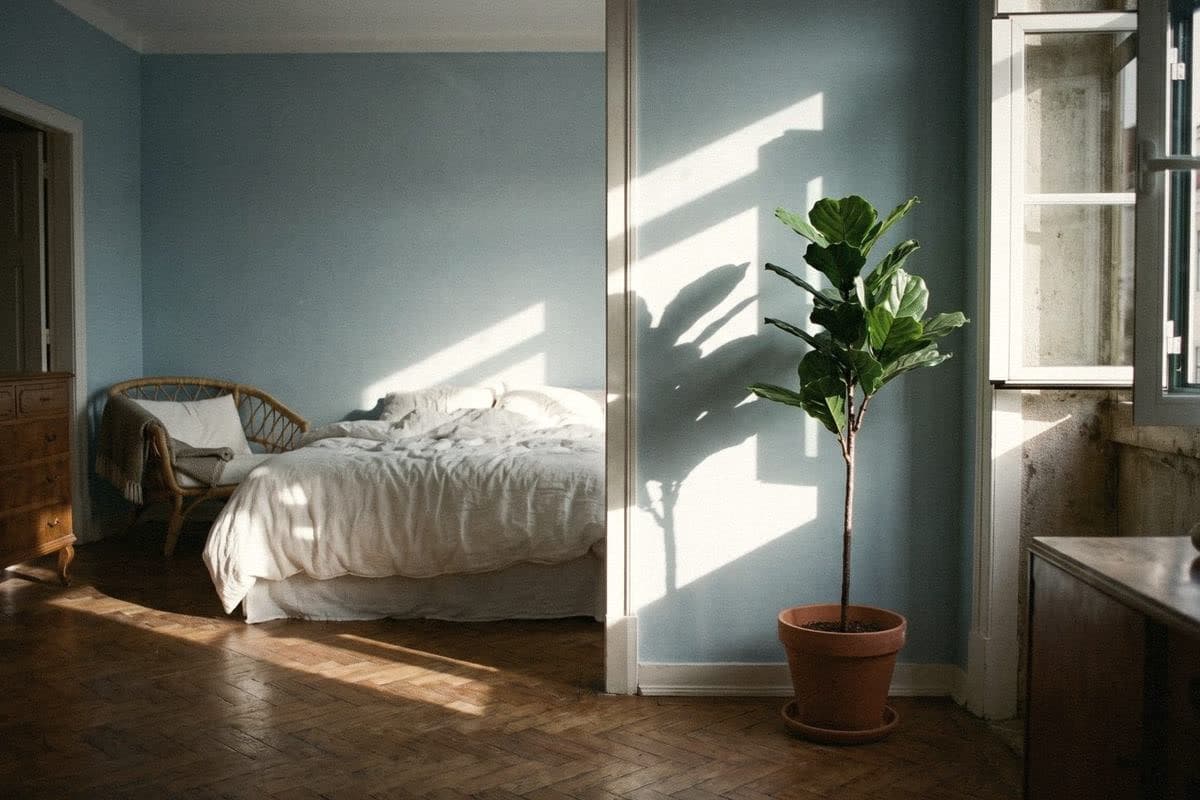
6 cool-toned bedroom shades: pick the one that suits the room's character
Each shade has a different personality, like slow songs that can be jazz or folk. Choose by the mood you want when the lights go out, not by the prettiest picture on the internet.
If you're still unsure, sage green and grey-green are the safest places to start, because they have a little hidden warmth and go with wood of any colour. Navy is the shade for people who already know they love a room that wraps around them.
- Pale blue: suits small rooms, and people who want to wake up to something bright
- Sage green: a greyish green, the easiest to live with in the group, goes with wood of any colour
- Grey-green: still, like tea leaves, for people who like minimal but don't want all-white
- Cool grey: clean and modern, needs warm-toned fabrics and wood alongside it
- Lavender: a soft greyish purple, gentle with personality, beautiful in rooms with morning light
- Navy: deep and enveloping, suits a headboard wall or a room used mainly at night
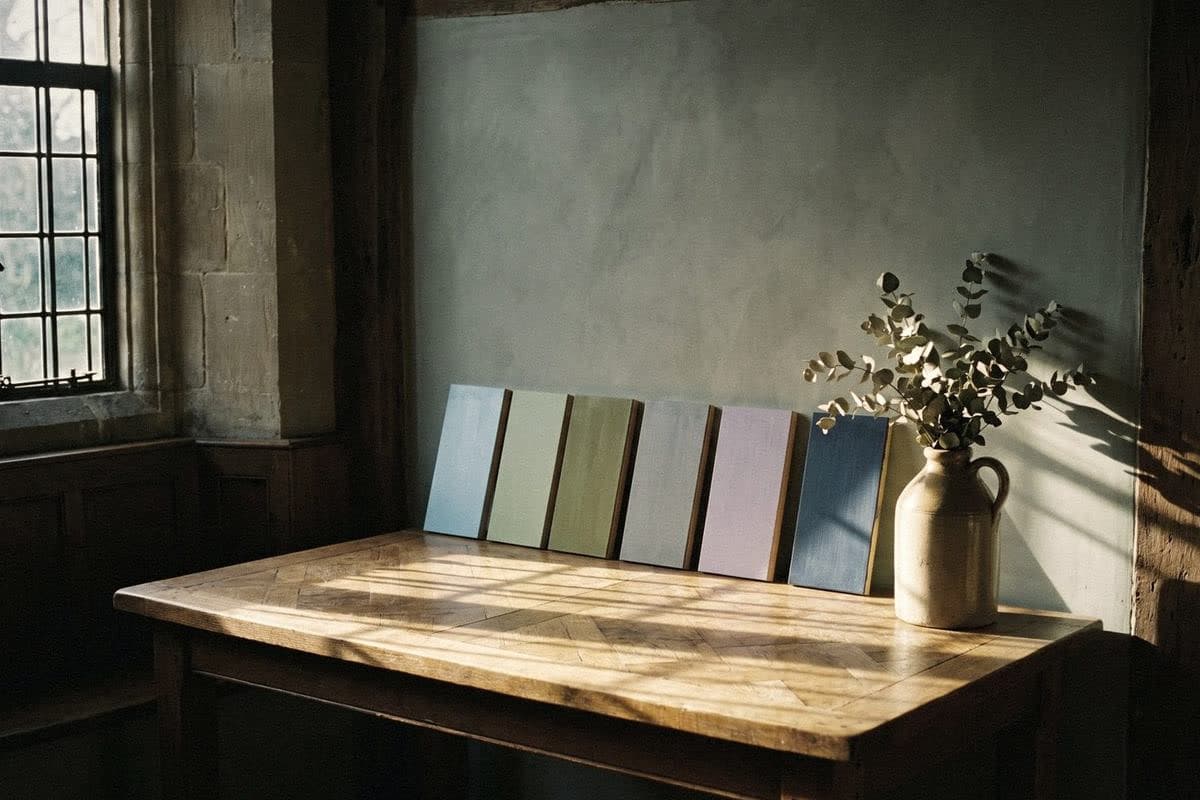
The direction of the light changes cool colours more than you think
The same colour in a north-facing room and a west-facing room looks like two different colours. In our homes, a room with north-facing windows gets soft, even light that is rather cool, so a cool colour there may look greyer and duller than it did in the pot. A west-facing room gets hot, fierce afternoon sun, and a cool colour helps bring the feeling back to comfortable.
East-facing rooms get gentle morning sun, which suits pale blue and lavender. And a room with almost no daylight, used only with the lights on at night, is actually where a dark colour like navy works well, because there's no point fighting the dark. Embrace it instead.
- North-facing rooms: choose a cool tone with a little warmth, such as sage green or grey-green
- West-facing rooms: pale blue or cool grey helps take the heat out of the afternoon sun
- East-facing rooms: clear blue and lavender look bright and beautiful in the morning
- Rooms with little light: navy or dark green, then add warm lights in several places
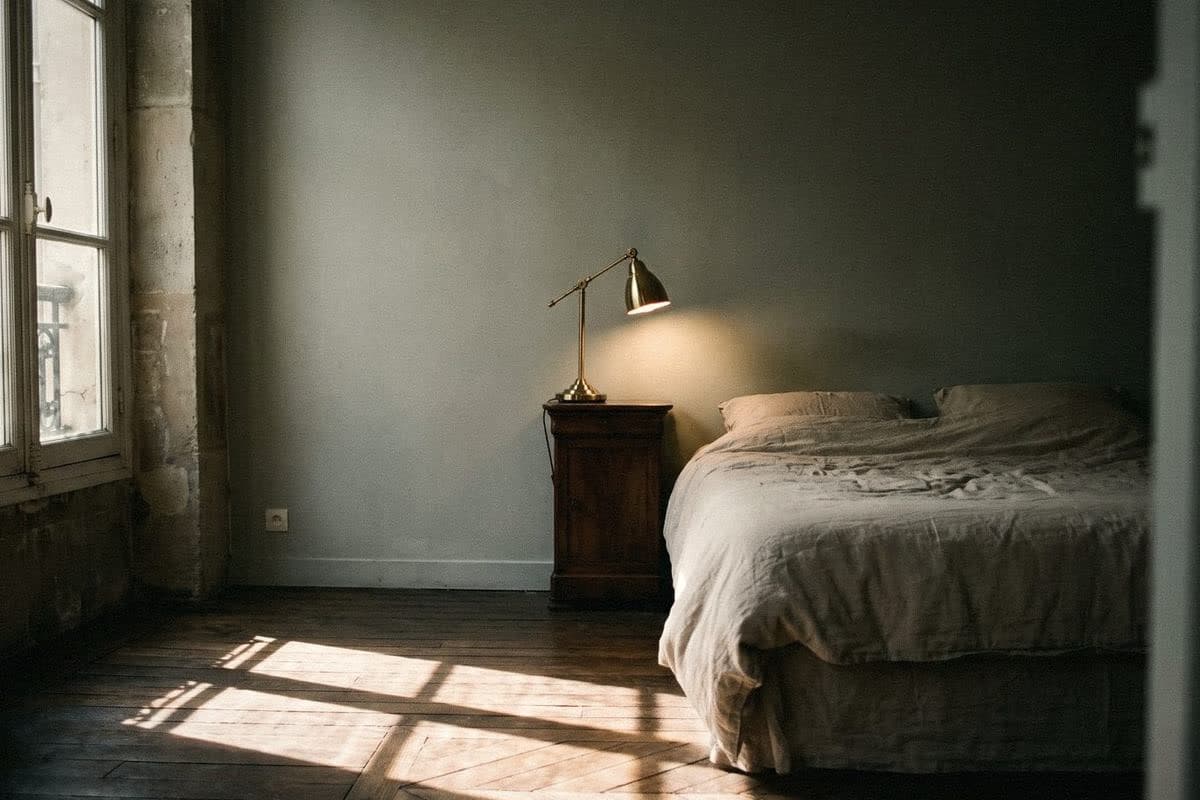
Pair cool bedroom colours with wood and fabric so the room doesn't feel cold
When a cool-toned bedroom looks like a clinic, it's usually not the wall colour that's wrong. It's that everything around it has gone cool too: blue walls, grey bedding, harsh white lights. So the room feels cold to the eye and to the heart.
The fix is to bring in warmth as a counterpoint: honey-toned oak or teak, cream or oatmeal linen, rattan or woven mats, and small touches of brass like a handle or a lamp base. It's like iced green tea with buttered toast; each makes the other taste better.
Lighting matters just as much. Warm white bulbs at around 2700–3000K make blue or green walls look soft at night. Very white bulbs make cool colours look harder and colder than you intended.
- Warm-toned wood: headboard, bedside table, curtain rail
- Cream, beige or oatmeal fabrics: bedding, curtains, rugs
- Natural materials: rattan, terracotta, woven mats
- Warm metals: small pieces in brass or copper
- Warm bulbs at 2700–3000K
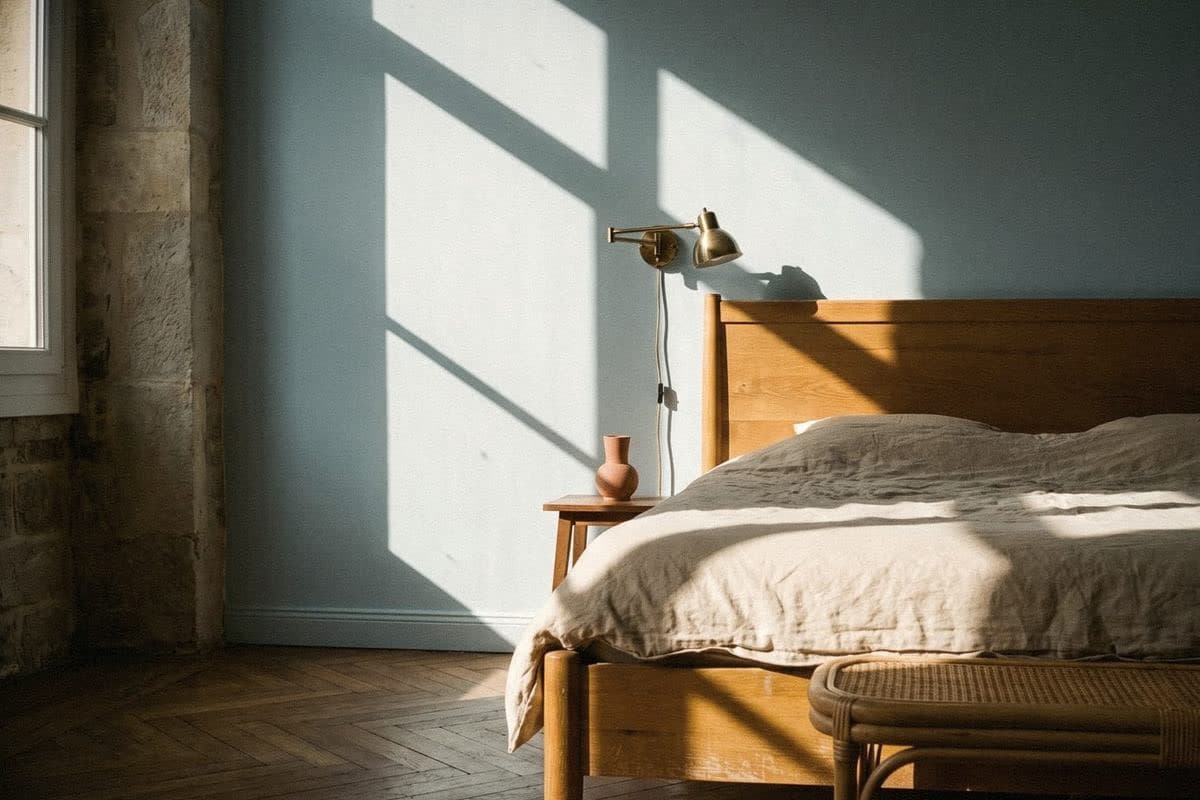
Navy and deep cool bedrooms, for the brave
A dark bedroom is the home's favourite jacket: put it on and you feel held. Navy, deep-sea blue or dark pine green make the corners of the walls fade away at night, so the room feels still and quiet. It suits people who struggle to sleep, or people who use the bedroom just for sleeping, not for working.
If you're not brave enough for the whole room yet, start with the headboard wall alone and leave the ceiling soft white so the room still feels tall and airy. Or, if you want depth with texture, a textured wall in a deep grey-blue feels like an old stone wall under moonlight.
- A dark headboard wall, with the other walls in a lighter colour from the same family
- A soft white ceiling, so the room doesn't feel low
- White or cream bedding, for a clean contrast with the walls
- Wall lights or bedside table lamps instead of a single ceiling light
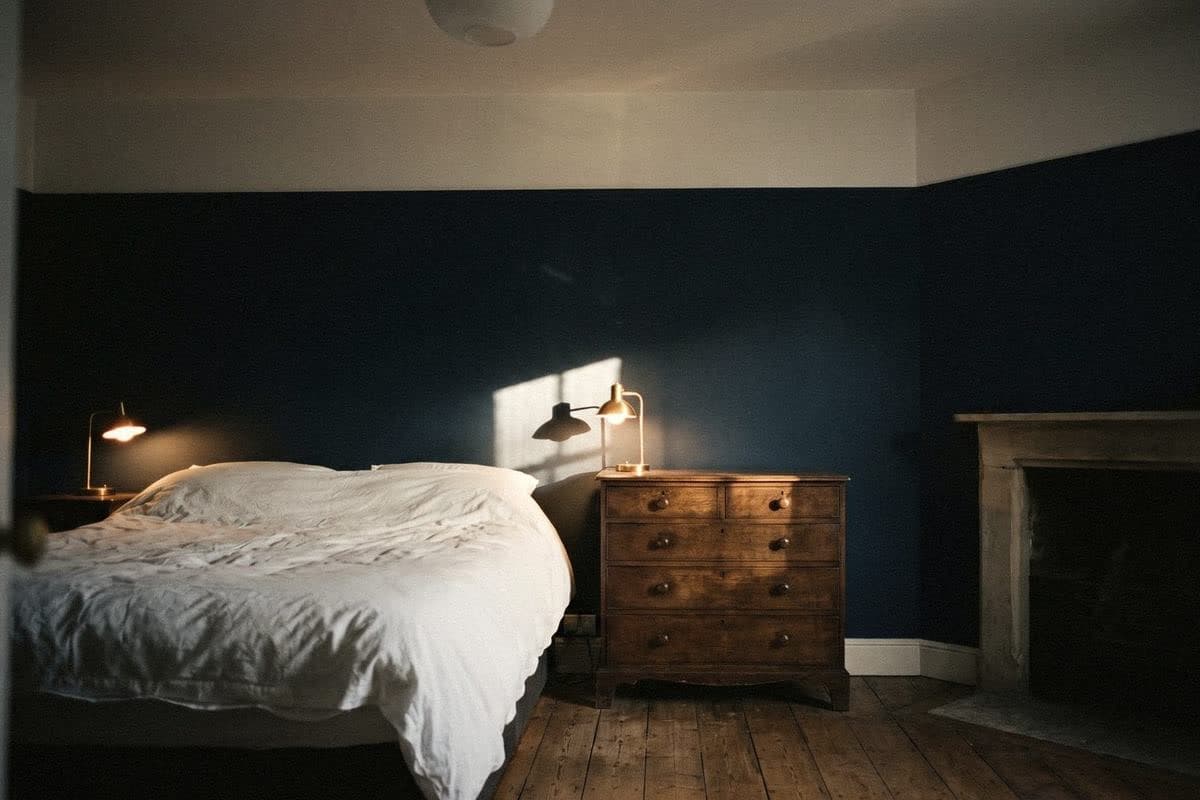
Mistakes that ruin a cool-toned bedroom, and how to test before you paint
Cool colours change their look more than any others when they leave the pot and go on the wall. A blue that looks soft in the shop can turn into a bright swimming-pool blue in a room that gets lots of sun. The only sure way is to paint a large sample on at least two of your actual walls and look at it for two or three days.
If you want to compare several shades at once, Voqe has sample pots in every shade. Try blue, green and grey side by side in the real room, and you'll see straight away which colour suits your room.
- Choosing a blue that's too bright makes the room look like a child's room or a swimming pool
- Using cool tones for everything, with no wood or warm fabric to break it up
- Painting a small room dark on all four walls and the ceiling without testing first
- Using very white bulbs, which make the colour look hard at night
- Only looking at the colour in the shop, not in your own room's light
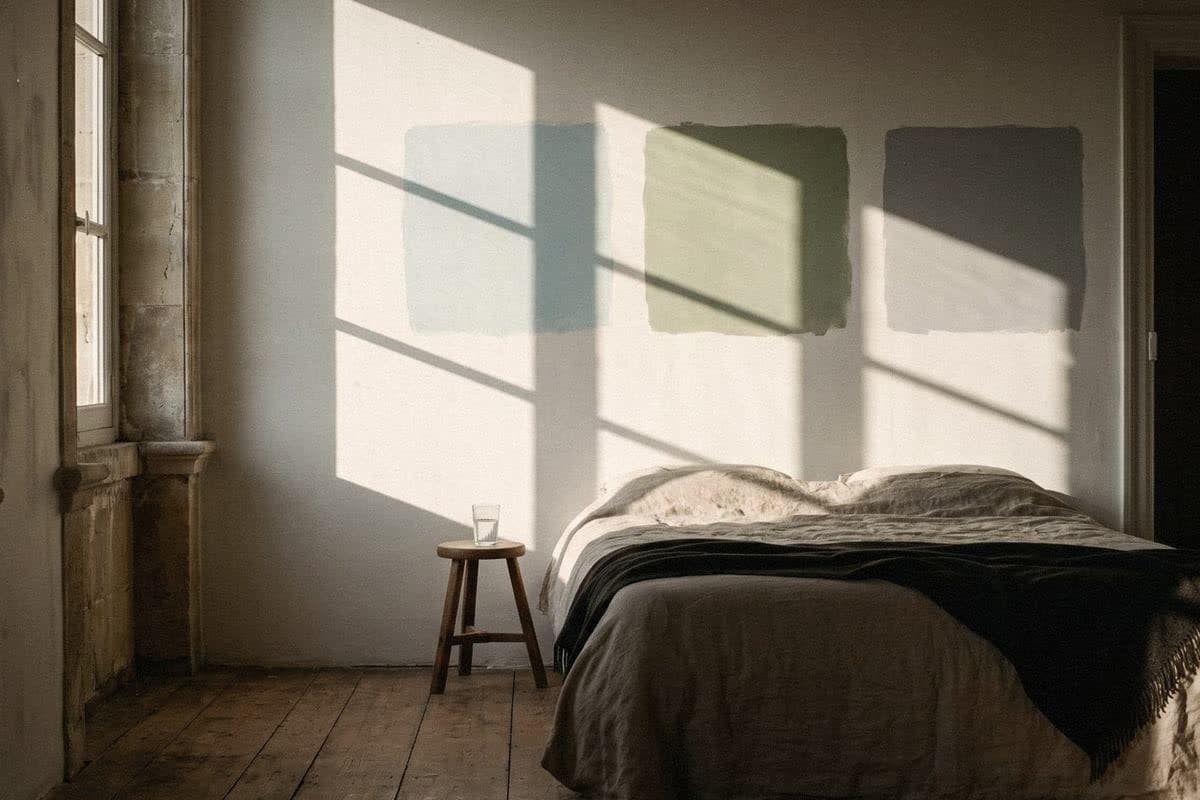
“A good cool-toned bedroom is like opening the window to the breeze after rain, not like opening the fridge.”
Frequently asked questions
Which colours count as cool tones for a bedroom?
Pale blue, grey-blue, sage green, grey-green, cool greys with a hint of blue or green, lavender, and dark colours like navy or deep-sea blue.
Does painting a bedroom in cool tones really make it cooler?
Colour doesn't directly lower the room temperature, but it makes the room feel cooler to the eye and more relaxing. Actually reducing heat also takes sun-blocking curtains, insulation and ventilation.
What colour should I paint a west-facing bedroom?
Cool tones like pale blue, cool grey or sage green help reduce the feeling of heat from the afternoon sun. Pair them with curtains that block light well and the room will be much more comfortable.
What furniture colours go with a blue bedroom?
Warm-toned wood like oak or teak, cream, beige or white fabrics, and warm metals like brass, which help keep the room from feeling cold.
Can I use dark cool tones in a small bedroom?
Yes, if you use them on the headboard wall only, with the other walls and ceiling in a light colour, and add warm lights in several places. The room will feel deep and enveloping without being cramped.

Colour on a screen never matches colour on a wall
Order a sample to paint at home, or come and see the full shade library at Voqe Studio, Bang Phli.
Order cool-tone sample jarsRead next
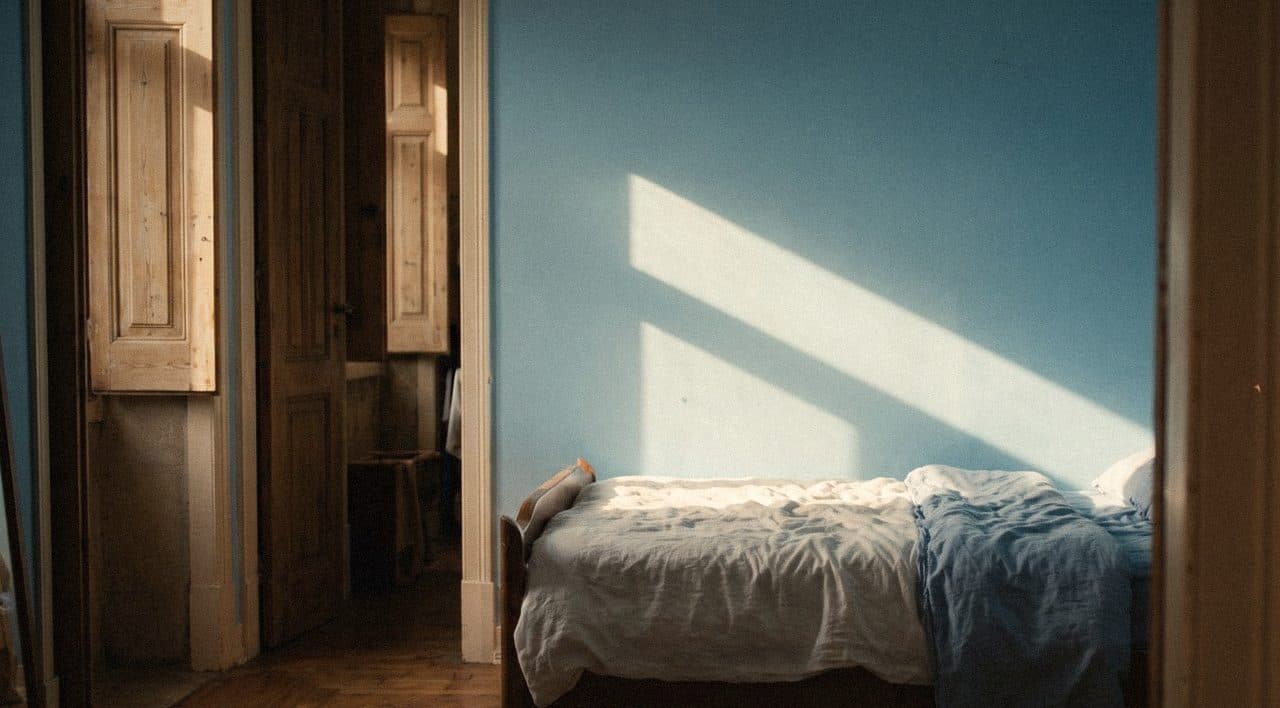
Blue bedrooms, from clear sky blue to deep navy: which shade helps you sleep well
Blue is the bedroom colour people in hot countries love most. But the wrong blue feels as cold as a doctor's waiting room. Here's how to choose a blue that's just warm enough.
Read article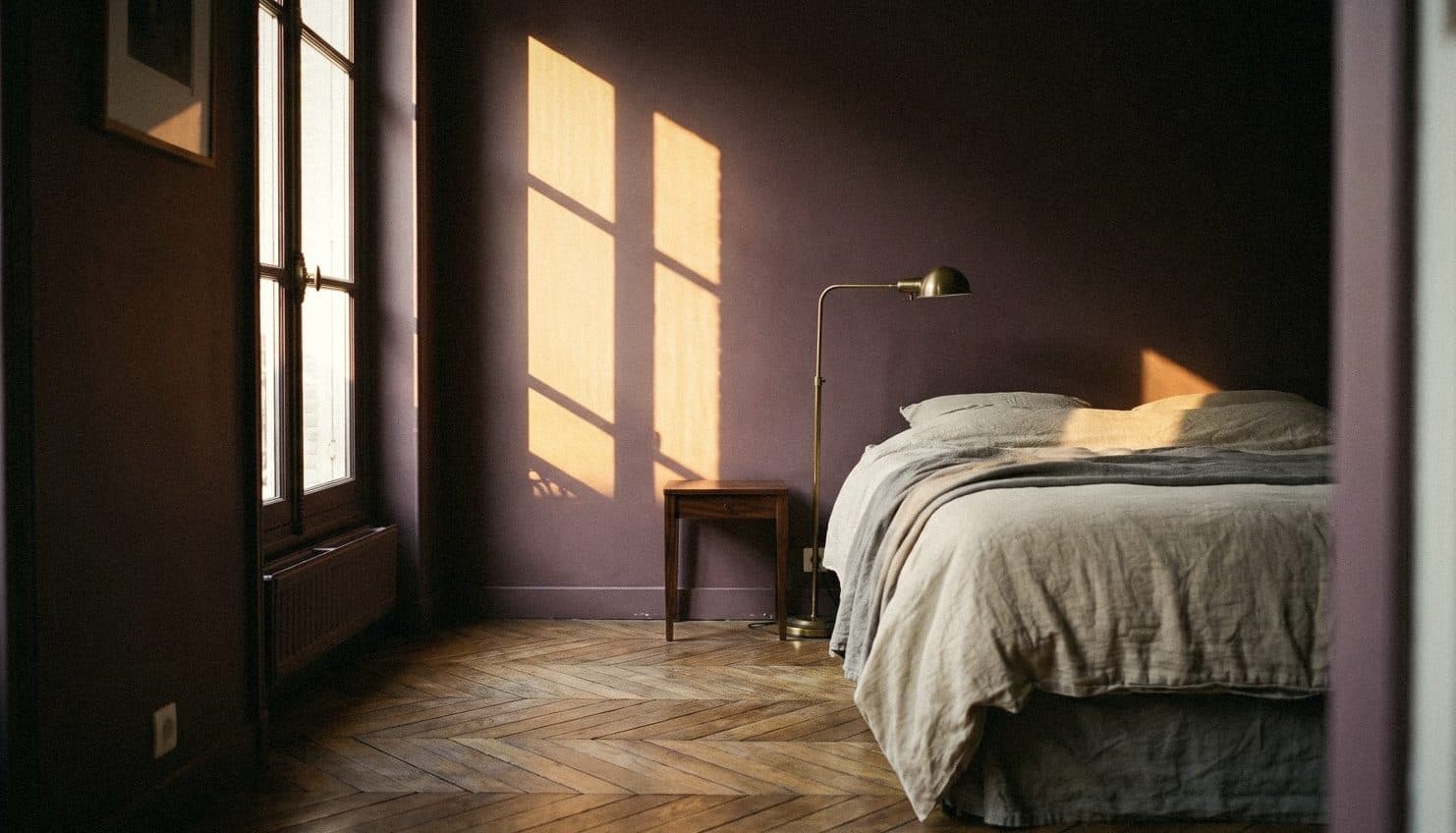
A grown-up purple bedroom, from lilac to aubergine
Purple doesn't have to be sweet like a child's room. Choose the right muted purple, pair it with neutrals and natural materials, and a bedroom instantly feels soft, deep and grown-up.
Read article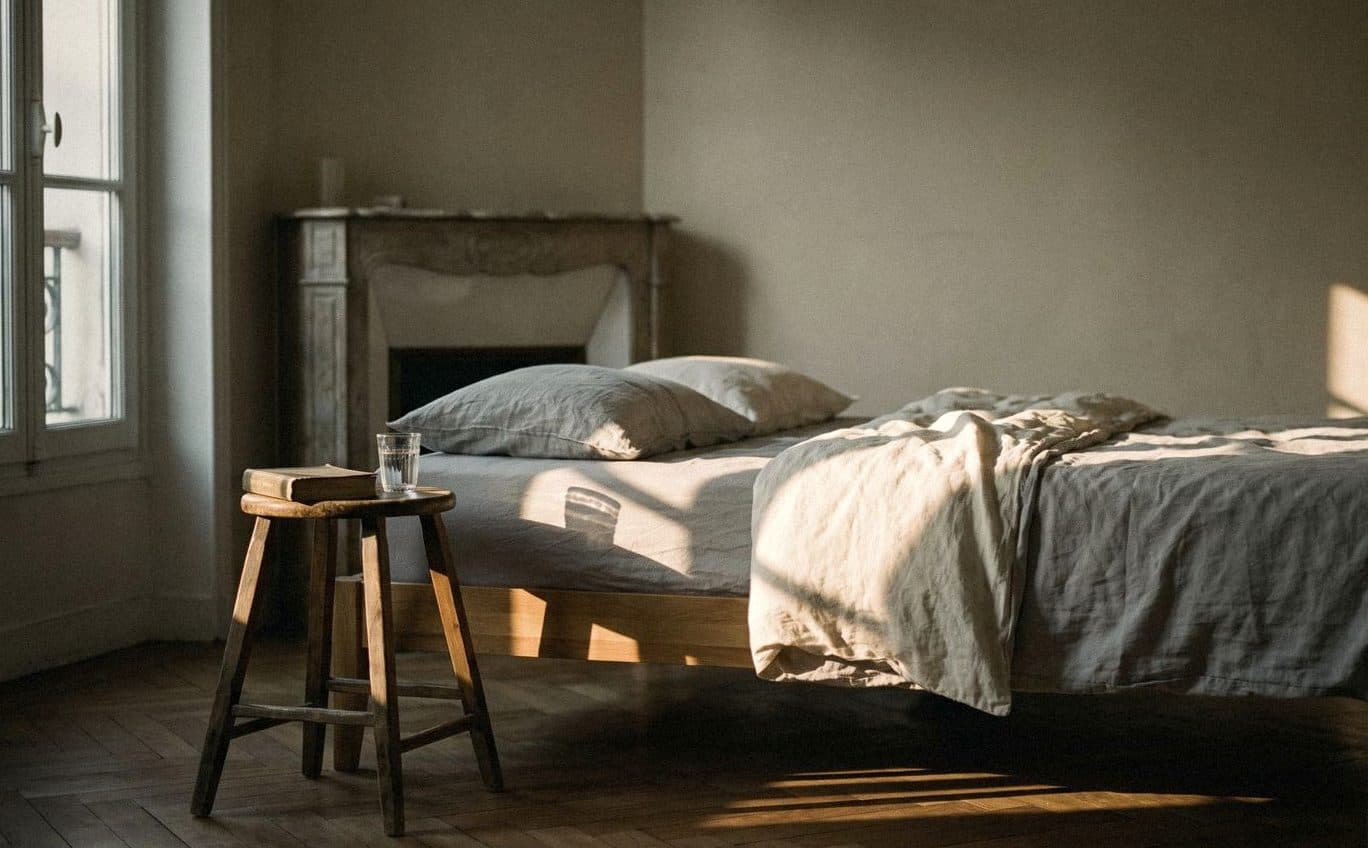
Bedroom colours: how to choose for easy sleep and a good mood in the morning
The bedroom is the one room where you want colour to speak most quietly. Choose well and it feels as soft as a hotel bed with fresh sheets.
Read article