


What is Mid Century Modern? The mid-century style that still looks great in Thai homes today
Slender chair legs, warm teak and the mustard of a 1960s film. Your grandmother's house may already have the whole style.
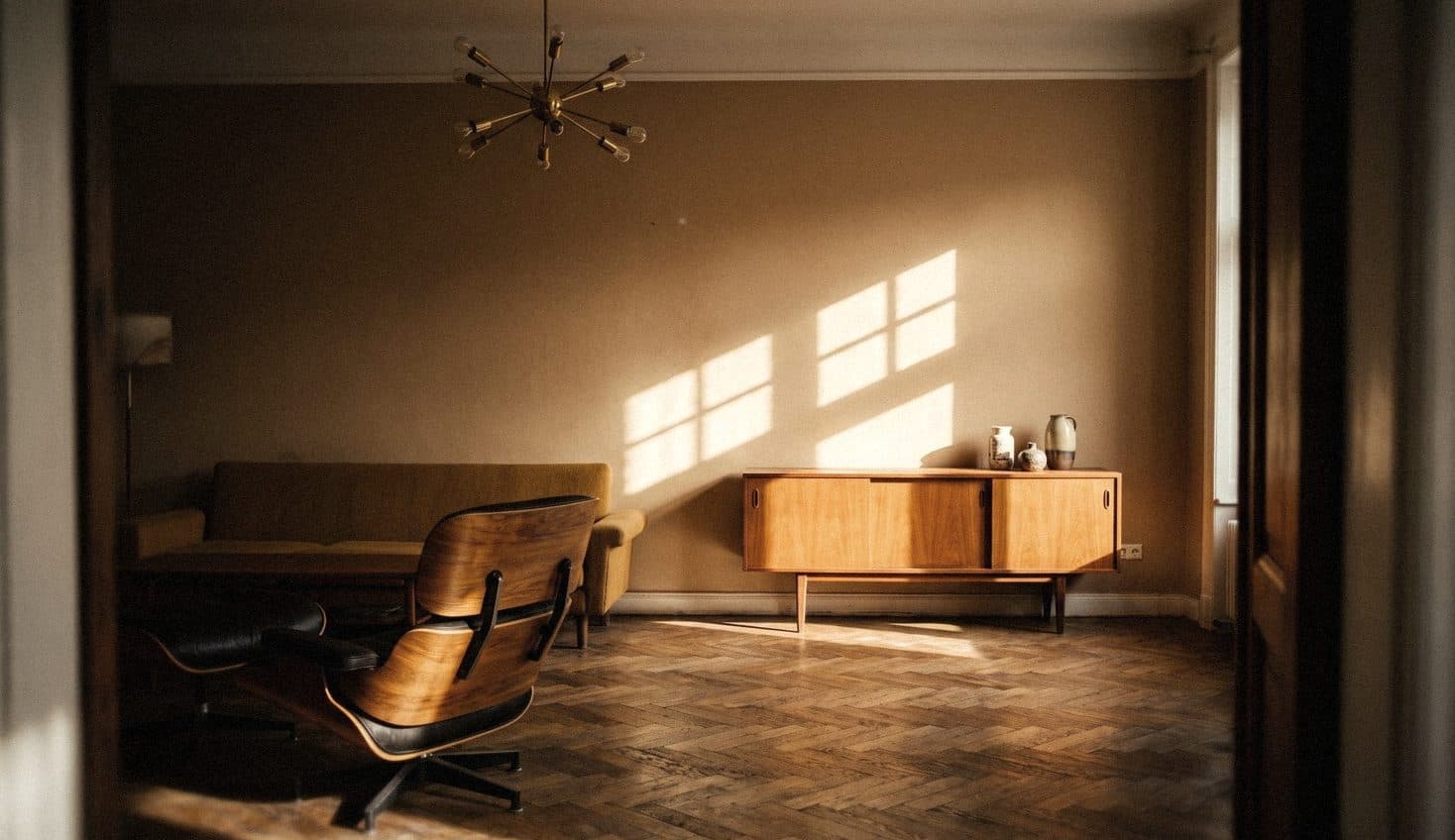
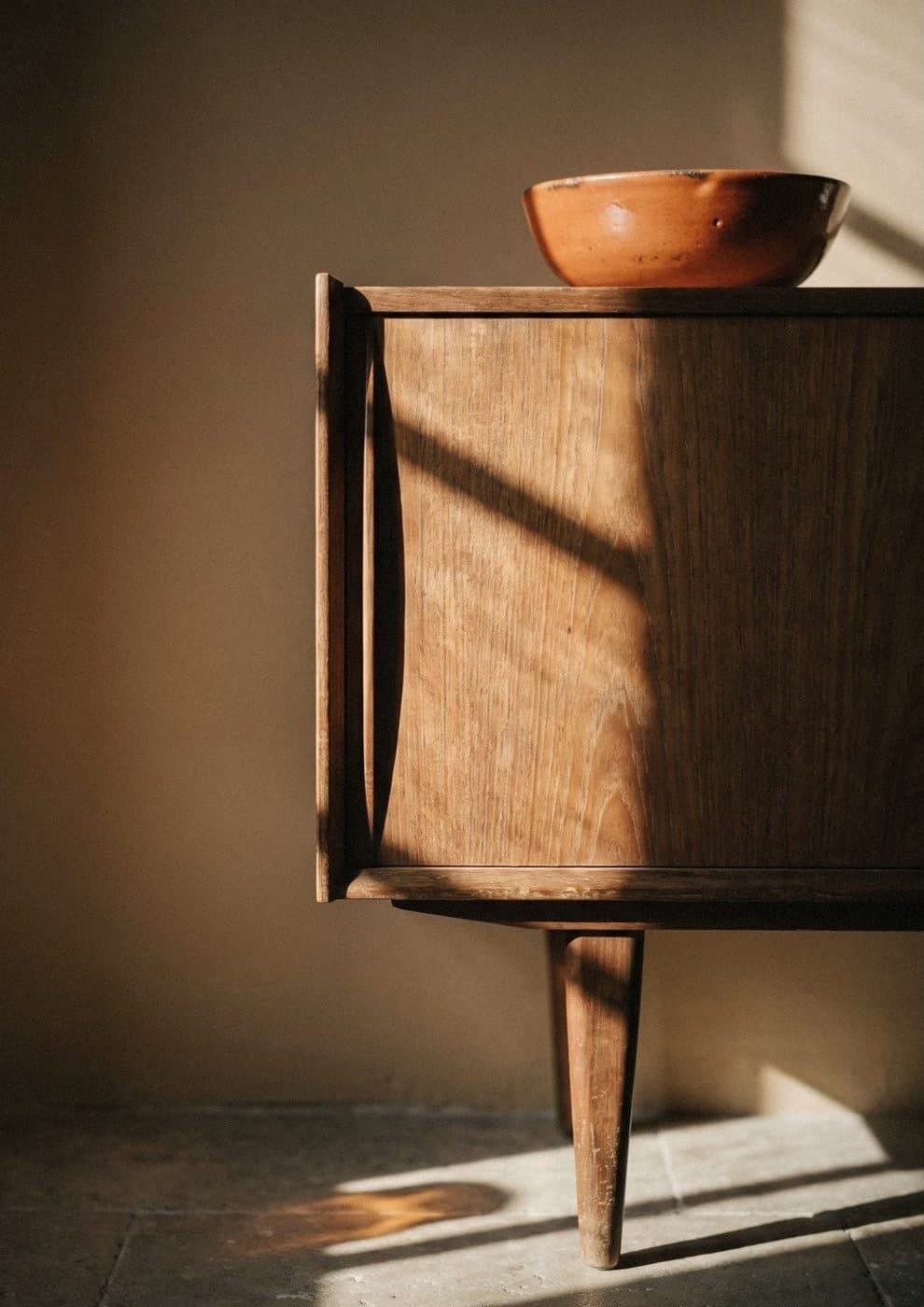
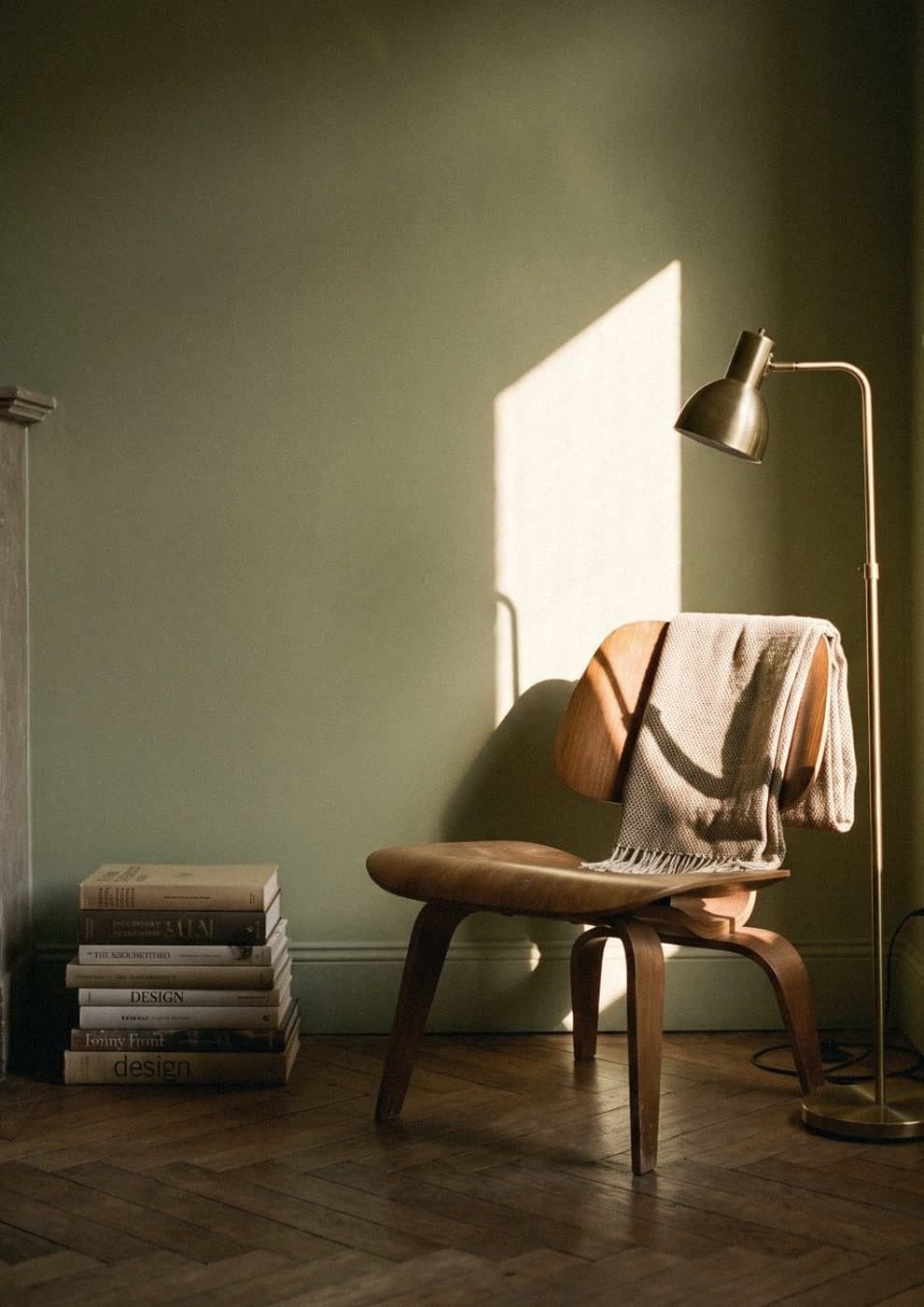
Mid-century modern is a style of home and furniture design from roughly 1945 to 1970. It is known for clean lines with soft curves, slim-legged furniture, walnut and teak, and accent colours such as mustard, olive green, brick orange and teal. In a Thai home it's easy to achieve with warm-toned walls, teak furniture and one or two accent colours.
What is mid-century modern, and where does it come from?
Mid-century modern refers to design from the middle of the 20th century, generally counted from the end of the Second World War to around 1970. It was a time of a lot of new house building, and new materials such as bent plywood, moulded plastic and fibreglass let designers try shapes that had never been possible before.
Its look sits between the seriousness of modernism and the fun of the era. Lines stay clean, but corners become rounder, chair legs are slender as high heels, and colours grow bolder.
Names that fans of the style will know include Charles and Ray Eames from America, and Arne Jacobsen and Hans Wegner from Denmark. Their work is still produced, and still copied, today.
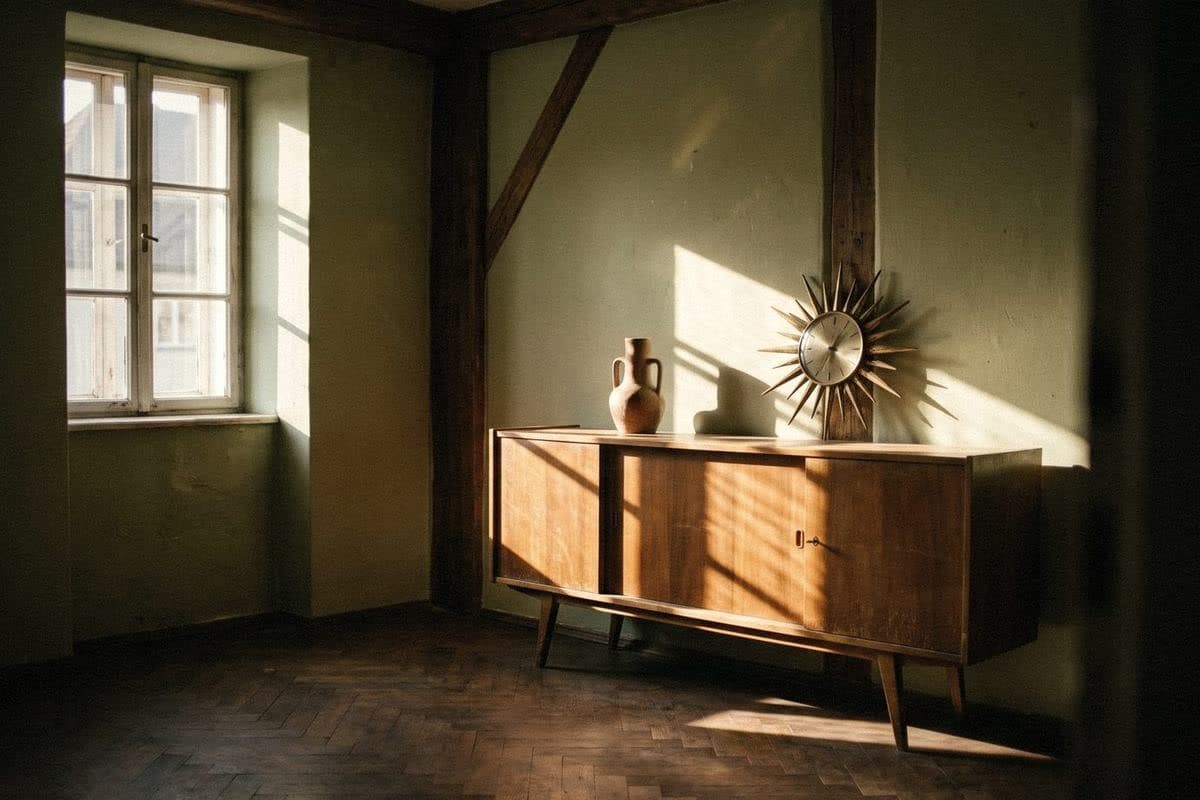
The key elements of mid-century modern
See these together in one room and there's hardly any need to guess the style.
- Furniture with slender legs, splayed legs or metal hairpin legs
- Warm, dark woods, especially walnut and teak
- Organic shapes: round tables, curved sofas, egg chairs
- Long, low cabinets and shelving, sideboard-style
- Graphic lighting: globe lamps and long-armed lamps
- Geometric patterns on rugs or fabric
- Wide windows that connect the room to the garden

Mid-century modern colours
Colour is the main mood of this style. Warm brown wood is the base, topped with accent colours that look as if they've been through an old film filter: mustard, olive green, brick orange, teal and chocolate brown.
For walls, you don't need to paint a whole room in a strong colour. An easy formula to live with is cream or warm beige for the main walls, letting the teak stand out, then an accent colour on one wall, a door or the chair cushions. If you like to be bold, a dark green or dark brown wall behind a wooden cabinet looks beautiful, straight out of a 1960s film.
- Base: cream, warm beige or warm white
- Warm accents: mustard, brick orange, caramel
- Cool accents: olive green, teal, pine green
- Dark colours for a single wall: chocolate brown or dark green

Teak and the Thai home: mid-century you may already own
The good news for Thai homes is that a lot of the simple, slim-legged teak furniture from our parents' or grandparents' generation looks very close to mid-century style: low display cabinets, slim-legged desks, rattan chairs with wooden frames. Look through the old family house or second-hand shops before buying new.
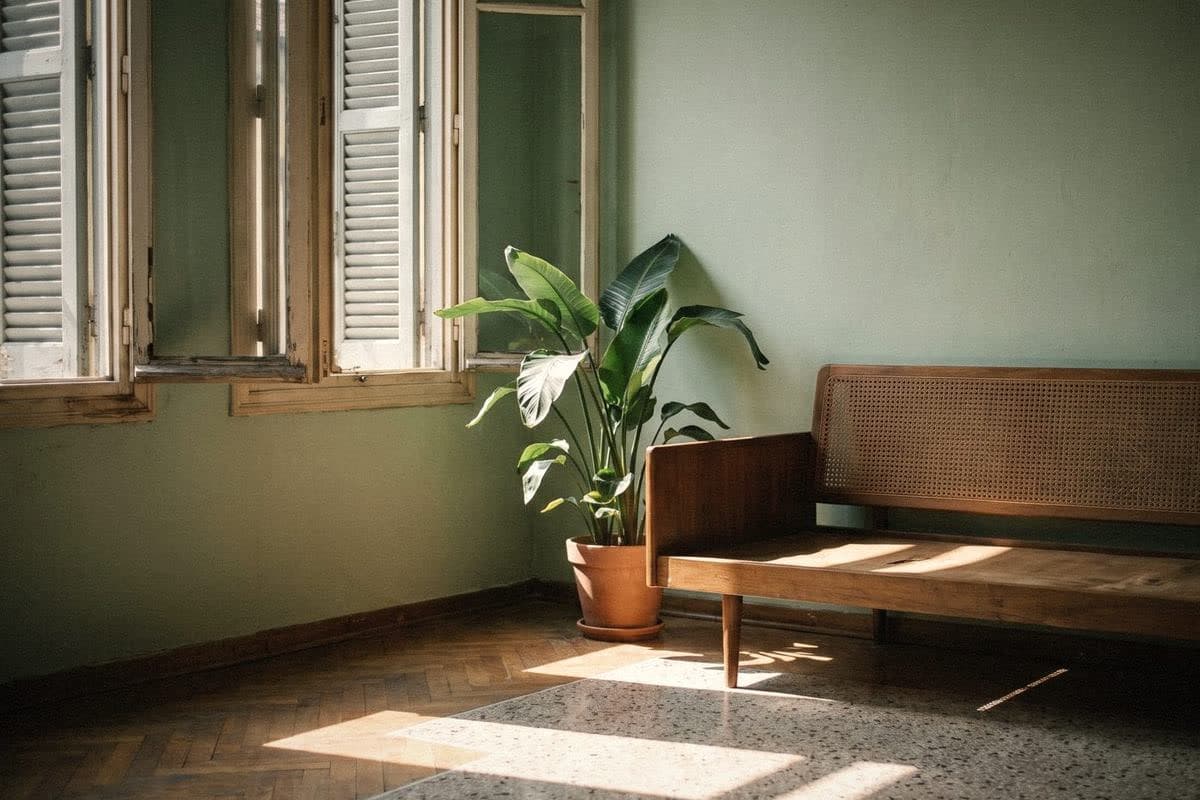
Some old pieces only need sanding and refinishing to become the star of the room again. The wall behind should be a colour that makes the wood stand out: warm cream, muted green or grey-green will make the wood look richer.
- A slim-legged teak display cabinet or low cabinet
- A rattan chair with a wooden frame, or a bentwood chair
- A round pedestal table
- An old brass lamp

Decorating a mid-century modern home in Thailand today
Thailand's hot, humid climate suits this style better than you might think, because mid-century loves rooms open to the garden, wide windows, big-leaved plants and natural materials such as rattan, wood and cotton.
What to watch out for are the velvets and thick wools you see in photos from abroad. In Thailand they can be hot and gather dust. Use tightly woven cotton or a linen blend instead.
- Living room: a slim-legged sofa, a low teak cabinet, a long-armed floor lamp, warm cream walls
- Dining room: a round pedestal table, bentwood chairs, one muted green wall
- Bedroom: a wooden headboard, bedding in mustard or brick orange
- Workspace: a slim-legged wooden desk, a curved chair, a warm brown wall
Mistakes that turn a room into a period drama set
Mid-century that looks good today isn't a copy of a whole 1960 room. It's taking the essentials and mixing them with things from the present.
If you want a 1960s accent wall but aren't brave enough yet, order Voqe sample pots and paint a test board to stand next to your real wooden furniture first. Accent colours change a great deal next to dark wood.
- Every piece is vintage, so the room looks like a museum
- More than two accent colours, so the room feels chaotic
- Too many wood tones in one room: walnut, teak and pale wood together
- Slim-legged furniture packed so tightly you can't see the legs
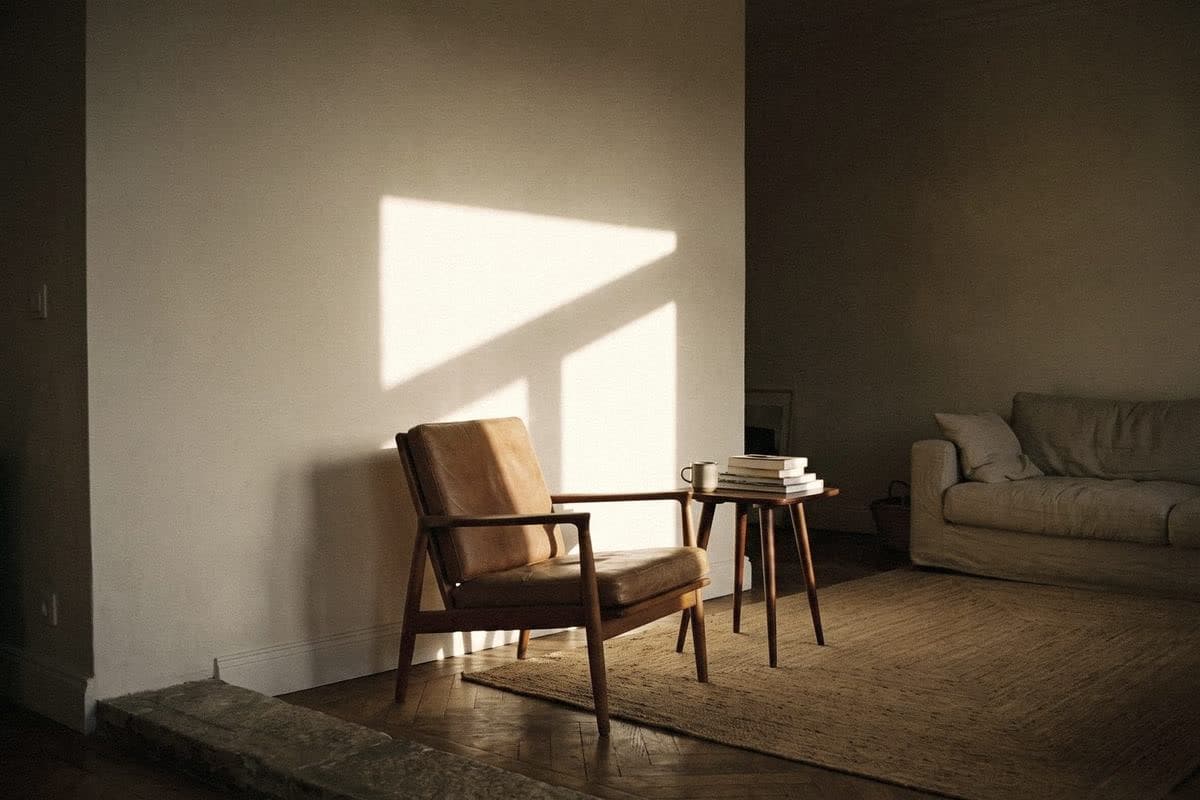
“Your grandmother's teak chair may be the coolest mid-century piece in the house.”
Frequently asked questions
What is mid-century modern?
Mid-century modern is a mid-20th-century design style known for clean lines with soft curves, slim-legged furniture, walnut and teak, and accent colours such as mustard, olive green and brick orange.
What period is mid-century modern?
It generally means roughly 1945 to 1970, or from the end of the Second World War to around the late 1960s. Some sources count a slightly wider or narrower period.
What colours does mid-century modern use?
A base of cream, warm beige or warm white with warm brown wood, accented with mustard, brick orange, olive green, teal or dark brown. Use no more than two accent colours per room.
How is mid-century modern different from modern?
Modernism is about straight lines, seriousness and industrial materials. Mid-century modern came after it and is warmer and more playful, with curves, warm wood and brighter accent colours.
Does mid-century modern suit a Thai home?
Yes. The style loves wide windows, plants and natural materials such as teak and rattan, which are already familiar in Thai homes. Just choose light fabrics that breathe well.

Colour on a screen never matches colour on a wall
Order a sample to paint at home, or come and see the full shade library at Voqe Studio, Bang Phli.
Take the quiz to find your accent shadeRead next

What home decor styles are there? 12 popular styles, all on one page
Minimal, Nordic, Muji, loft: they sound alike but they are not the same. Here are 12 interior styles on one page, with the materials and wall colours that suit each.
Read article
What is a modern-style house? Straight lines, box shapes, and colours that really work in Thailand
Modern doesn't mean the very latest. Find out what a modern house is, how it differs from contemporary, and which colours survive the Thai sun.
Read article
Khaki and brown house paint: warmth with taste
From safari-shirt khaki to dark-roast coffee brown, these colours make a home as warm as a hug on a rainy day, if you choose well.
Read article