


A minimal living room that still feels warm: how to arrange it, which colours to use, and where to spend first
Minimal doesn't mean empty. A good living room has few things, but every one of them is warm and there for a reason. Here's how to get there without stripping out the whole room.
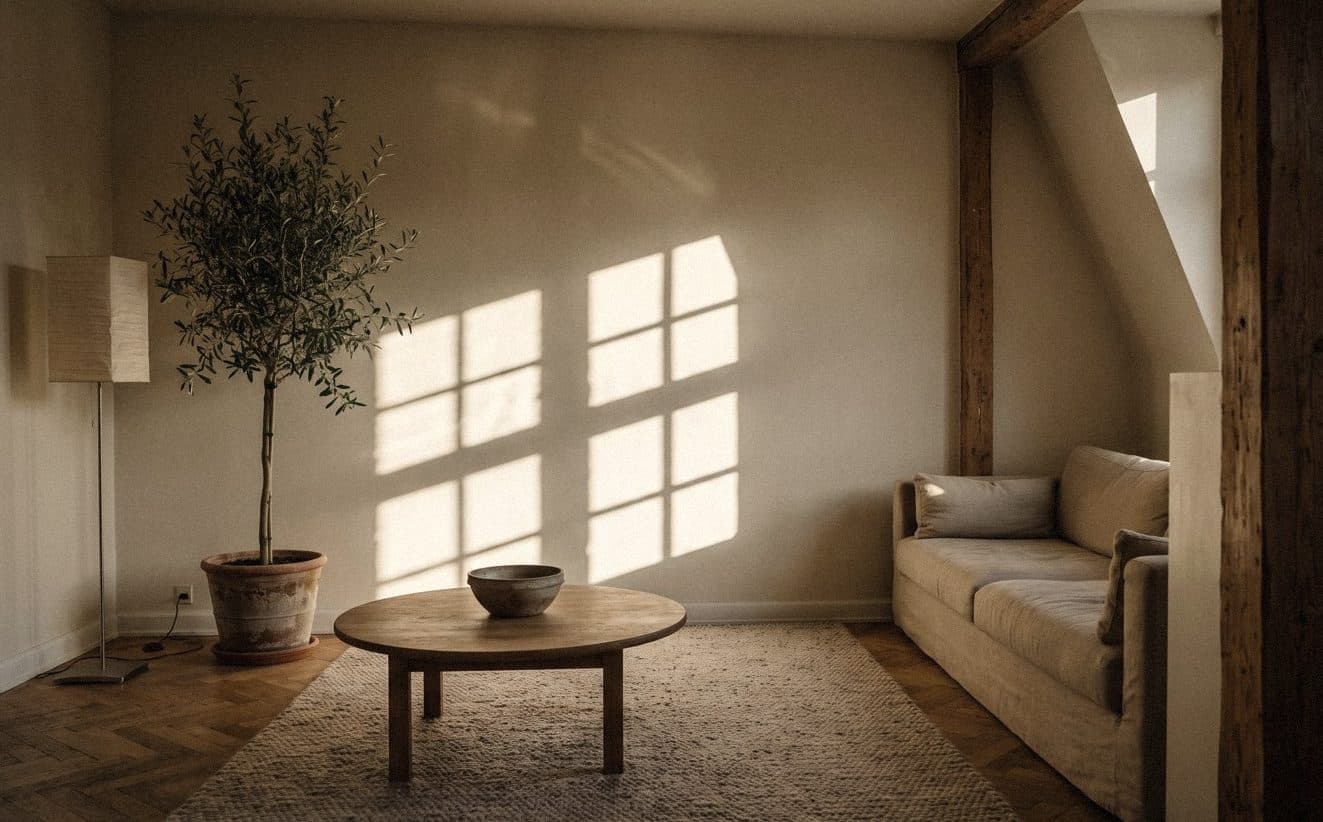
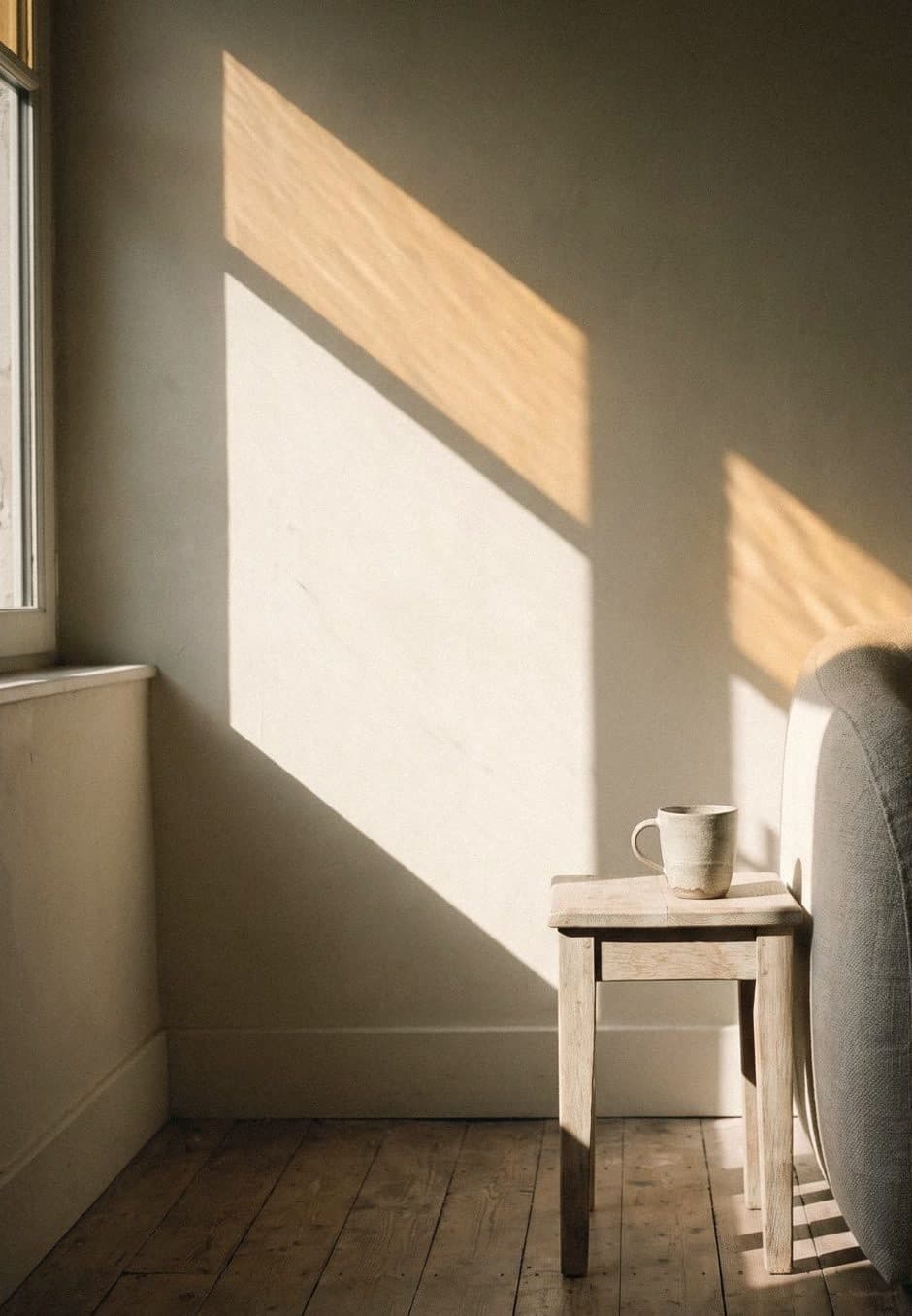
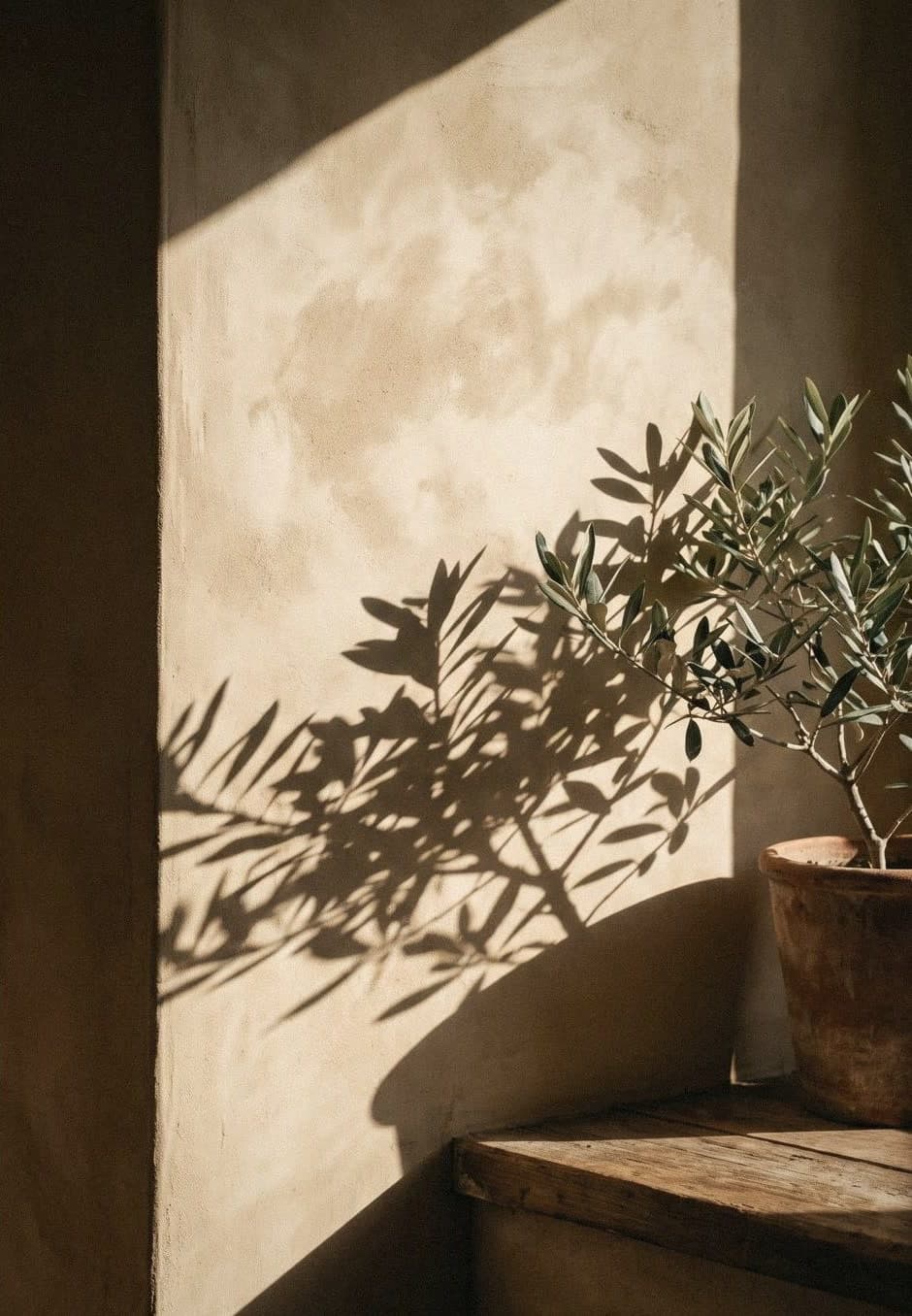
A warm minimal living room has few things, but every one of them has a job. Use a warm backdrop colour such as soft white, cream or beige, and pair it with wood, linen and several points of warm light. Start by clearing clutter and arranging the sofa so the walkway is open, then spend on painting the walls, the sofa, the rug and the lighting before you buy any decorations.
A minimal living room is not an empty room
Many people picture a minimal room as a bare white space, a grey sofa and the feeling of sitting in a waiting room for your number to be called. Rooms like that photograph well, but you don't want to stay in them long. A good minimal living room needs warmth, like a single bowl of hot khao tom (rice soup): few toppings, but delicious.
The heart of minimalism is that everything in the room is there for a reason: things you really use, things you really love, and empty space you left on purpose, not space that's empty because you haven't bought anything yet.
- Few things, but each one has a job or a meaning
- A calm, warm backdrop colour, not a stark white
- Real materials that feel warm to the touch: wood, fabric, stone, terracotta
- One focal point per room
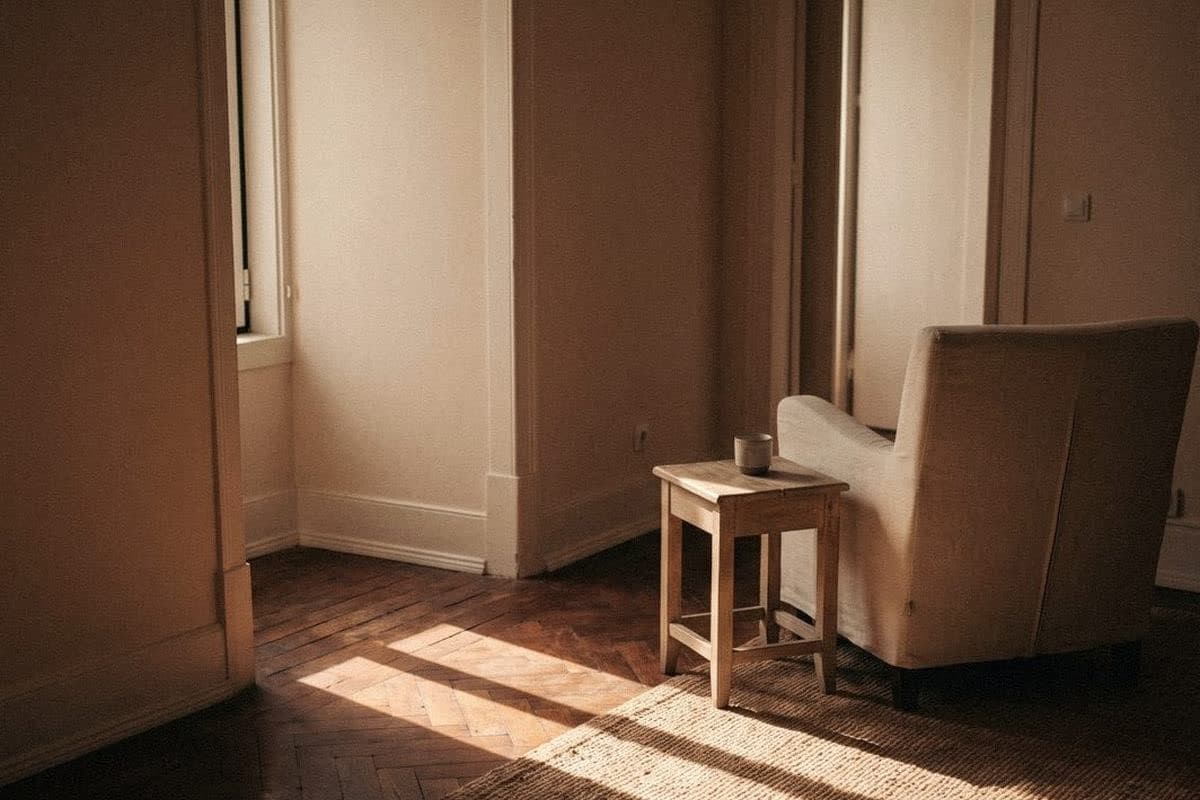
Arranging a living room starts with the sofa and the walkway
Before you buy anything, draw a simple plan of the room on paper. A minimal living room feels open because the walkway is clear, not only because there's less furniture. Leave the main walkway wide enough to pass through comfortably, and don't let it cut through the middle of the conversation area.
The sofa usually goes against the longest wall, or floats in the room facing its focal point, such as a window or the TV wall. The rug should be big enough for the front legs of the sofa and chairs to sit on it, so the room reads as one group. A small rug in the middle of the room makes everything look adrift, and the room looks smaller.
- A main walkway about 80–90 cm wide
- A coffee table about 40–45 cm from the sofa: close enough to reach, far enough not to knock your legs
- A rug big enough for the sofa's front legs to sit on it
- One focal point: the window, the wall behind the sofa or the TV wall
- One armchair or stool, instead of a second large sofa set
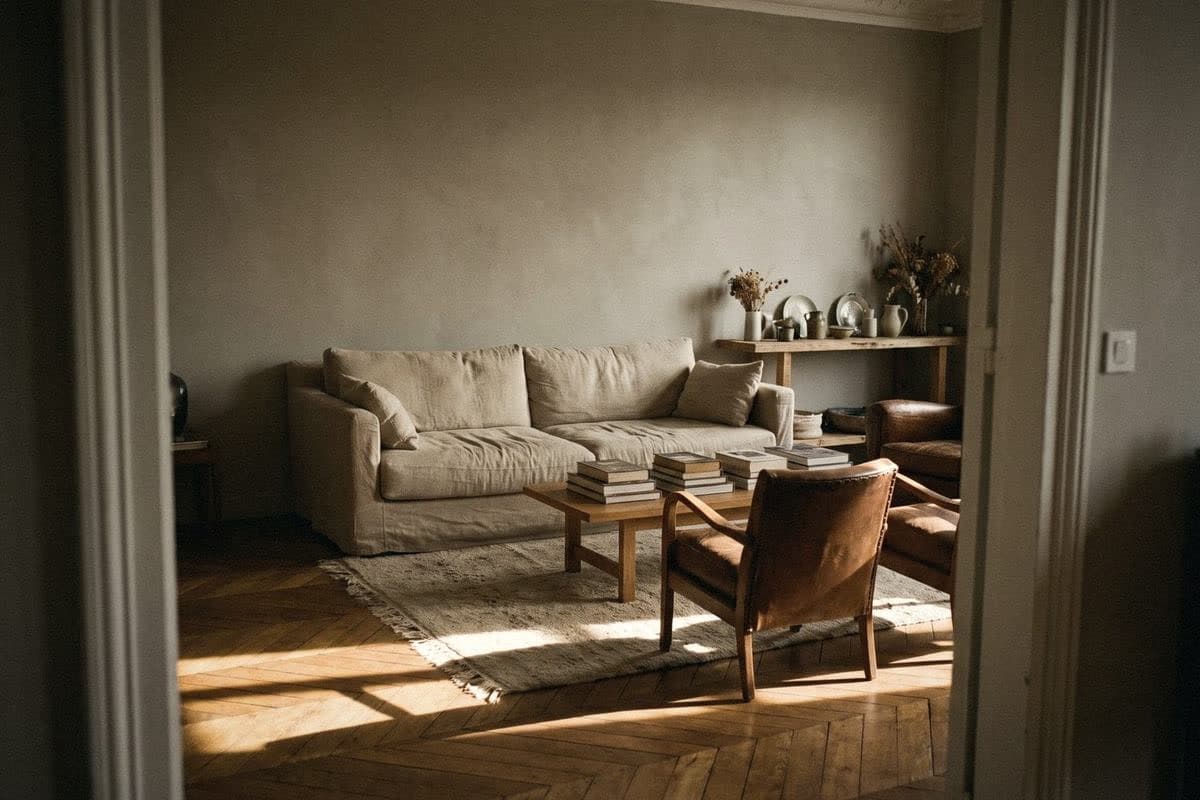
Storage: the secret of a room that looks clear
A minimal room doesn't always have fewer things than other homes. It just has better storage. Closed cabinets, either low and long or full height to the ceiling, in a colour close to the wall, blend into the room. Everything in the house disappears inside, and the room doesn't look crowded.
Open shelves still work, but use them to display a few pieces, not to store everything. Rattan baskets or fabric boxes gather small clutter, such as remotes, charging cables and magazines, into one place.
- Closed cabinets in a colour close to the wall: lots of storage, and the room doesn't look crowded
- Open shelves: just a few display pieces per shelf, with space left to breathe
- Baskets or boxes: gather small clutter into one place
- The one-in, one-out rule: when something new comes in, something old goes out
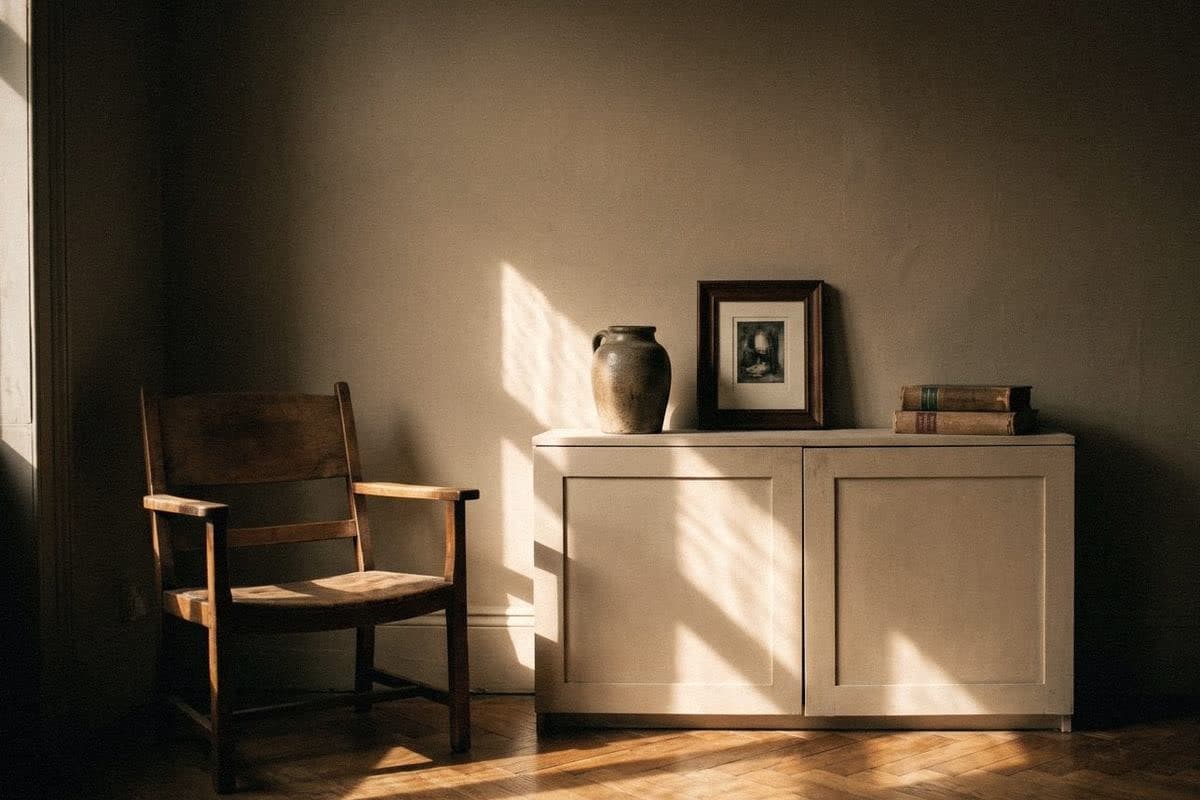
The wall behind the sofa, and a colour palette for a minimal living room
Colour is the cheapest way to warm up a minimal room. Avoid whites so white they lean blue, and choose a soft white, cream or pale beige as the main colour, about 60% of the room. The secondary colour, about 30%, comes from wood, fabric and the sofa. The last 10% is the accent, such as tea green, terracotta brown or matt black.
The wall behind the sofa is the one that does the most. Paint it one or two shades darker than the other walls, or give it a plaster-textured finish in the same tone. The room gains depth but stays calm. Window light falling across a textured wall is decoration you don't have to buy.
- Soft and warm palette: Ivory + Oatmeal + oak + Tea Leaf
- Sand and stone palette: Sand Dust + Soft Gray + dark wood + matt black
- Linen palette: Linen + soft white + rattan + terracotta
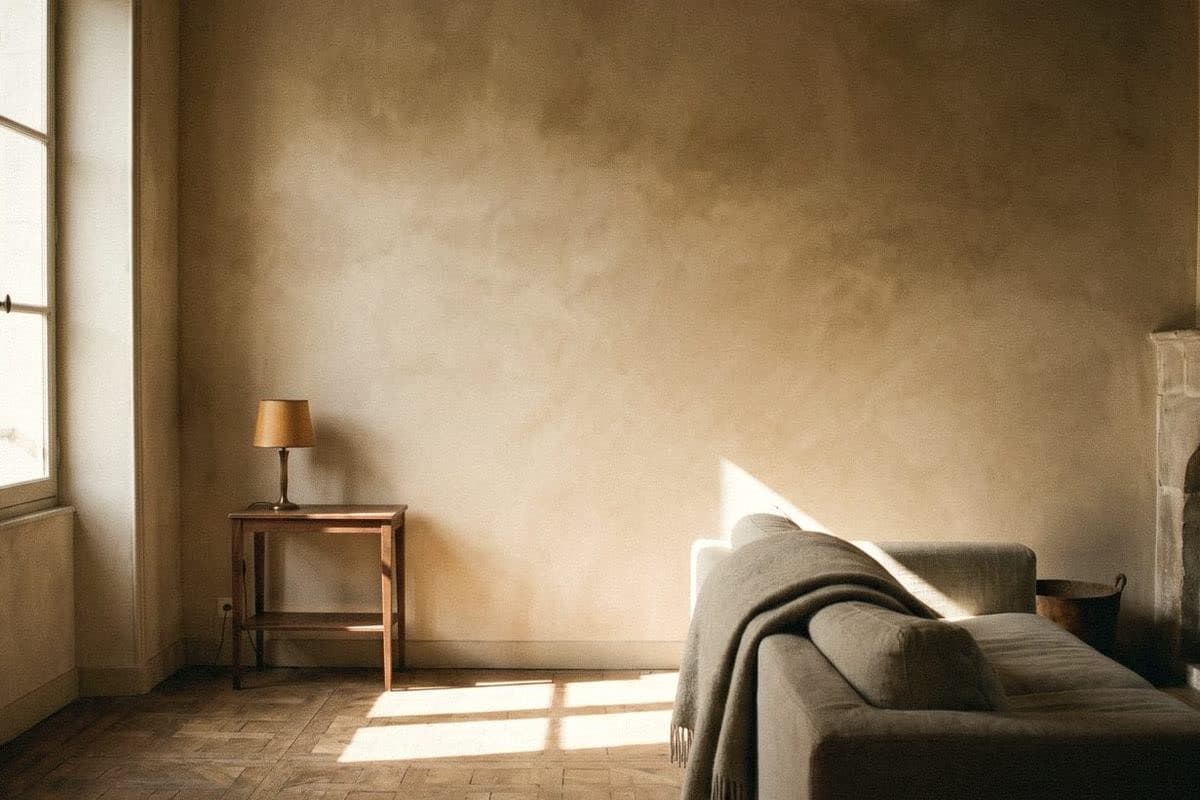
Materials, lighting and plants that keep the room from feeling cold
With fewer things, every piece is seen more clearly, so the surface of each material matters a great deal. Wood with visible grain, slightly creased linen, stone that's cool to the touch and handmade ceramics bring a plain room to life.
Lighting is where most minimal rooms go wrong. A single white ceiling light makes the room look like an office. Try several layers of light: a floor lamp beside the sofa, a table lamp and a dimmable ceiling light. Use warm bulbs of about 2700–3000K, and the room will feel warmer the moment evening comes.
One or two large plants look more minimal than ten small pots. Choose plants that genuinely like the light in your room, because a dying plant is not a decoration.
- At least three points of light: ceiling, floor lamp, table lamp
- Warm bulbs, 2700–3000K
- At least three warm materials: wood, fabric, and stone or terracotta
- One or two large plants instead of many small pots
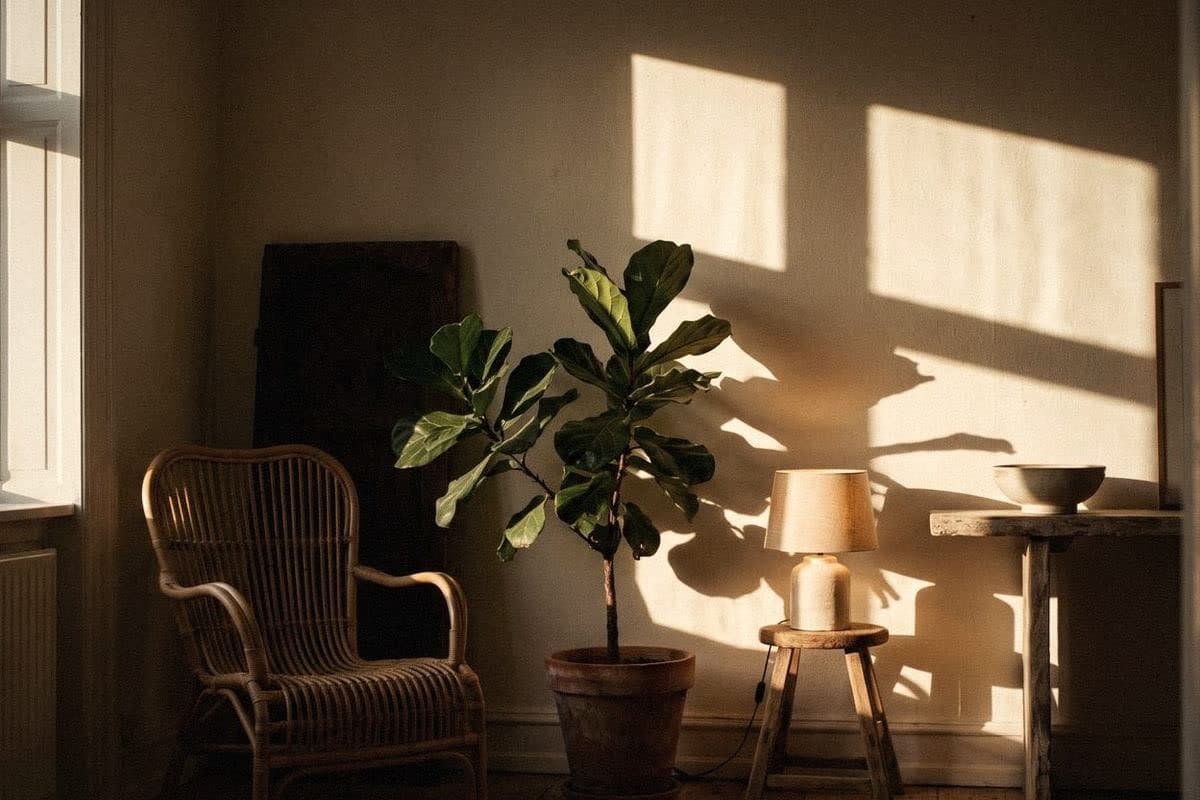
Decorating on a small budget: the order that gets the most from your money
A minimal living room doesn't have to be expensive, but you need to spend in the right order. Always clear clutter first, because it's free and the results are instant. Next comes wall colour, which changes the room more than anything else for the money. Then invest in the large pieces you use every day.
Before you paint for real, try a sample on the wall behind the sofa. If you're still torn between cream and beige, the Voqe colour quiz will help you decide faster. Leave small decorations until last, and buy them when you find the right piece, not to fill a space.
- 1. Clear clutter: free, and the biggest result
- 2. Paint the walls: the biggest change to the room for the money
- 3. Sofa: the piece you use every day, worth investing in
- 4. Rug and lighting: make the room warm and pull it together
- 5. Curtains: control the light and add softness
- 6. Decorations and plants: add them gradually
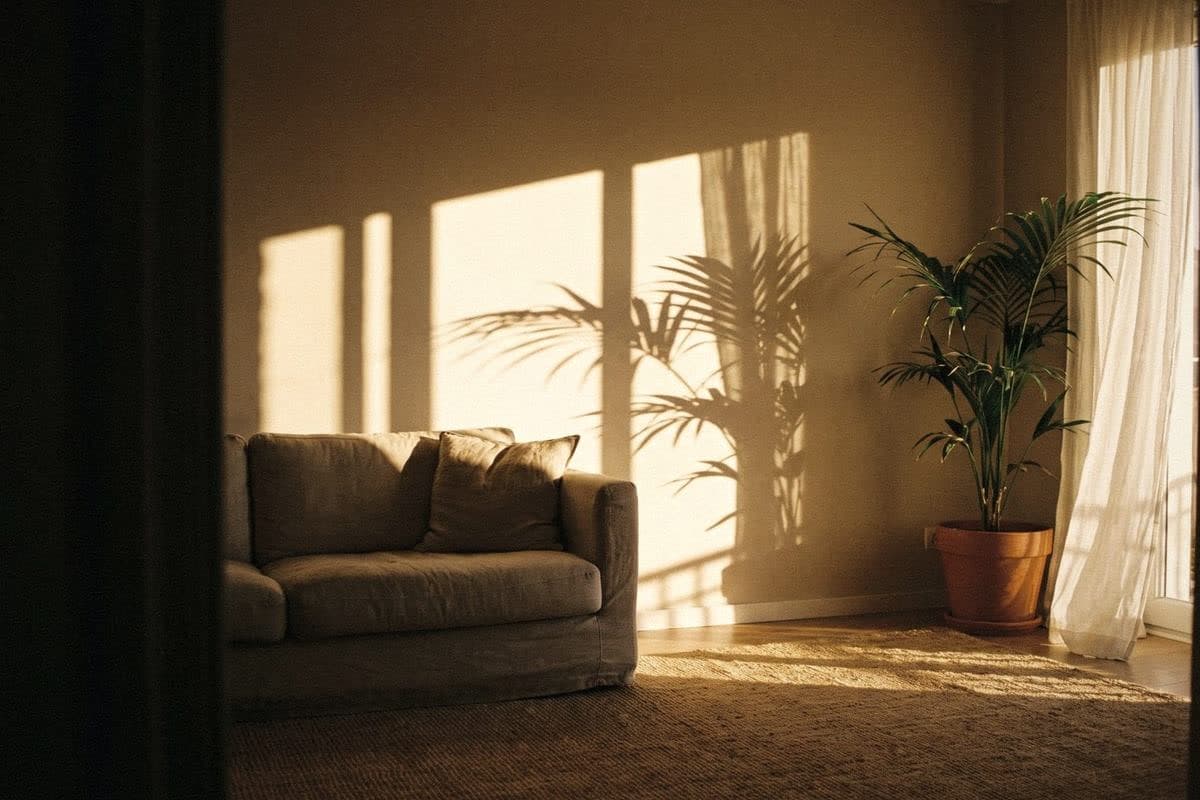
“A minimal living room isn't a room with nothing in it. It's a room where everything has its place.”
Frequently asked questions
What colour is best for a minimal living room?
Most people use a warm backdrop colour such as soft white, cream or beige as the main colour, wood and fabric as the secondary colours, then add a little accent colour, such as tea green or terracotta brown. The room looks calm but not cold.
How do I stop a minimal living room from looking too bare?
Add warm materials such as wood, linen and ceramics, use several points of warm light, use a large rug, and give the wall behind the sofa some depth with a slightly darker colour or a plaster-textured finish.
How do I decorate a small living room in a minimal style?
Use light, warm colours on both the walls and the ceiling, choose furniture on slim legs so you can see the floor underneath, use closed cabinets in a colour close to the wall, and keep the walkway clear. The room will look bigger than it really is.
How is minimal different from Japandi?
Minimal focuses mainly on simplicity and owning less, and works with many materials. Japandi blends Japanese simplicity with Scandinavian warmth, and leans more clearly on wood, natural fabrics and craft.
Where should I start when decorating a living room on a small budget?
Start by clearing clutter, then repaint the walls, which changes the room more than anything else for the money. After that, invest in the sofa, rug and lighting, and leave decorations until last.

Colour on a screen never matches colour on a wall
Order a sample to paint at home, or come and see the full shade library at Voqe Studio, Bang Phli.
Take the quiz to find your living room colourRead next
Minimal house paint: less, but never bland
A minimal home doesn't mean white from top to bottom. It means choosing few colours and choosing them well. Flat, lifeless walls don't come into it.
Read article
What is a minimal home? Not just white paint, but a way of living with less and living well
Paint the whole house white and it still isn't minimal, because minimalism starts with the layout and the storage, not the paint pot.
Read article
Living room colours: warm enough to live in all day, good enough that friends ask
The living room is the room everyone in the house uses, and the one guests see first. Choose a colour warm enough to live with all day, with just a little to talk about.
Read article