


What is a minimal home? Not just white paint, but a way of living with less and living well
Paint the whole house white and it still isn't minimal, because minimalism starts with the layout and the storage, not the paint pot.
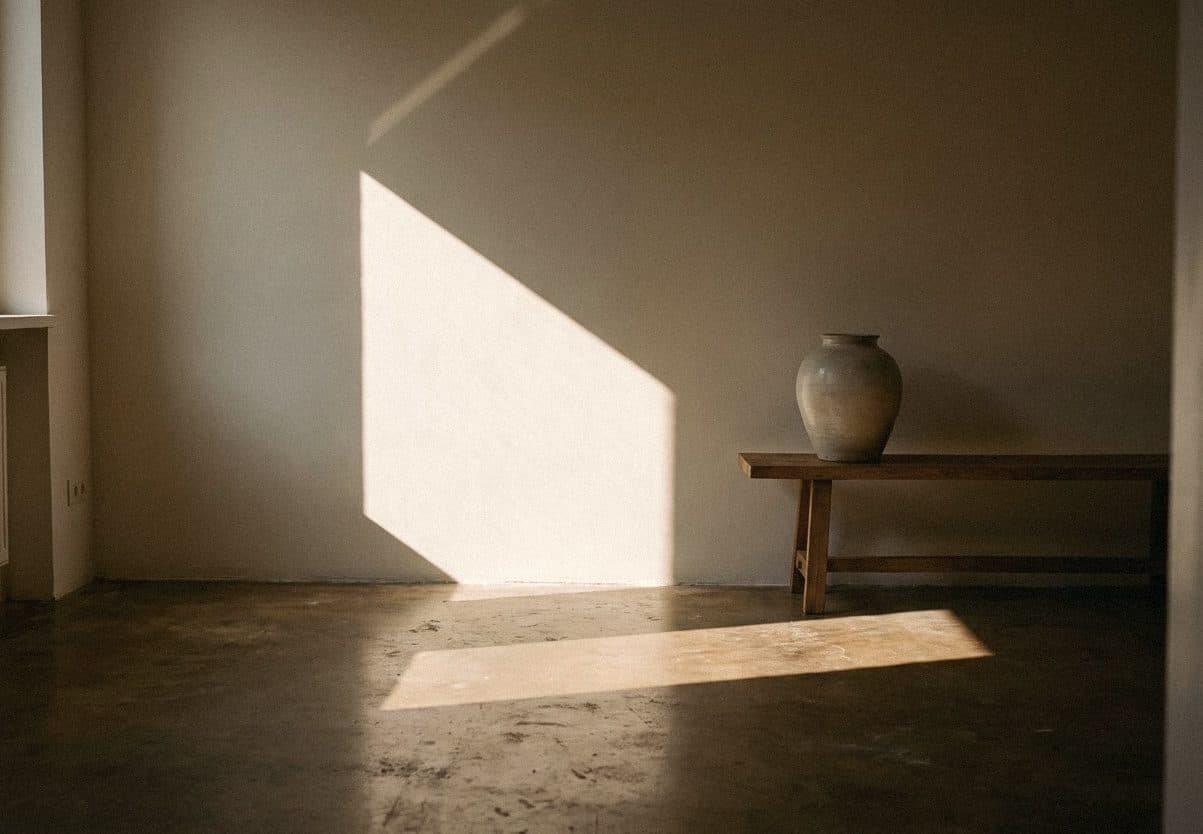
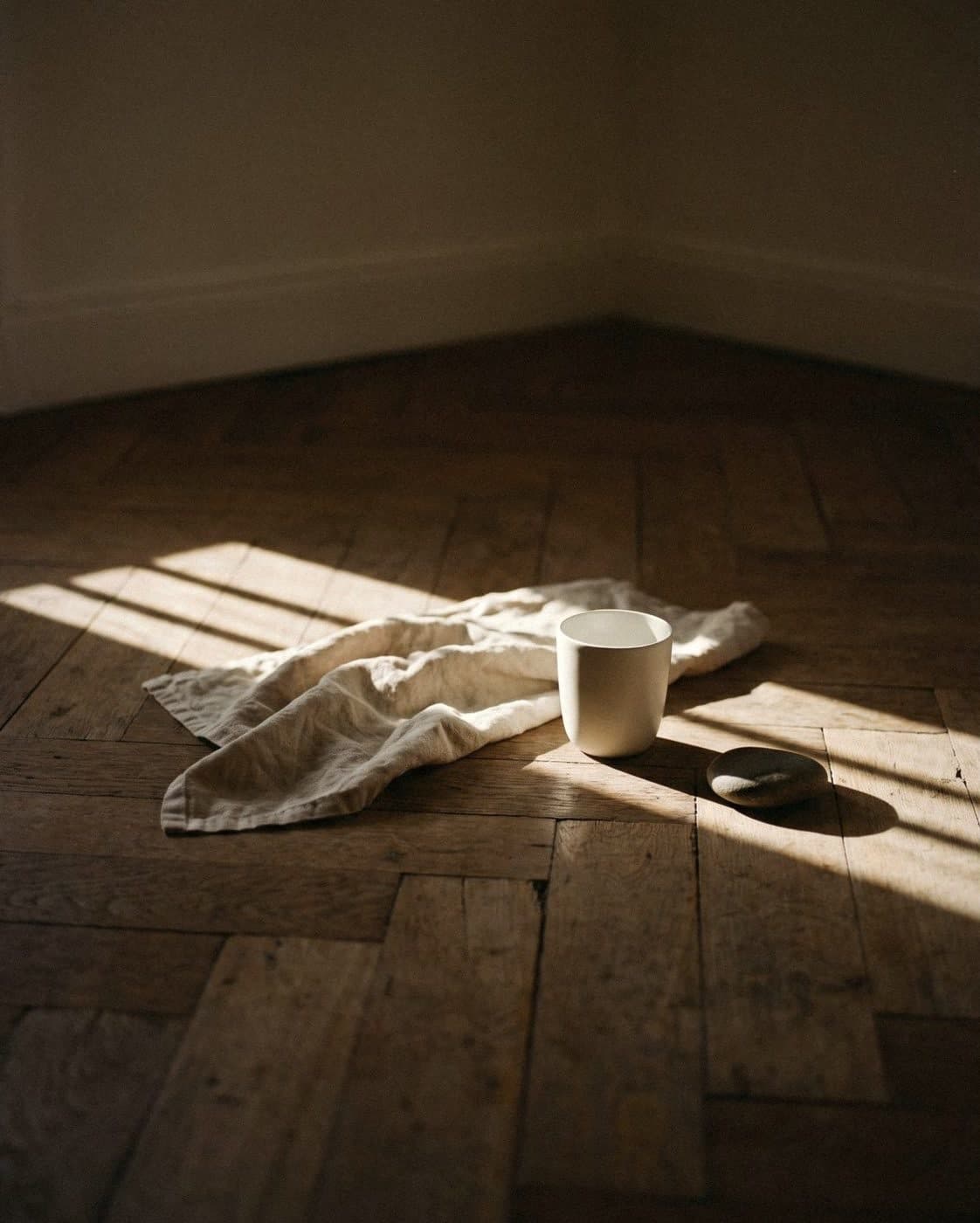
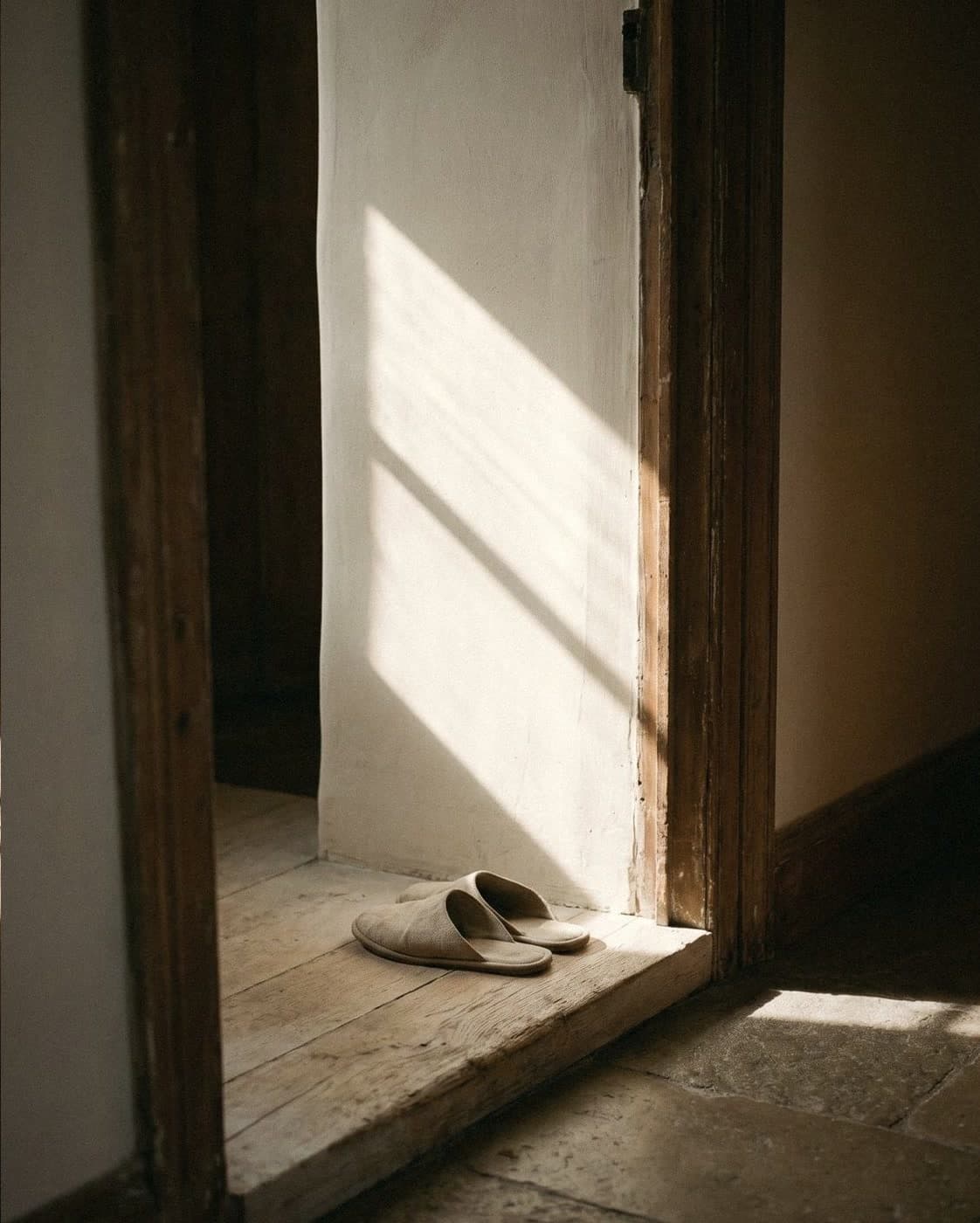
A minimal home is designed to hold only what is necessary and meaningful. It favours clean lines, empty space, storage that can be hidden away, only a few materials and a calm palette such as off-white, light grey and beige. The heart of a minimal-style home isn't white paint but planning so that the few things you own are in the right place, so the house looks clear every day, not just on the day you tidy up.
What is a minimal home? More than a white room
Minimalism is a movement in art and design that came to prominence in the mid 20th century. The core idea is to cut out what is unnecessary until only what matters remains. The phrase less is more, which people love to quote, is tied to the modernist architect Mies van der Rohe.
Many people think a minimal home means painting the whole house white and buying furniture with simple lines. But if every table is still overflowing, the house isn't minimal. It is like wearing a sleek suit with pockets bulging with receipts.
A truly minimal home starts with the question: what do we use every day, and where should those things live? Colour and furniture come later.
Layout and storage: the heart of a minimal-style home
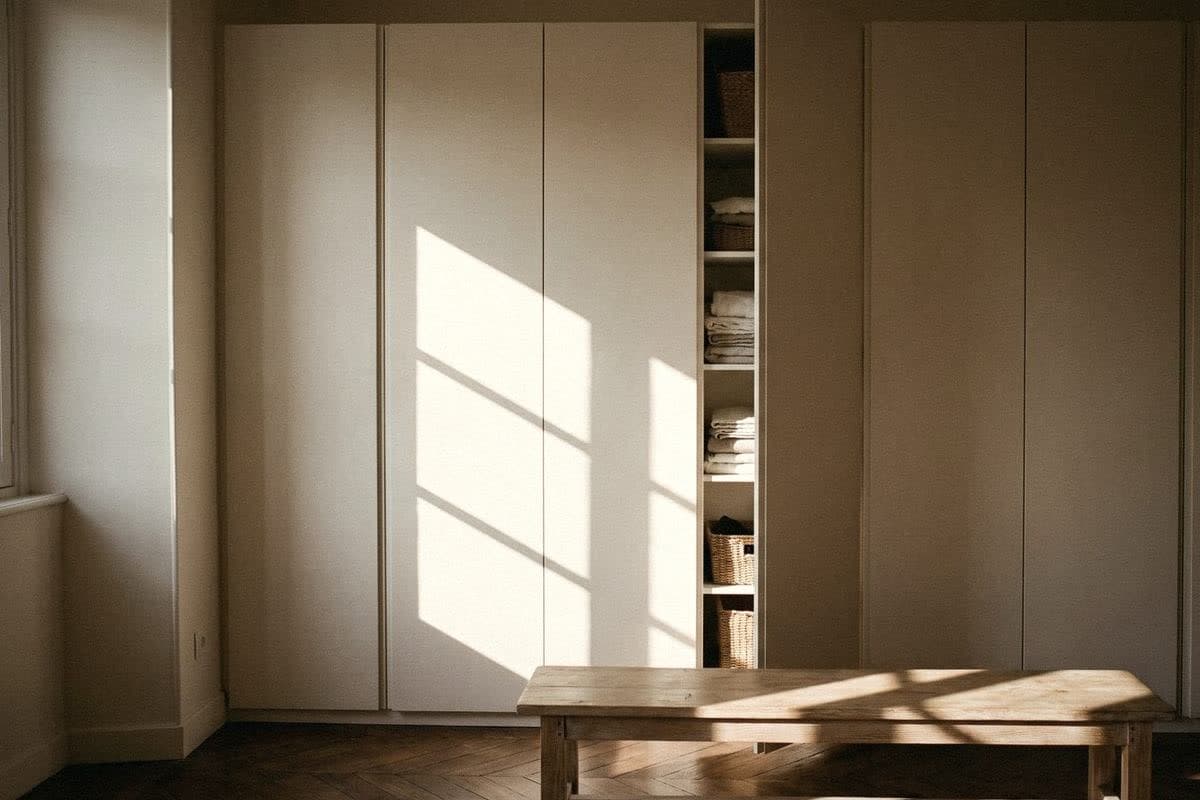
A minimal home that stays clear every day usually has more storage than meets the eye: floor-to-ceiling built-in cupboards, cupboard doors that blend into the wall, drawers under the bed, and storage near the front door.
An open layout lets light and air through, but real-life things need somewhere to land: keys, post, tote bags, charging cables. If they don't have a place, they always end up on the dining table.
- Build flush-fronted storage in the same colour as the walls
- Set aside a spot near the door for everyday things
- Choose furniture with built-in storage
- Leave at least half of every table and kitchen worktop clear
- Review your things every year, and let go of what you don't use
Materials and light in a minimal home
A minimal home uses only a few materials, but each must be good: smooth plaster, light or mid-tone wood, stone, slim metal and glass, repeated throughout the house so it feels continuous.
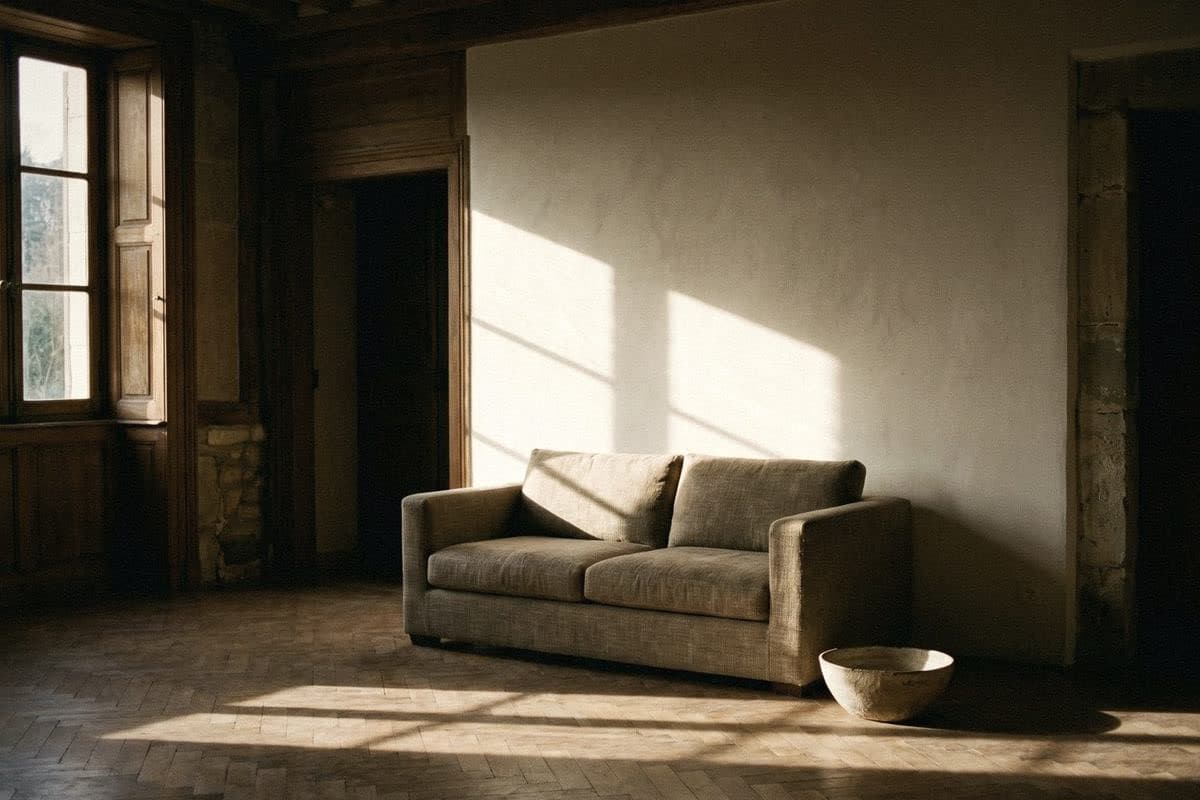
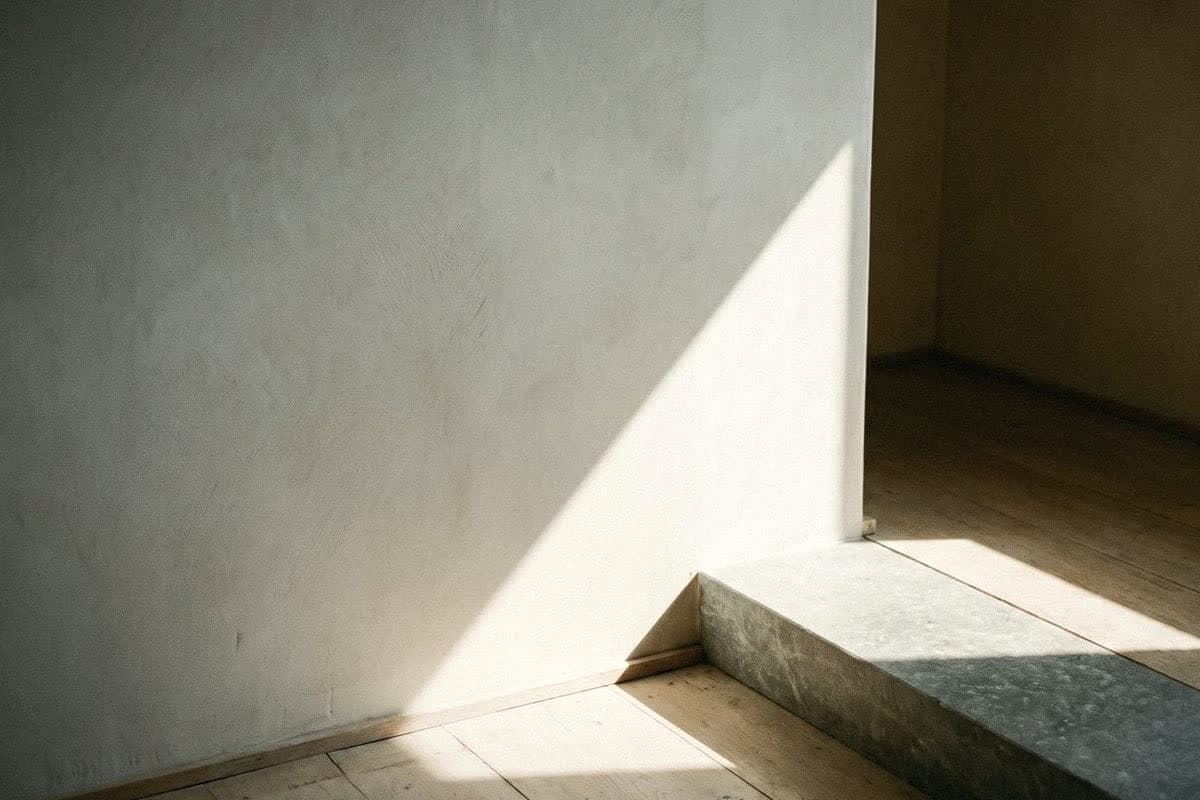
With fewer things, light and shadow become the decoration. Morning sun across a plain wall, or leaf shadows on a bare one, is more beautiful than a wall of picture frames. At night, use warm light hidden in the ceiling or under cupboards, so the room feels soft rather than hard.
The thing to watch: if everything is smooth, the room turns cold. Let one texture do the work of decoration, such as linen, a woven rug or a matt wall with depth.
Minimal home colour palettes
A minimal home isn't only white. The palette that works well is calm neutrals: off-white, cream, light grey, beige and greige. Use one main colour on most walls, then one or two more on a feature wall or furniture.
In Thai homes with strong sun, stark white can reflect so much light it glares. A creamy or greyish white is softer. In rooms with little light, warm tones keep the room from looking dull, while in very sunny rooms light grey makes them feel cooler.
- Main colour: off-white or pale cream on most walls
- Second colour: light grey or beige on a feature wall or cupboards
- Material colours: wood, stone and fabric act as a third colour without any paint

Minimal vs Japandi vs Muji: what's the difference?
These three styles look so alike that people often confuse them. All of them like few things and calm colours, but they feel different. If you still can't choose, ask yourself whether you prefer precision, warmth or ease.
- Minimal: plain, crisp and precise, with smooth materials, in cool or warm tones
- Japandi: Japanese mixed with Scandinavian, with mid to dark wood, low furniture and natural textures; warmer than minimal
- Muji: light wood, cotton and linen, organised storage boxes; friendly-looking and focused on easy living rather than luxury
Minimal homes in Thailand, and the most common mistakes
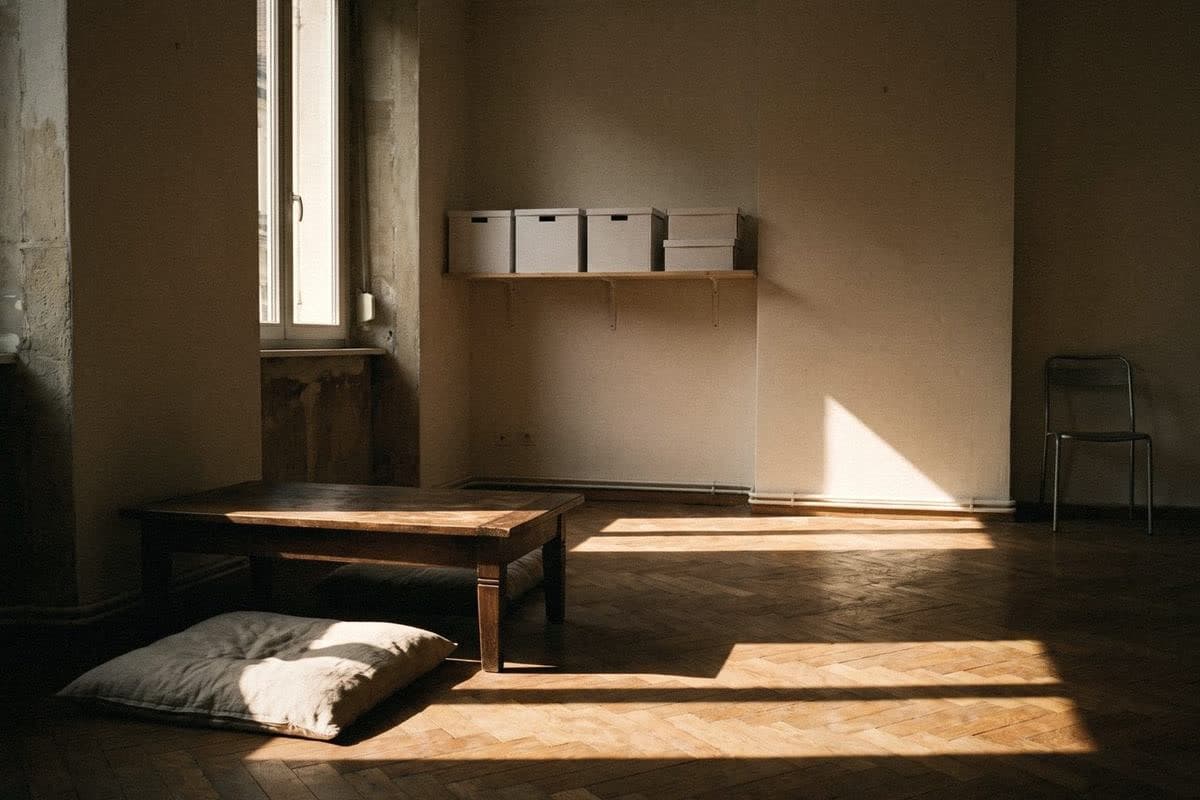
Thai homes naturally have a lot of things: gifts and souvenirs, offerings for making merit, plastic bags kept just in case. A minimal home that survives has to be designed with storage for real life, not life in a magazine.
The hot, humid climate matters too. Plain light walls show marks easily, so ventilate well and choose a paint you can wipe clean. If you want to see which off-white or beige suits the real light in your home, order a few Voqe sample pots and paint them side by side in the room first.
- Painting the whole house white but not building any storage
- Buying something new every time you see a minimal look you like
- No texture at all, so the room feels as hard as an office
- Cool white lighting throughout, so the home looks like a clinic
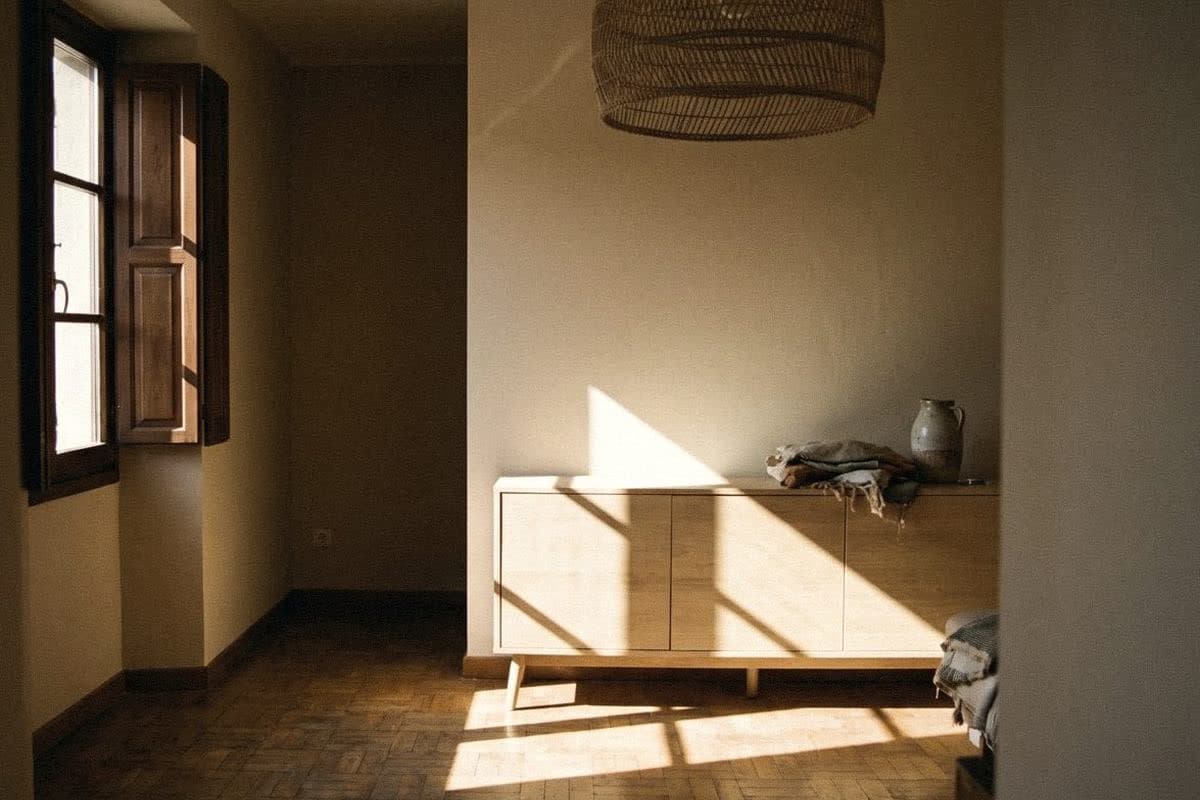
“A minimal home doesn't start at the furniture shop. It starts with the first bin bag.”
Frequently asked questions
What is a minimal home?
A minimal home holds only what is necessary and meaningful, with clean lines, empty space, hidden storage, few materials and calm colours. Its heart is the layout and storage, not just white paint.
What colours suit a minimal-style home?
Calm neutrals such as off-white, cream, light grey and beige. Choose one main colour for most walls, then one or two more for a feature wall. In very sunny rooms, choose a creamy or greyish white instead of stark white.
What is the difference between a minimal home and Japandi?
Minimal is about crisp simplicity and smooth surfaces. Japandi blends Japanese calm with Scandinavian warmth, using mid to dark wood, low furniture and more natural texture.
What does a minimal house look like from the outside?
Usually a simple shape, such as a box or a clean-lined gable, with no mouldings or ornament. It uses only a few materials, white, grey or beige exterior colours, and neatly hides gutters, pipes and air-conditioning units.
Does a minimal home suit a family with children?
Yes, if you plan storage for toys and everyday things from the start and choose wall finishes and furniture that are easy to clean. A home with fewer things is also quicker to tidy.

Colour on a screen never matches colour on a wall
Order a sample to paint at home, or come and see the full shade library at Voqe Studio, Bang Phli.
Order calm-tone sample jarsRead next

What home decor styles are there? 12 popular styles, all on one page
Minimal, Nordic, Muji, loft: they sound alike but they are not the same. Here are 12 interior styles on one page, with the materials and wall colours that suit each.
Read article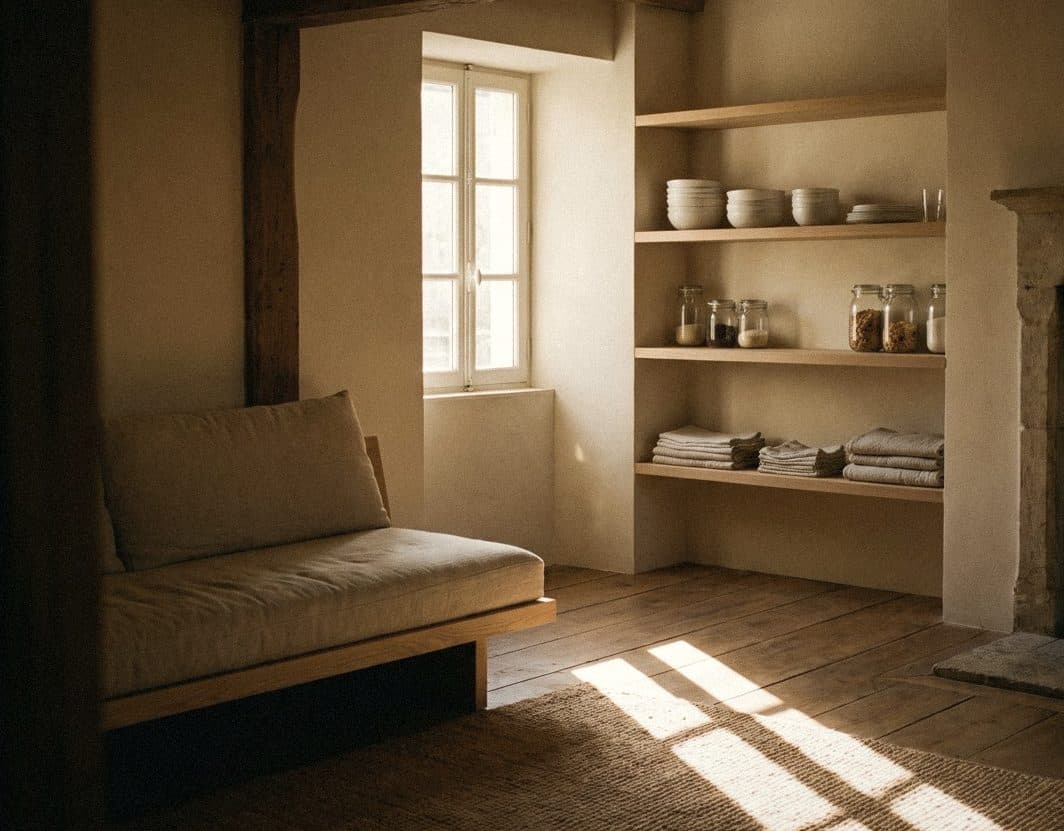
Muji-style homes: simple, warm, easy-to-live-with decor without buying from one brand
Pale wood, soft white walls, linen and boxes that fit their shelves. You can get the Muji look without anyone's logo in your home.
Read article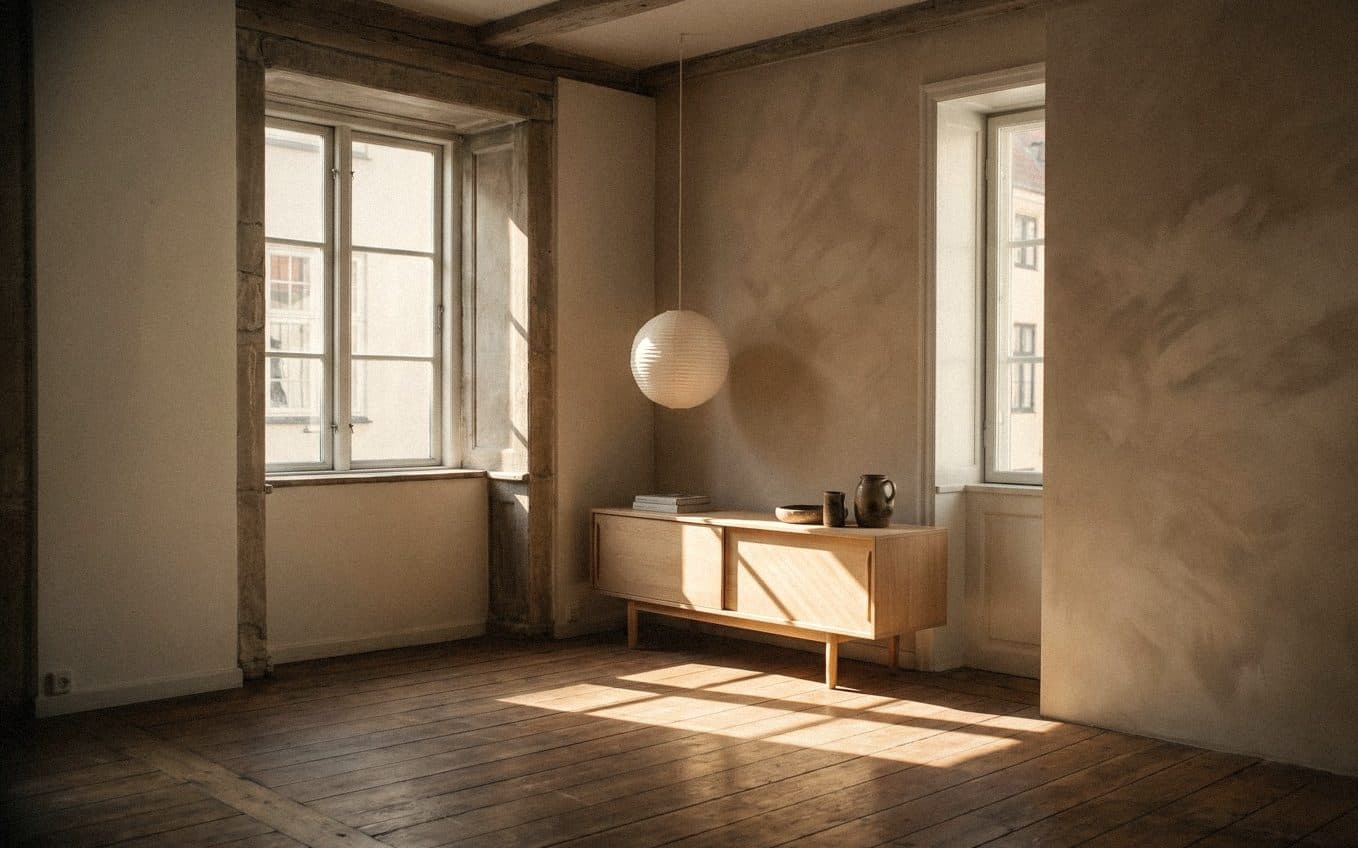
Japanese-style and Japandi homes in the Thai climate: how to choose wall colours
Traditional Japanese or Japandi, either can look beautiful in a tropical home, as long as you choose wall colours that are calm and stand up to humidity.
Read article