


Muji-style homes: simple, warm, easy-to-live-with decor without buying from one brand
Pale wood, soft white walls, linen and boxes that fit their shelves. You can get the Muji look without anyone's logo in your home.
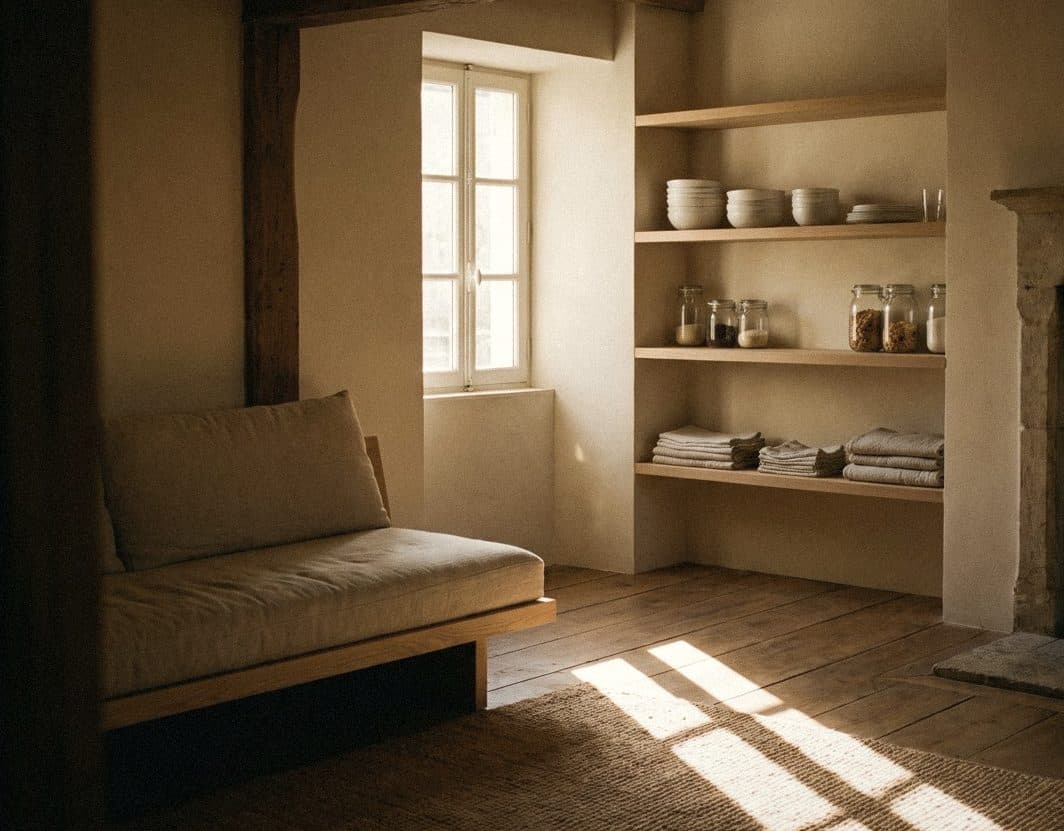
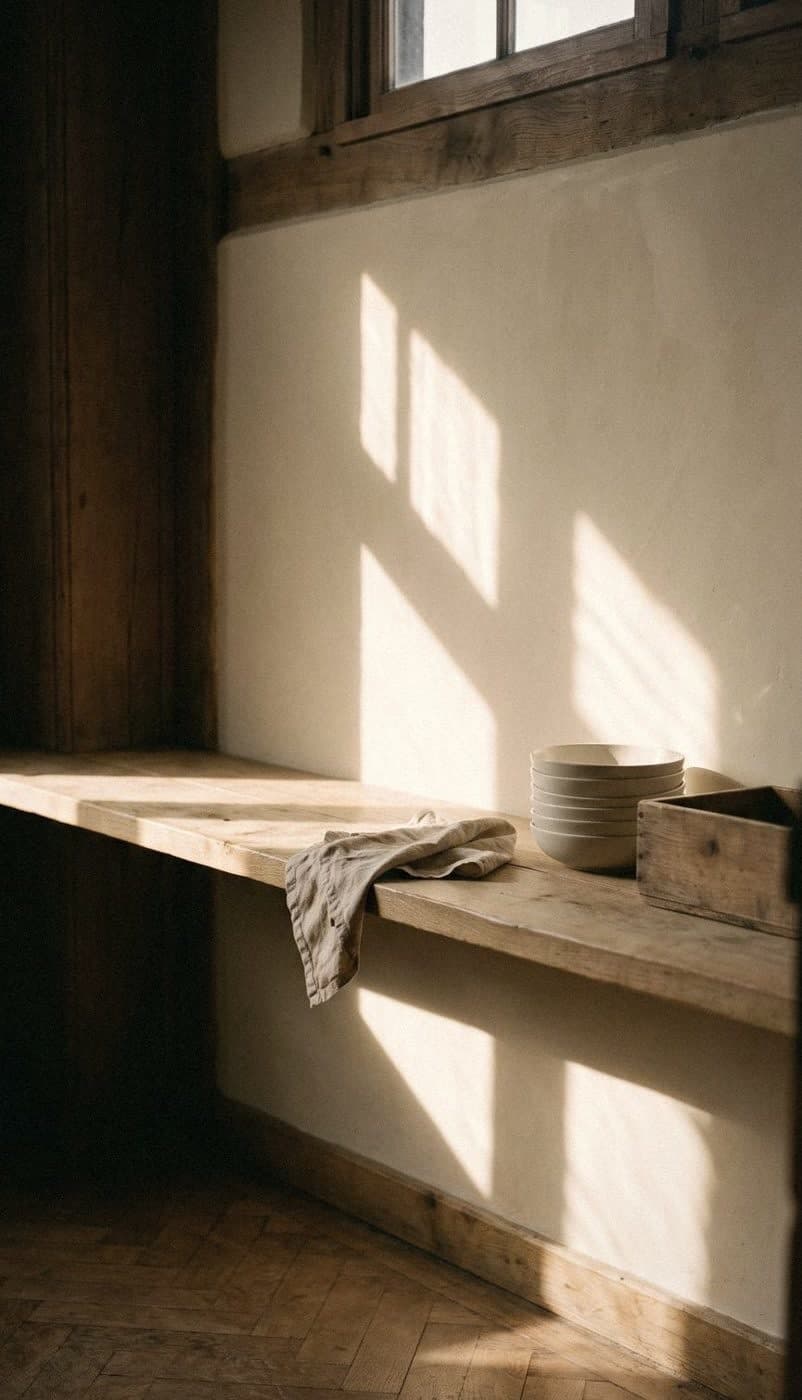
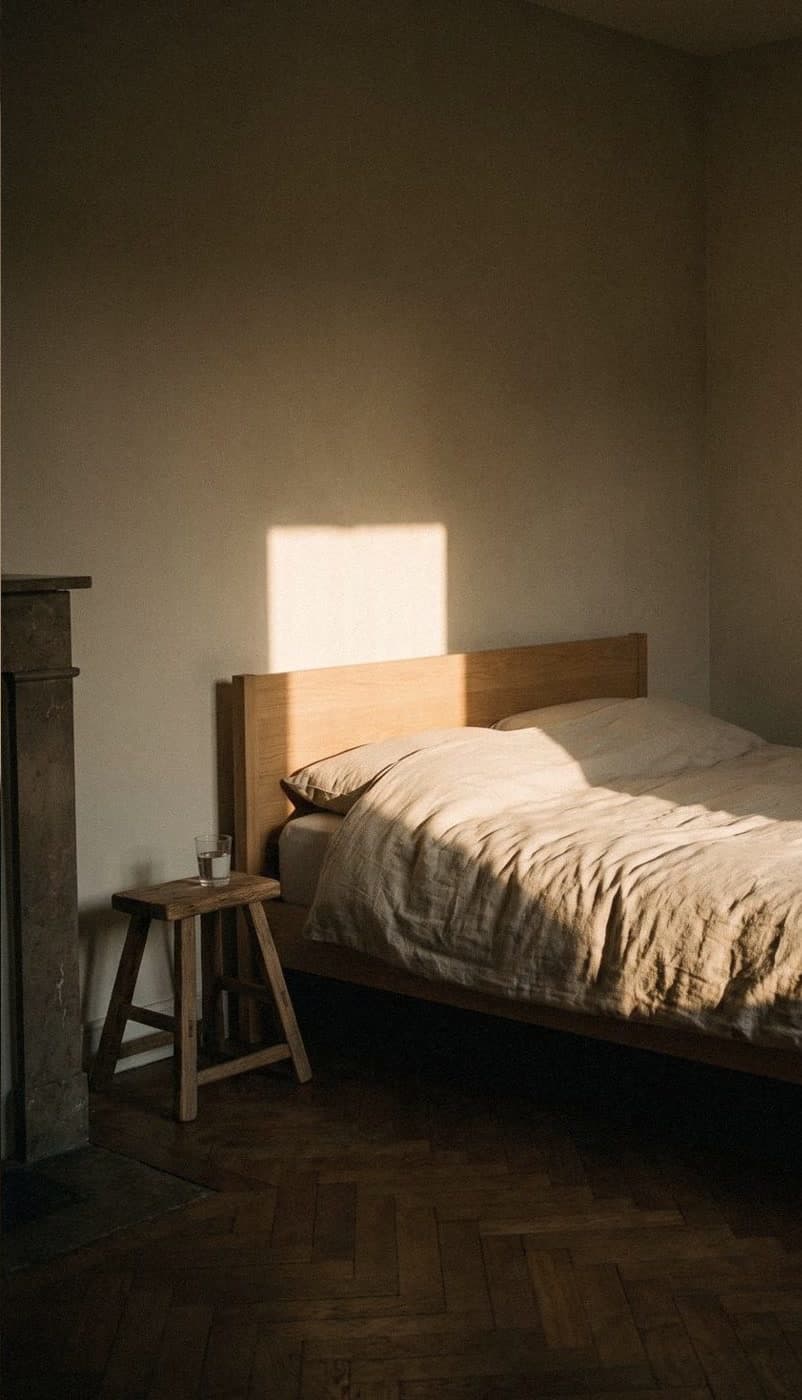
A Muji-style home is decorated along the lines of Muji, the Japanese brand known for simple, logo-free, practical goods. Its key elements are pale wood, soft off-white or cream walls, natural cotton and linen, and orderly storage. You don't need to buy from one brand: just choose things that are simple, durable and go together.
What is a Muji-style home?
Muji is short for Mujirushi Ryohin, Japanese for roughly "no-brand quality goods". The idea is everyday things with the excess cut away: no big logos, no loud patterns, natural colours, and made to last.
When people brought this thinking into their homes, the "Muji-style home" was born: simple, bright, warm and orderly. Like a bowl of hot khao tom (rice soup) in the morning, it's nothing showy, but you could have it every day and never tire of it.
Where it differs from strict minimalism is that a Muji home isn't trying to look luxurious. It's trying to look easy to use. Some things can simply sit out on display, because they are everyday objects that are already beautiful.
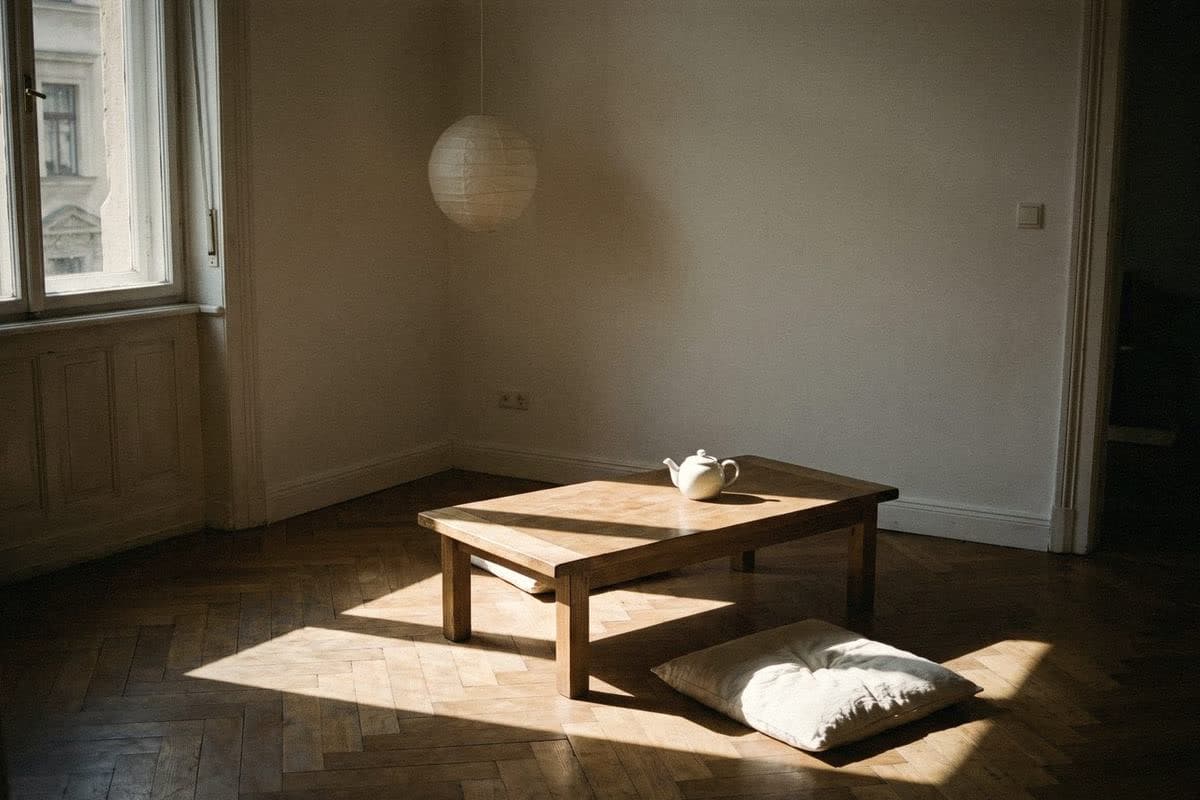
The key elements of a Muji home
Put as briefly as possible, a Muji home comes down to these six things. Missing one or two is fine, but tick off more than half and your home will start to feel Muji straight away.
- Pale wood, such as oak, ash or natural-toned rubberwood, for floors, shelves and furniture
- Walls in soft off-white, warm white or pale cream, never stark white
- Cotton and linen in natural colours: white, grey, light brown and navy
- Boxes and shelving in standard sizes that fit their spaces exactly
- Simple, fairly low furniture that's easy to move around
- A few small pot plants
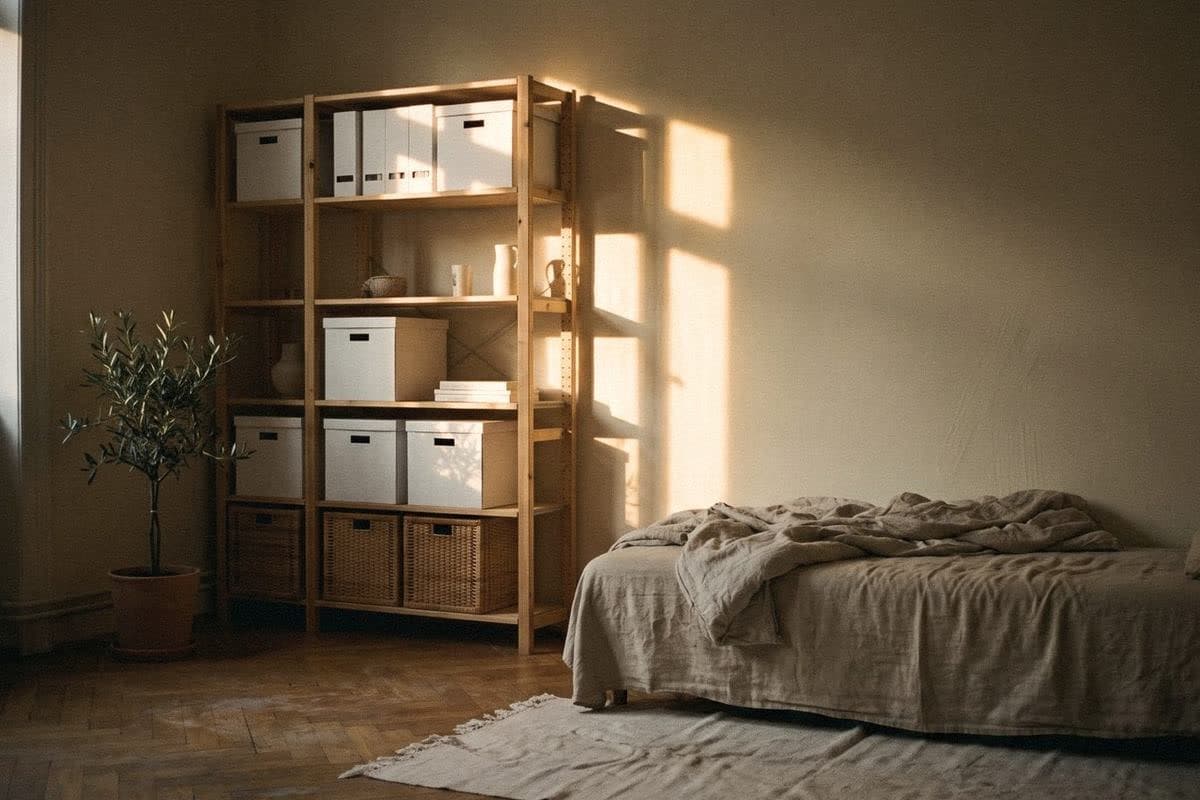
The Muji colour palette
The colours of a Muji home are the colours of natural materials: paper white, rice cream, wood brown, stone grey and the navy of dyed cotton. The walls are a bright, soft backdrop that lets the wood and fabric take the lead.
The trick is to choose a white with a little warmth, because stark white walls and pale wood look disconnected. A warm white or cream blends with the wood until the room reads as one piece. If you want some colour, use a muted grey-green or navy in fabrics, or on one small wall.
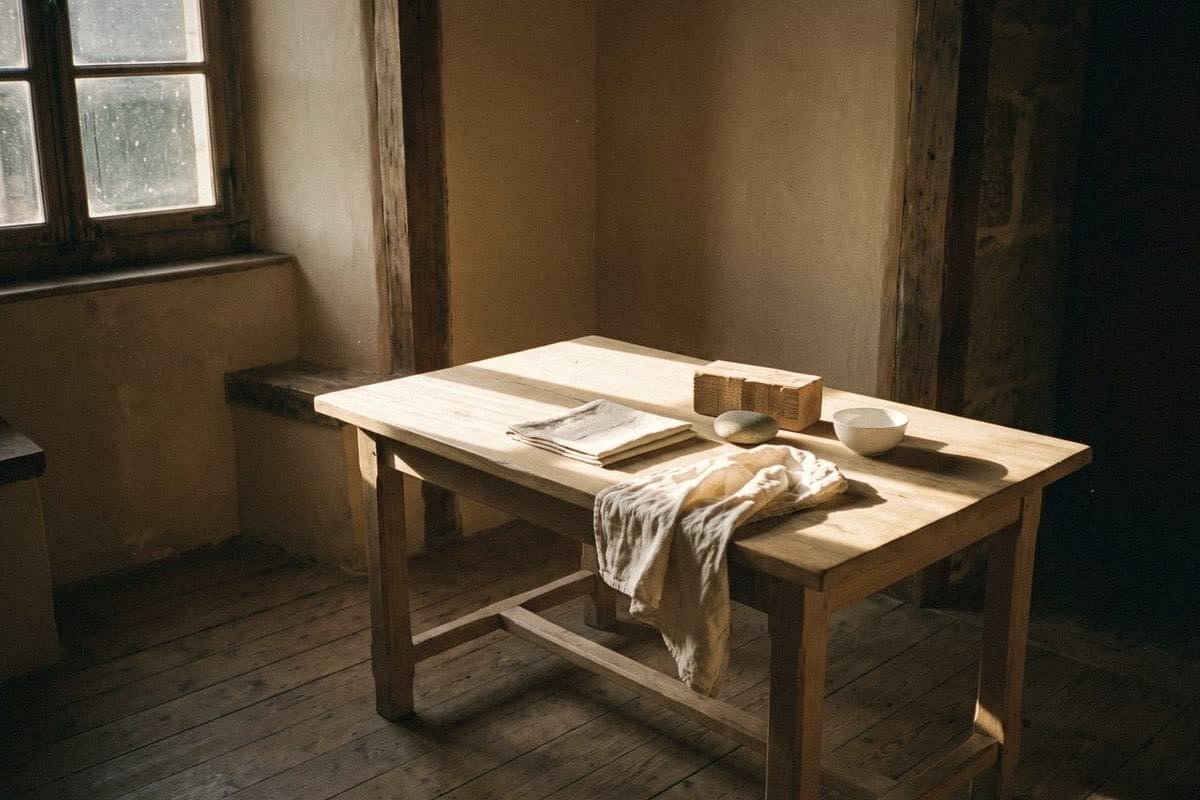
Get the Muji look without buying from one brand
A Muji home doesn't need anyone's logo in it. What makes a home look Muji is the principle, not the price tag. Things from the shop down the road, Thai wooden furniture or old pieces from your mum's house can all fit in, as long as they meet a few conditions.
Woven baskets, reed mats and Thai basketry suit a Muji home very well, because they too are natural materials made to be used.
- Plain colours, no big patterns, no logos
- Real materials: wood, fabric, ceramic, glass
- Sizes that match, so they line up neatly
- Versatile and easy to move
- Repairable and long-lasting
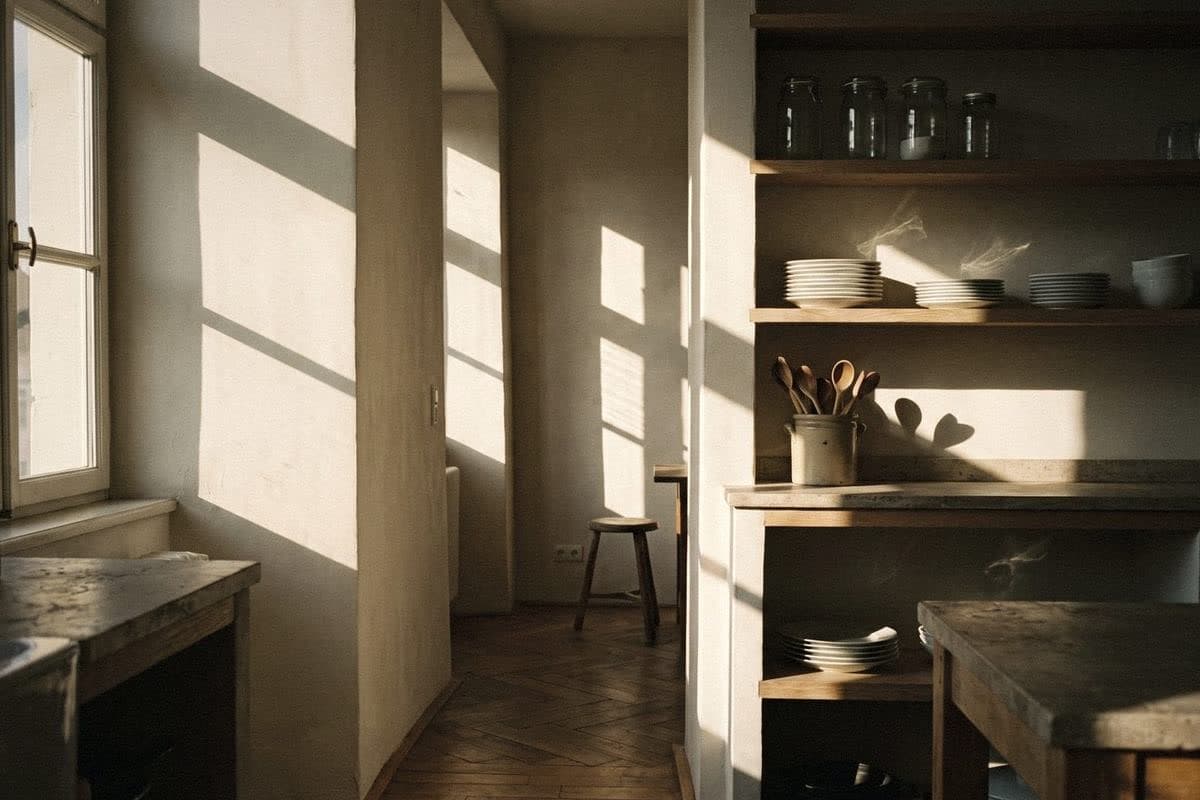
The Muji-style home in Thai condos and houses
Thai condos are often small, with windows on one side only and more belongings than the room can hold. The Muji approach helps here, because it focuses on storage systems, and pale walls spread the light from a single window across the whole room.
In a hot, humid Thai home, linen and cotton work better than heavy fabrics. Wood should be sealed against moisture, and don't forget to give storage cupboards some ventilation so they don't smell musty.
- Condo: a bed with drawers, tall shelving, a folding table, warm white walls throughout
- Townhouse: cupboards under the stairs, open wood shelves in the kitchen, wood or wood-look floors
- Detached house: a window seat, linen curtains, a wooden veranda under the eaves
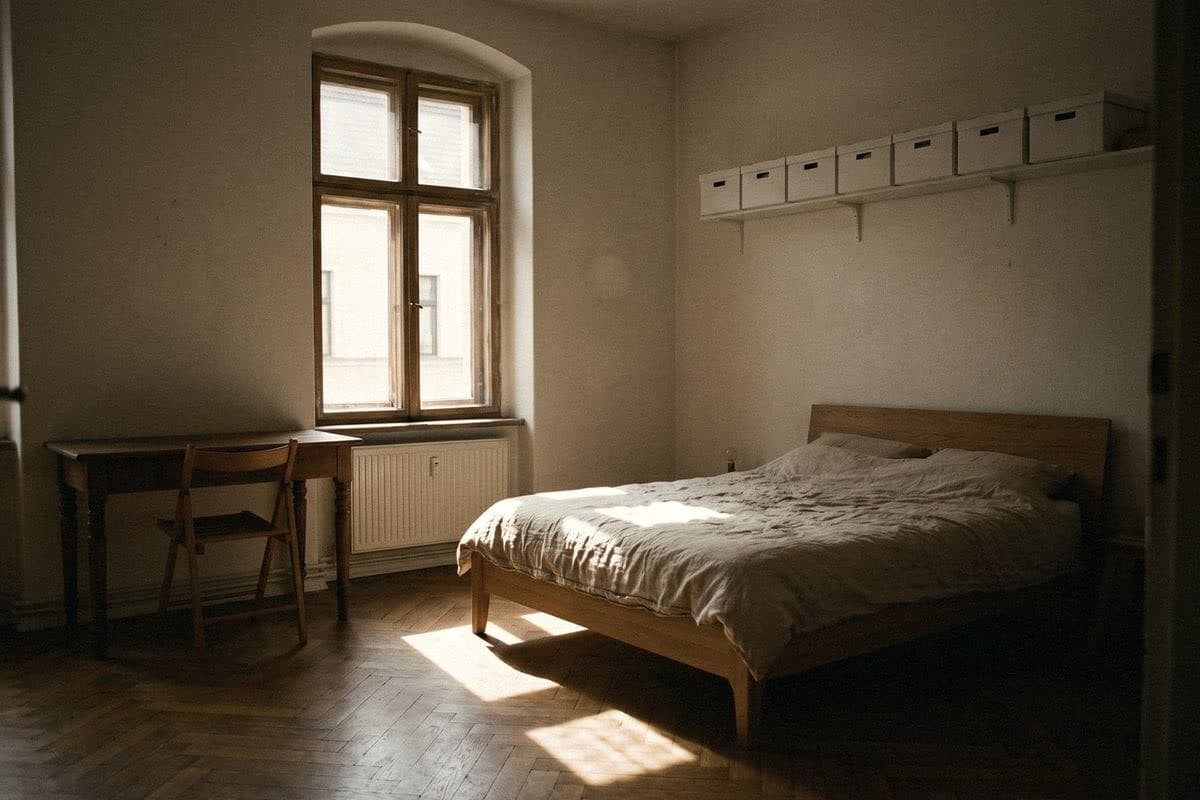
Mistakes that make a Muji home look bland
A Muji home looks simple, but get it wrong and it becomes so plain it feels bland, like a hotel room no one has moved into yet. The difference lies in texture and light.
Before choosing a white for the whole room, order two or three Voqe sample pots and paint them next to your actual wood floor. The white that suits your wood shows itself as soon as you see them side by side.
- Mixing too many wood tones, so nothing looks like a set
- Stark white clashing with the wood, which makes the room feel hard
- Buying lots of storage boxes without clearing anything out
- Cool white lighting everywhere, so all the warmth disappears
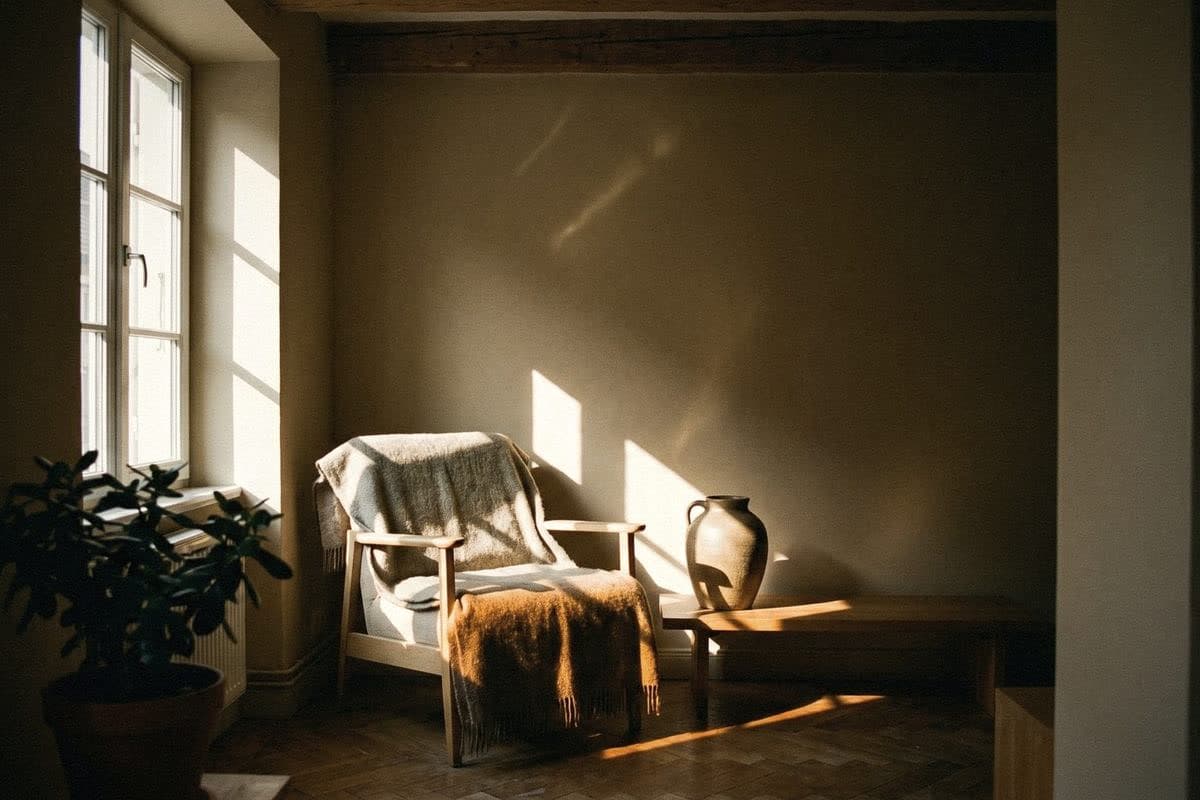
“A Muji home doesn't shout that it's beautiful. It just makes every morning a little easier.”
Frequently asked questions
What is a Muji-style home?
A Muji-style home is decorated along the lines of the Japanese brand Muji, with pale wood, soft off-white or cream walls, natural cotton and linen, simple logo-free things and tidy storage.
What colours does a Muji home use?
Walls are usually warm white, soft off-white or pale cream to suit pale wood, with natural colours such as stone grey, light brown or navy in fabrics and accessories.
How is a Muji home different from a minimalist home?
Minimalism is about crisp simplicity and owning as little as possible. Muji is simple in a warm, relaxed way, uses more pale wood and natural fabric, and doesn't mind everyday things being out, as long as they're tidy.
How do I start decorating a condo in Muji style?
Start by clearing things out, paint the whole room in warm white or cream, choose pale wood furniture with built-in storage, switch bedding and curtains to cotton or linen, then sort your things into boxes of the same size.
Do I have to buy Muji products for a Muji-style home?
No. The Muji look comes from principles: simple things, real materials, natural colours, matching sizes and long life. Things from ordinary shops or Thai basketry fit in well.

Colour on a screen never matches colour on a wall
Order a sample to paint at home, or come and see the full shade library at Voqe Studio, Bang Phli.
Order soft white sample jarsRead next

What home decor styles are there? 12 popular styles, all on one page
Minimal, Nordic, Muji, loft: they sound alike but they are not the same. Here are 12 interior styles on one page, with the materials and wall colours that suit each.
Read article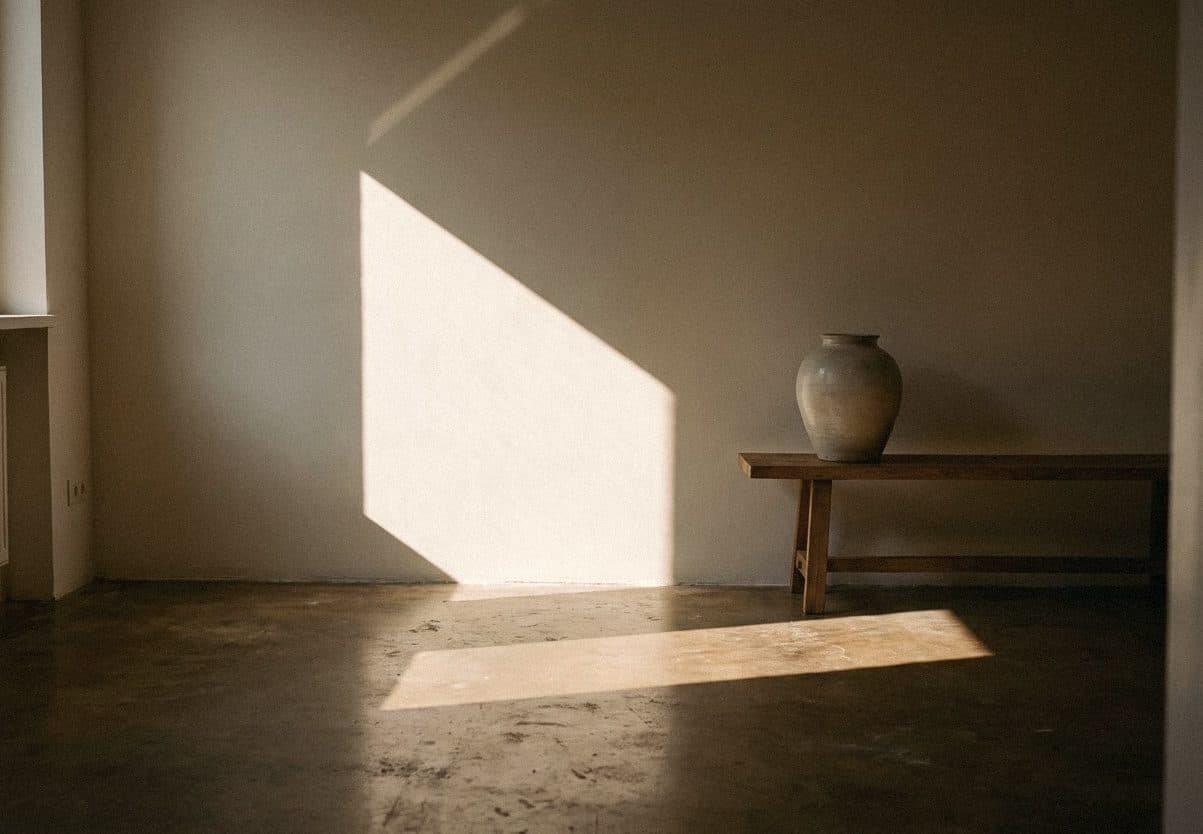
What is a minimal home? Not just white paint, but a way of living with less and living well
Paint the whole house white and it still isn't minimal, because minimalism starts with the layout and the storage, not the paint pot.
Read article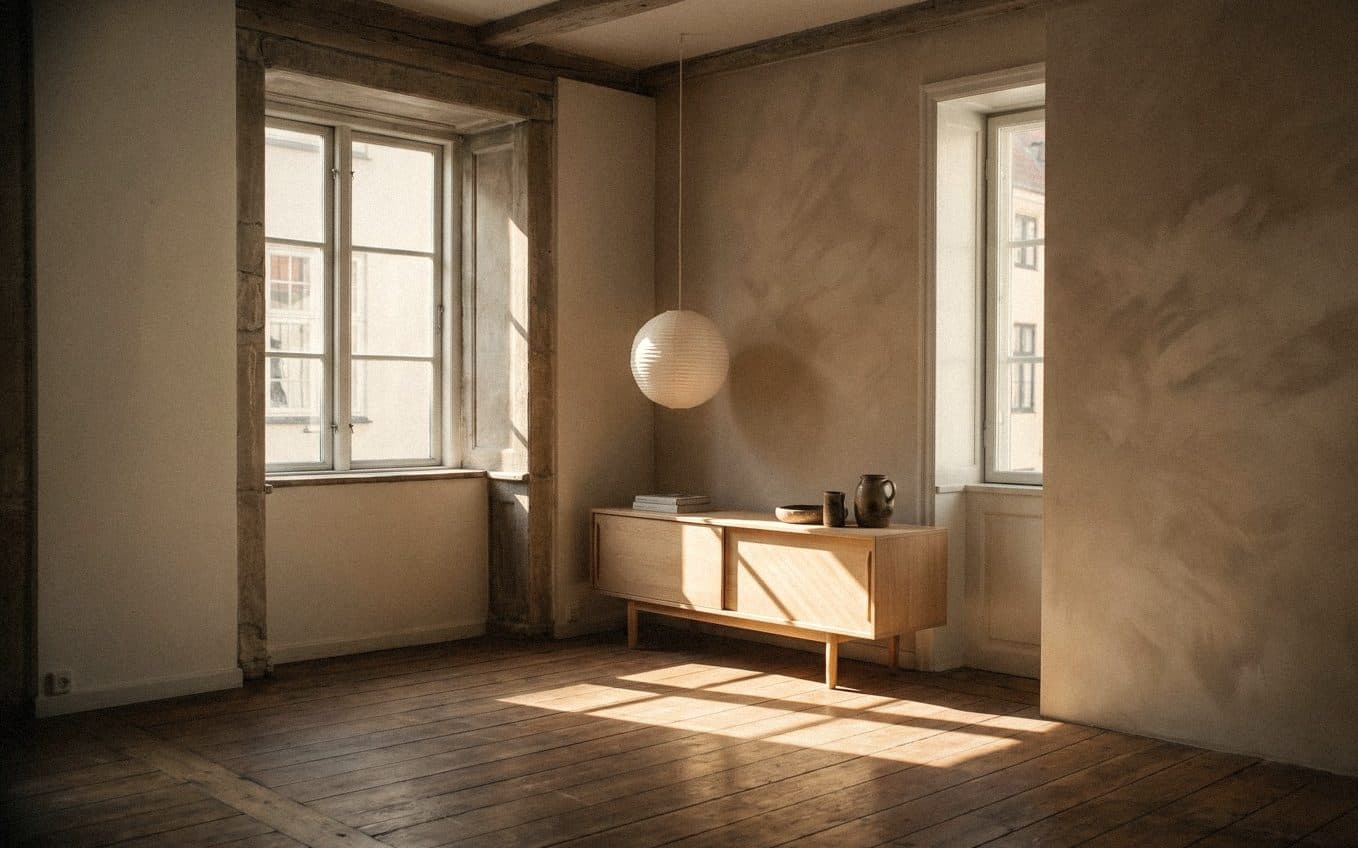
Japanese-style and Japandi homes in the Thai climate: how to choose wall colours
Traditional Japanese or Japandi, either can look beautiful in a tropical home, as long as you choose wall colours that are calm and stand up to humidity.
Read article