


What is wabi sabi? The wabi sabi home that's beautiful because it's imperfect
A home that doesn't need to be perfect, but feels calm every time you walk in. Wabi sabi can start with a single wall.
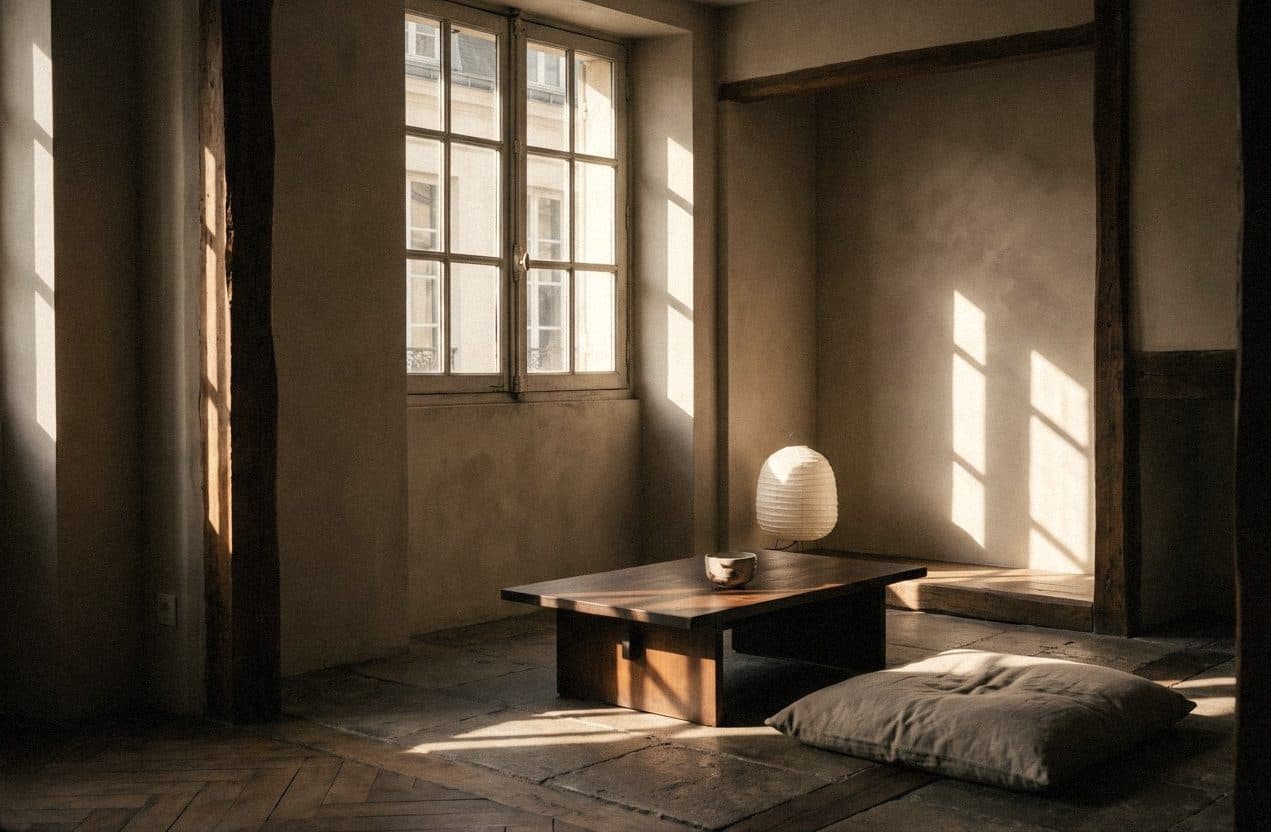
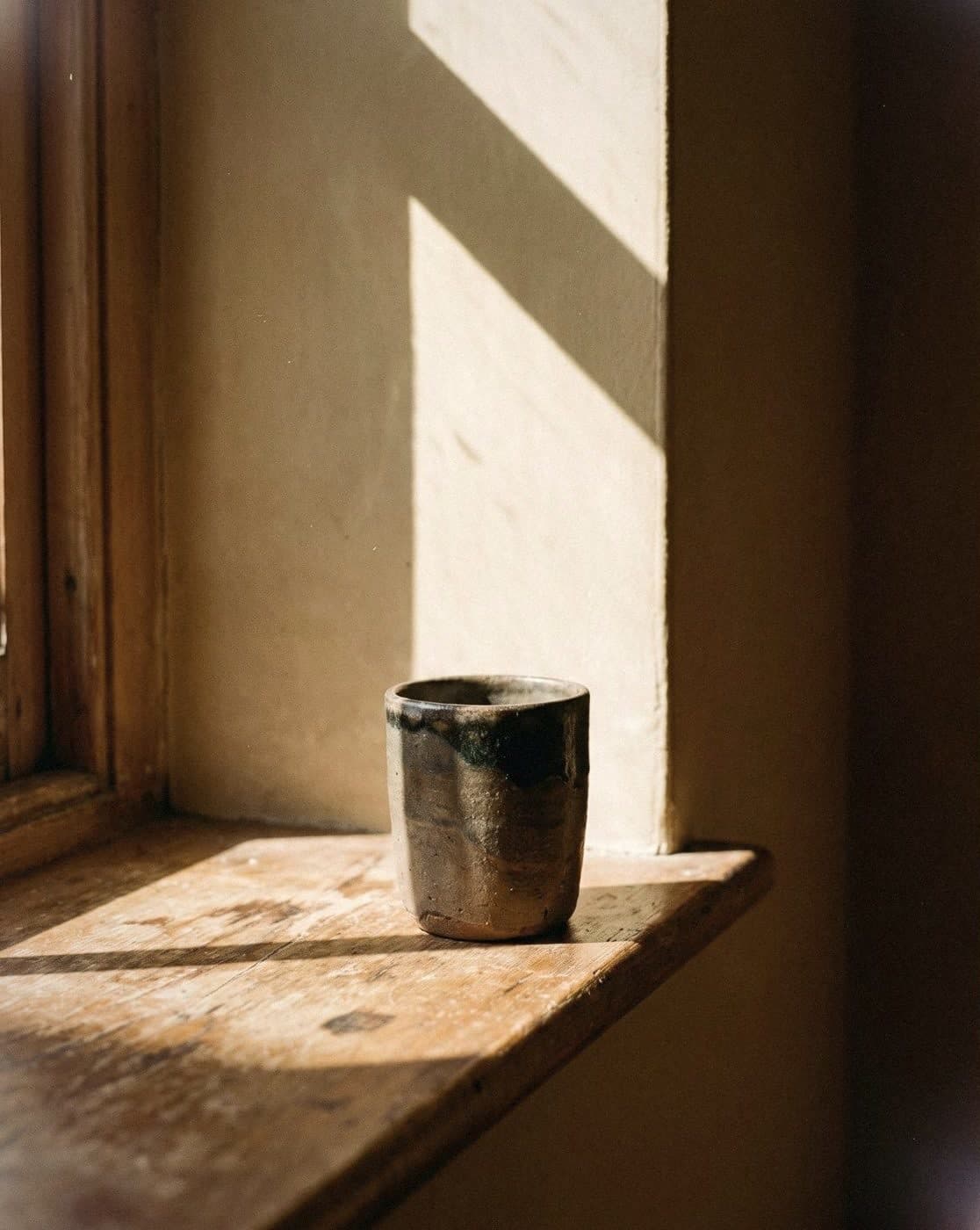
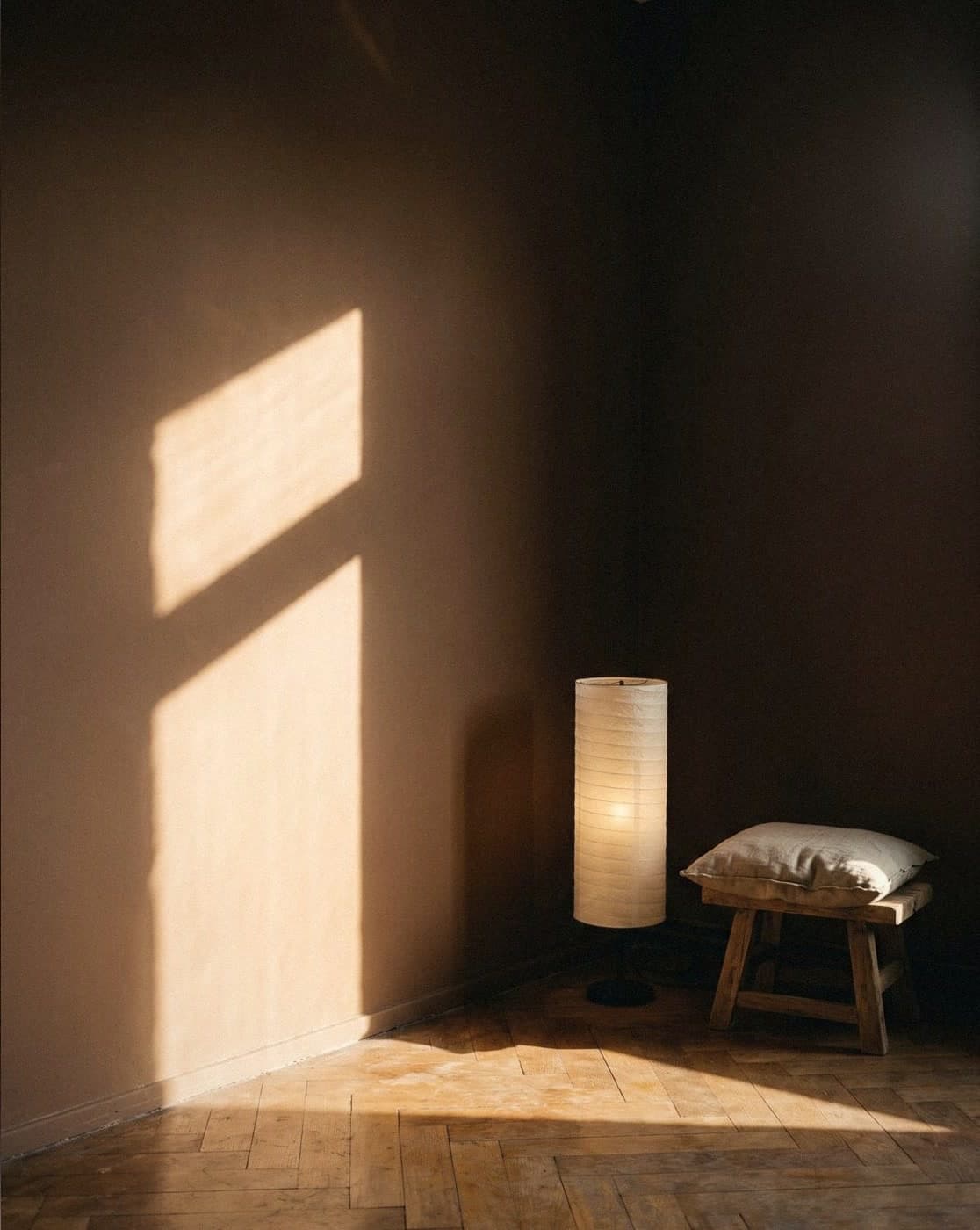
Wabi sabi is a Japanese idea of beauty that finds loveliness in things that are imperfect, impermanent and simple. A wabi sabi home leans on natural materials, well-used things that show their wear, and walls with an uneven surface. You can create walls like this with Voqe Mineral Finish, a matt mineral paint applied by hand, where no two walls share the same pattern.
What is wabi sabi?
Wabi sabi is a Japanese idea of beauty. Wabi speaks of simplicity and a modest, unassuming life. Sabi speaks of the beauty that comes with time, such as rust, worn edges, or colour that fades with age.
In everyday terms: a chipped teacup is still your favourite cup, and may be even more of a favourite, because it has a story.
At home, wabi sabi doesn't mean letting the place run down. It means choosing fewer things, using real materials, and letting surfaces be a little uneven.

An uneven wall is the heart of a wabi sabi home
Walls are the largest surface in a room. If they're showroom smooth, however beautiful the old wooden table you put in front of them, the room still looks too new.
Voqe Mineral Finish is a matt, limewash-style mineral paint made with natural minerals. Each set has two tones, Light Shade and Shadow Shade, applied in alternating criss-cross directions until a pattern like old plastered walls appears. The pattern depends on the hand of whoever applies it, so no two walls are ever alike. That is exactly what wabi sabi means.
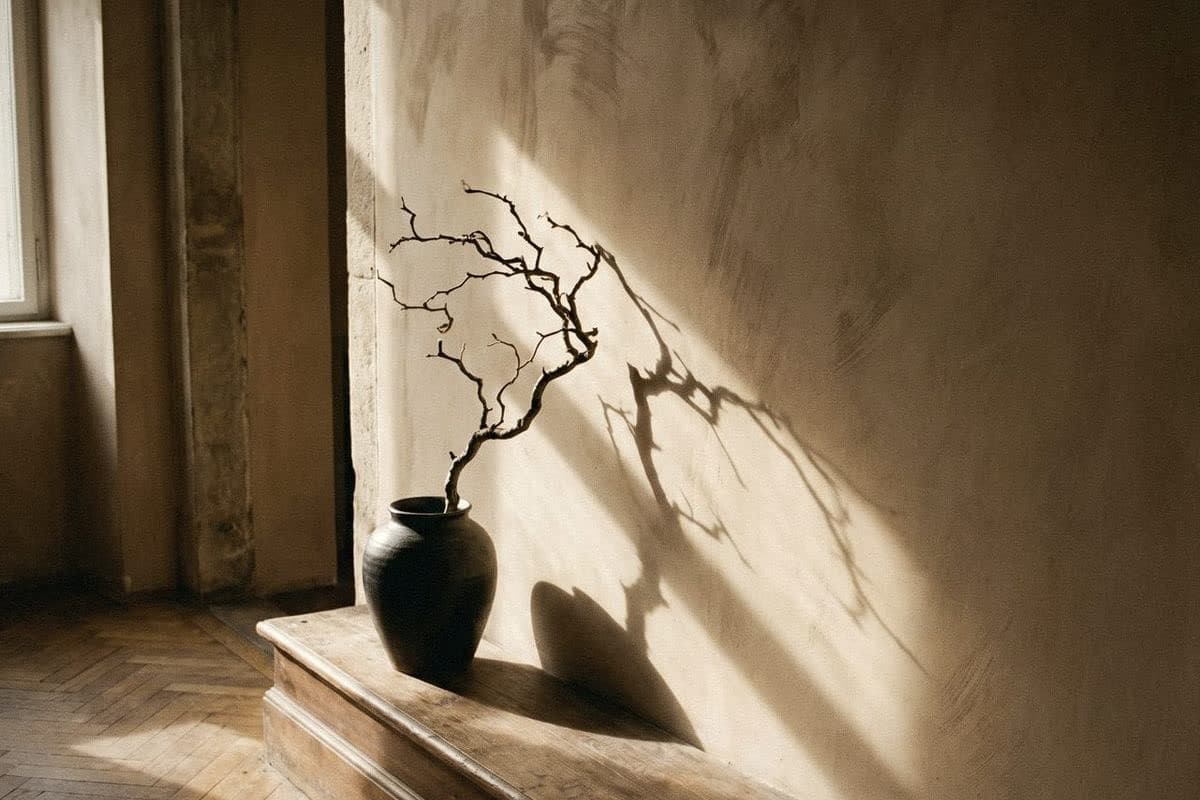
Natural materials, and things that grow more beautiful with use
A wabi sabi home loves materials that change with time: wood that darkens, linen with a slight crumple, pottery with an uneven glaze, stone with mottled marks.
Choose fewer pieces, but ones you truly love, and let the walls be a calm backdrop that doesn't steal the scene. Natural light matters too. When sunlight comes through thin curtains onto a mineral wall, you'll see the light and shadow tones shift all day.
- Natural wood without a high-gloss finish
- Linen or cotton in natural colours
- Handmade ceramics: cups, plates, vases
- A single branch in a vase rather than a full bouquet
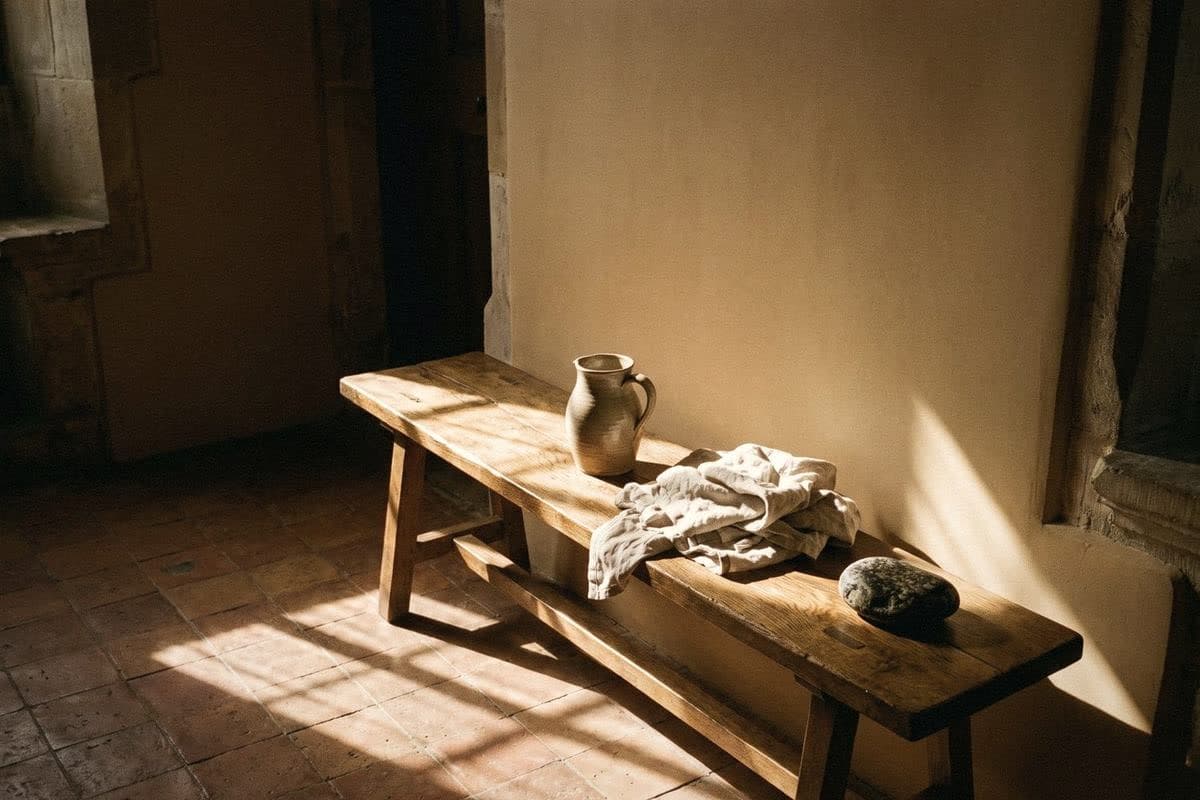
A wabi sabi colour palette: earth, rice, sand and leaves
Wabi sabi colours are the ones you find in nature: rice, sand, earth and muted green. None of them shout.
In Mineral Finish, try starting with Toasted Rice, a roasted-rice tone, Chill Beige, an easy-going beige, or Chao Phraya Sand. For a little more depth, try Tamarind from the earthy browns or Siam Olive from the greens.
On the rest of the room's walls, use a light Voqe Wall Paint colour such as Oatmeal, an oat cream, so the whole room blends together.
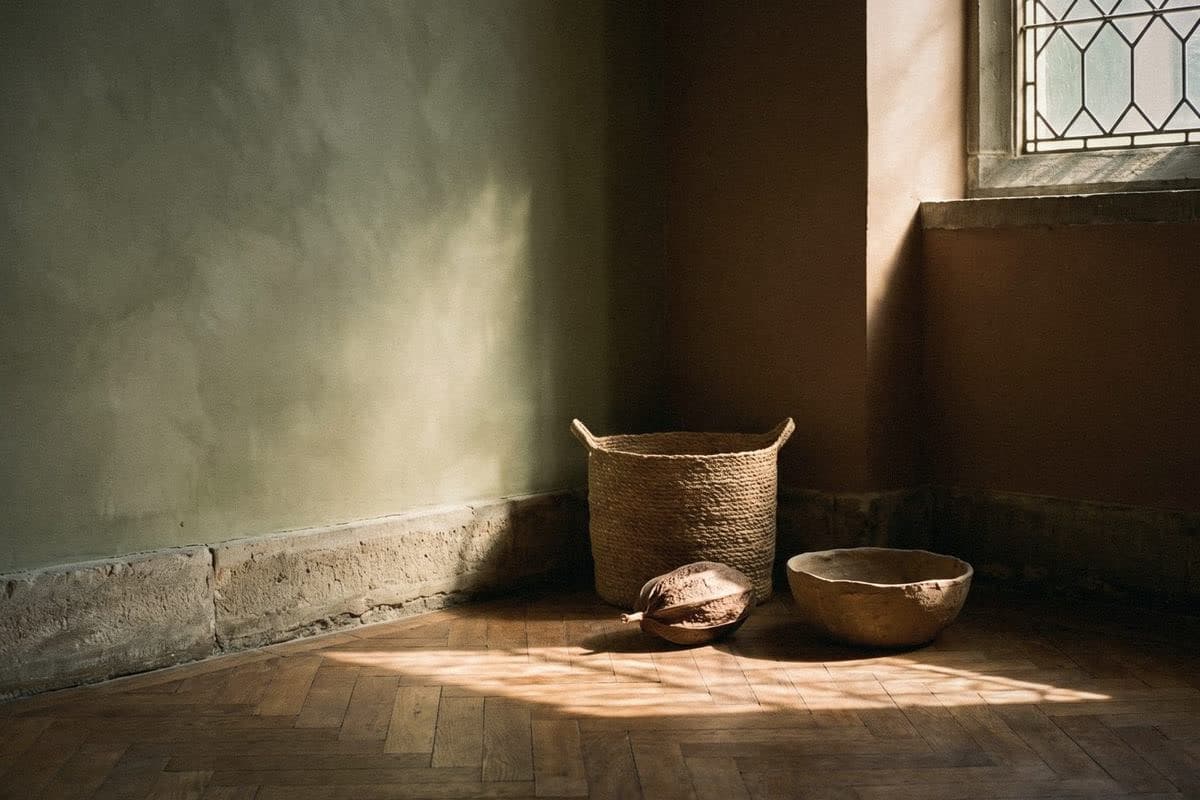
Start your wabi sabi home with one wall
You don't need to renovate the whole house. Pick the one wall you look at most, such as the wall behind the bed or behind the sofa, and paint it with Mineral Finish. The system is 1 coat of primer and 2 coats of Mineral Finish, applied with a large brush, a roller or a sponge.
For a small wall, use Set 2QT at ฿1,180. For a large wall, use Set 2GL at ฿2,998. Want to see the real finish first? Visit Voqe Studio (Bang Phli), Monday to Friday, 8:00 to 16:30, or send a photo of your room for a free colour consultation on LINE @dynohomes.
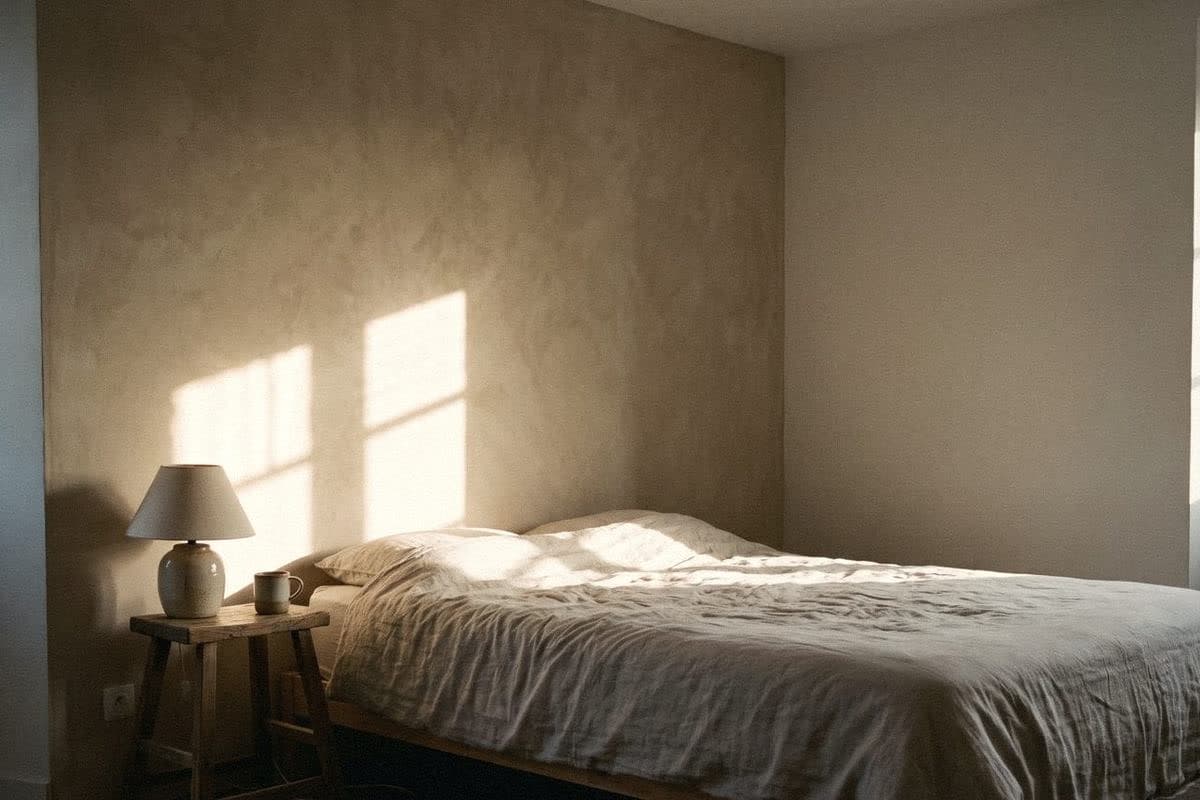
“A perfect home is nice to look at. An imperfect home is nice to live in.”
Frequently asked questions
What is wabi sabi?
Wabi sabi is a Japanese idea of beauty that finds loveliness in things that are imperfect, impermanent and simple, such as signs of wear, the marks of a hand, or colour that fades over time.
Where do I start with a wabi sabi home?
Start by owning fewer things, choosing natural materials, and giving your main wall some texture, for example with Voqe Mineral Finish, where every wall has its own pattern.
What colours suit a wabi sabi home?
Natural tones such as rice, sand, earth and muted green. In Mineral Finish, that means Toasted Rice, Chill Beige, Chao Phraya Sand, Tamarind and Siam Olive.
What is the difference between wabi sabi and minimalism?
Minimalism is about smooth, clean and precise. Wabi sabi also keeps things few, but it loves uneven textures, signs of use, and materials that change over time.

Colour on a screen never matches colour on a wall
Order a sample to paint at home, or come and see the full shade library at Voqe Studio, Bang Phli.
See natural-tone Mineral Finish shadesRead next
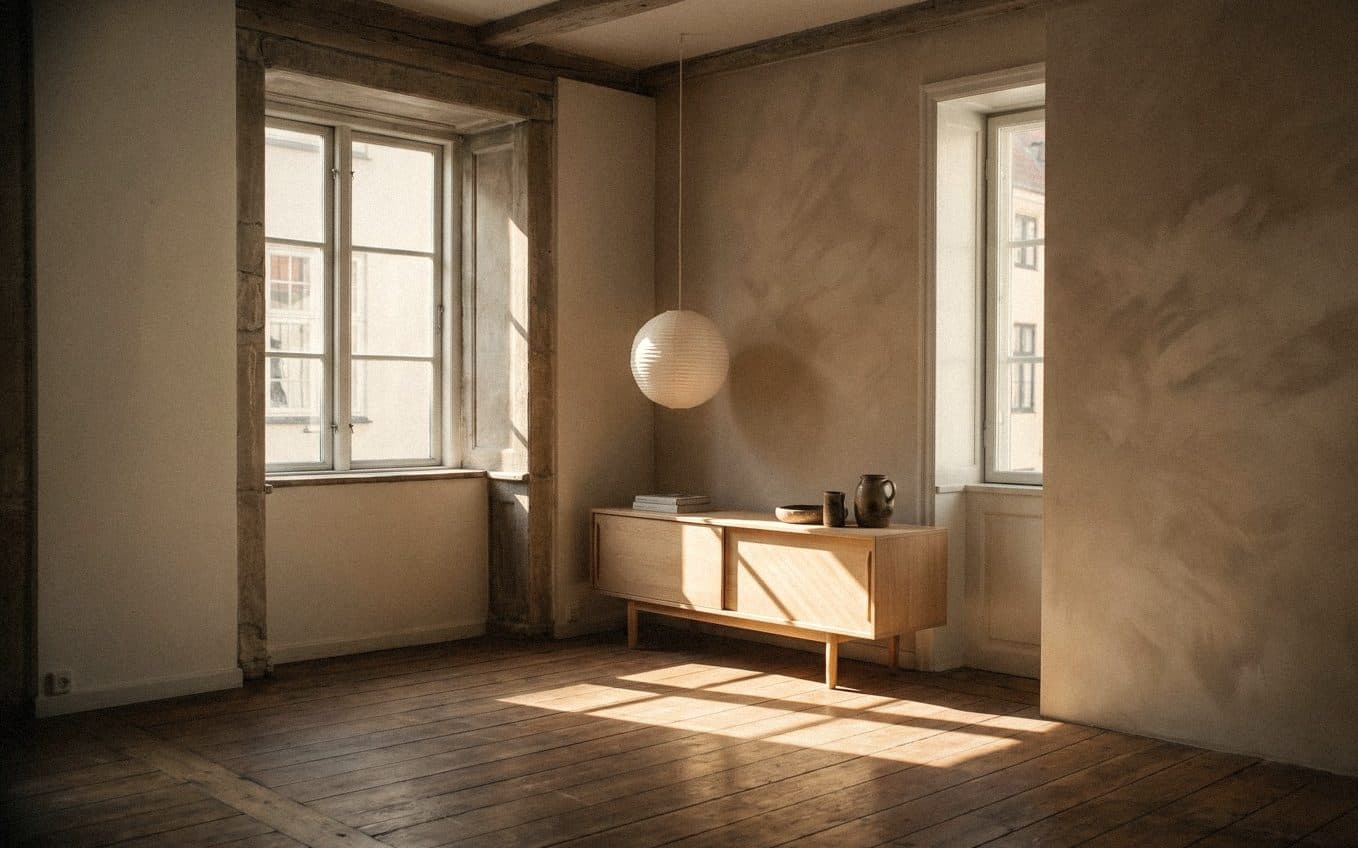
Japanese-style and Japandi homes in the Thai climate: how to choose wall colours
Traditional Japanese or Japandi, either can look beautiful in a tropical home, as long as you choose wall colours that are calm and stand up to humidity.
Read article
What is Mineral Finish? A lime wash-style mineral paint that gives walls texture
The depth of a European plastered wall, applied yourself with a brush. Everything you need to know about Mineral Finish, on one page.
Read article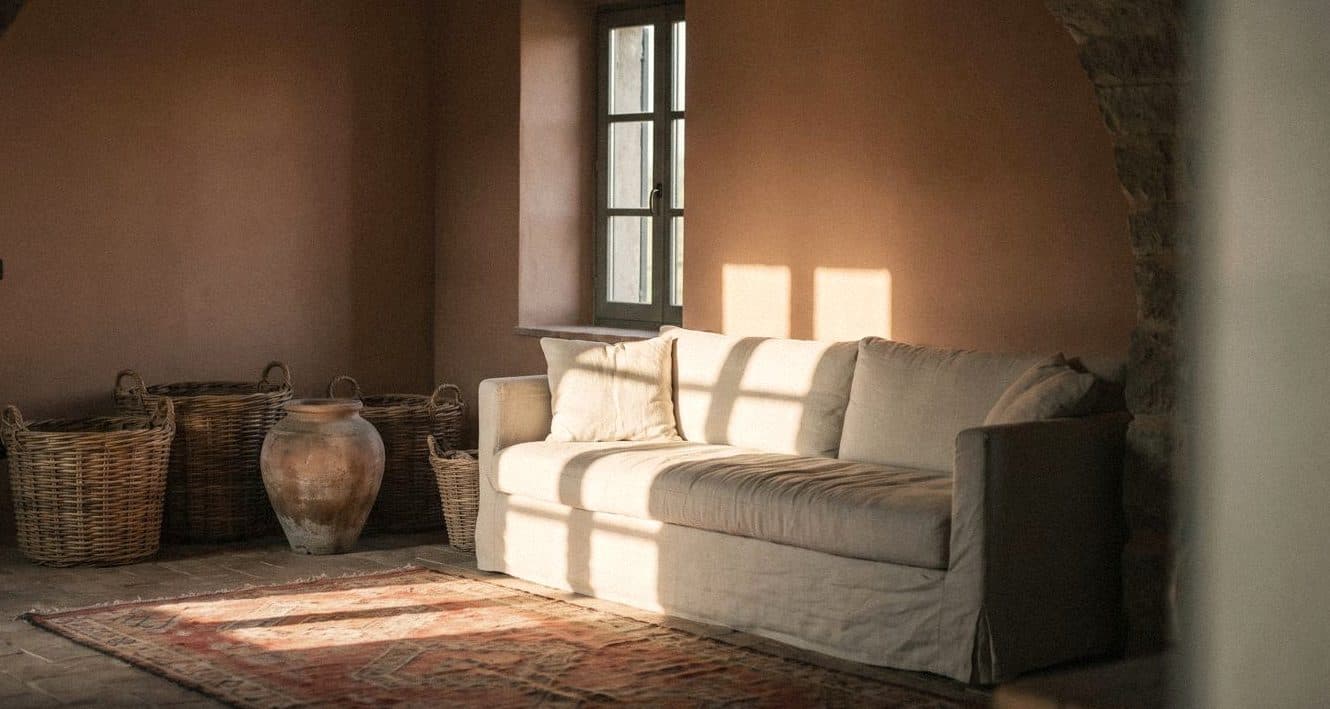
Earth tones: paint your home as warm as a night at a house in the countryside
Clay, sand, brick, coffee, olive: colours nature used long before we did. Voqe's earth-tone shades, and how to use them so your home feels warm without going dark.
Read article