


White and cream bedrooms: how to keep them from looking like a hospital recovery room
A white bedroom doesn't feel cold because it's white. It feels cold because it's the wrong white, the wrong light, and there's nothing for your hands to touch.
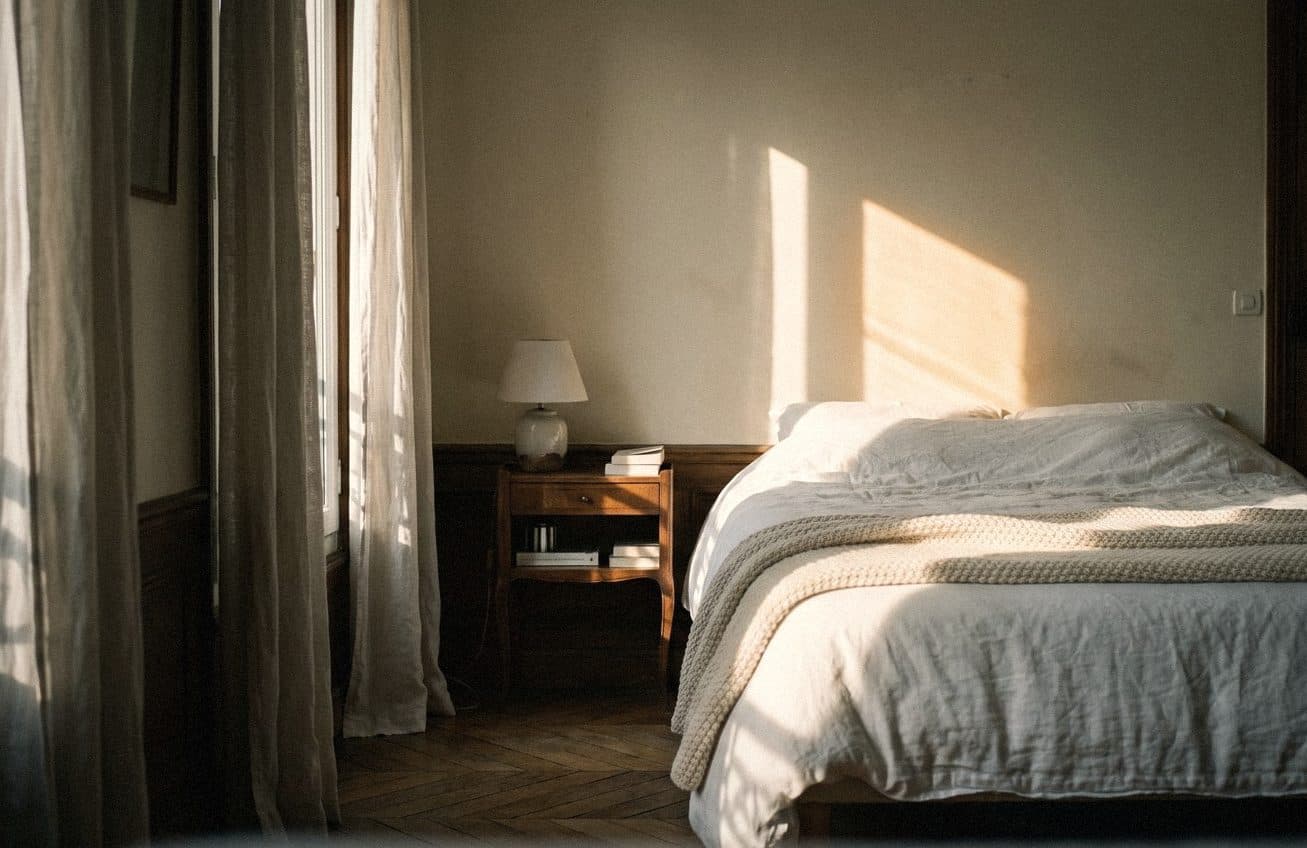
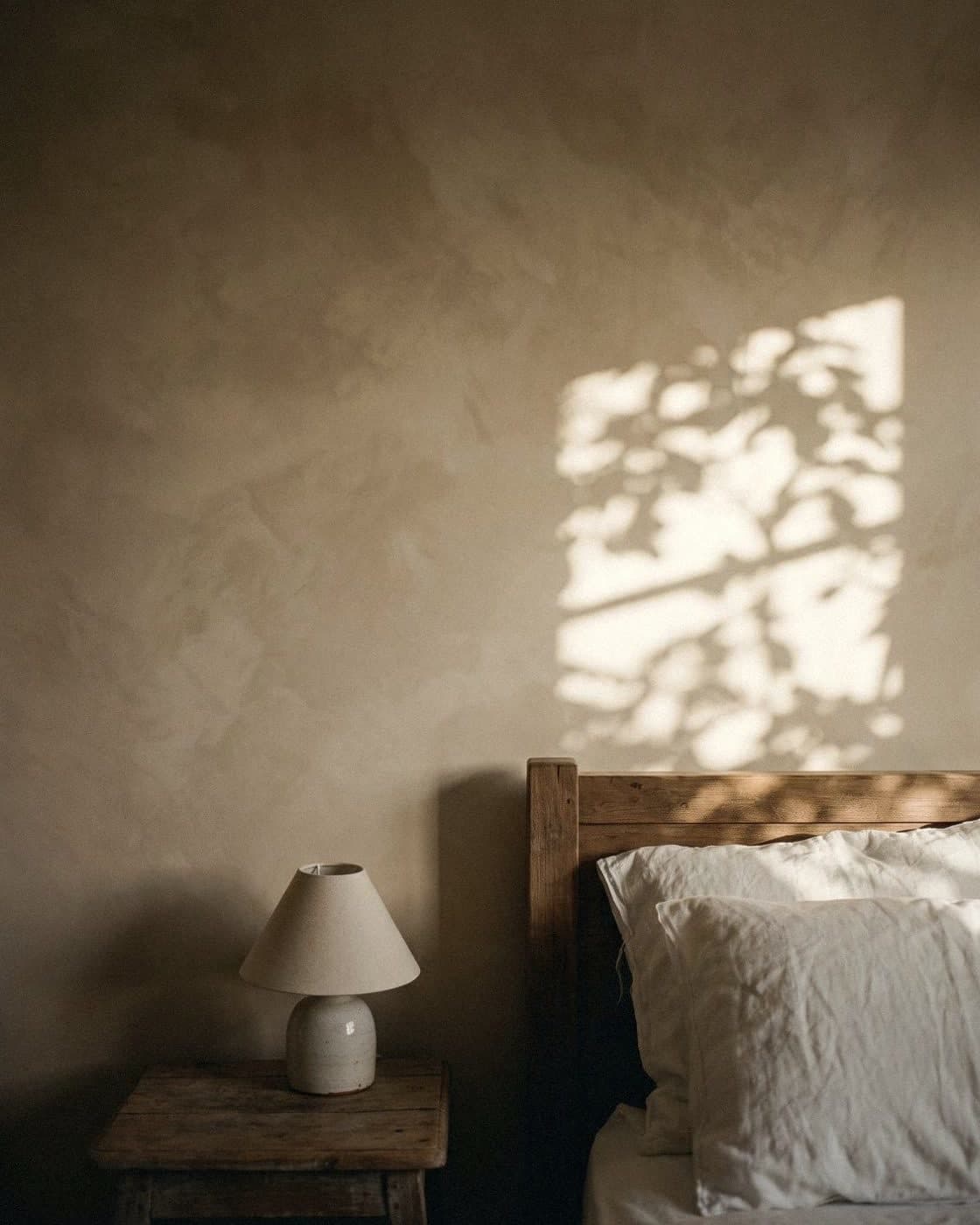
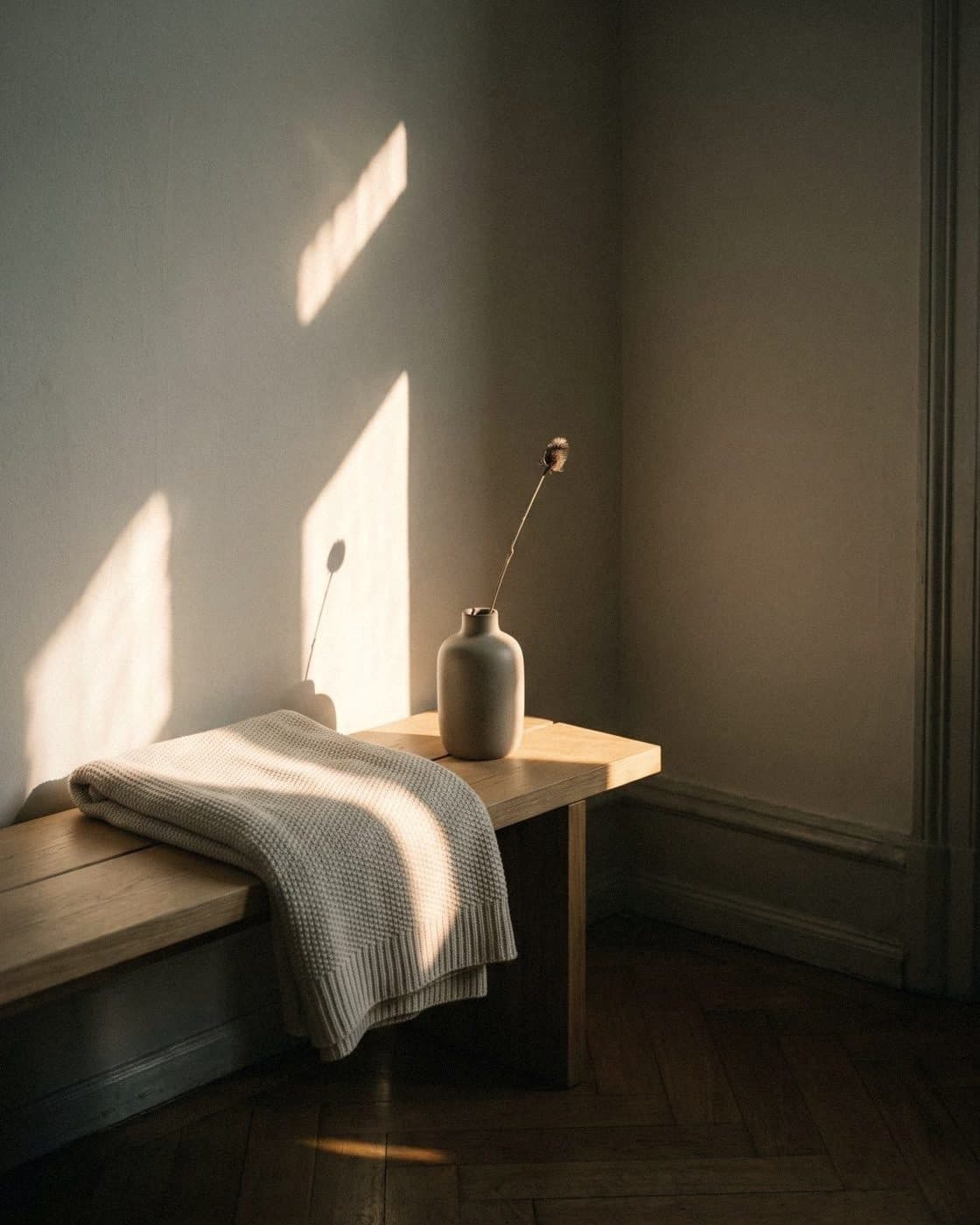
A warm white or cream bedroom starts with a shade that matches the room's light. A room that gets strong sun suits a soft white that isn't too yellow; a room with little light suits a warm cream, so it doesn't look dull and grey. Then layer textures such as wood, linen and knits, use warm white lighting and add one soft accent colour. The bedroom will look like a good hotel, not a recovery ward.
Why some white bedrooms feel like a hospital
A white bedroom that feels cold usually has three things at once: a white that leans blue or grey, cool white downlights, and surfaces that are all smooth and shiny. Smooth white sheets, glossy white laminate wardrobes, thin white curtains. Everything reflects light equally, so the eye has nowhere to rest, and the room feels like you're waiting for the doctor's round.
The good news is you can fix it without giving up white. Just shift the shade a little warmer, change the colour of the light, and add textures your hands can touch. A good white room is a canvas that lets wood, fabric and light do the work.
- A blue- or cool grey-leaning white in a room with little light
- Cool white light throughout the room
- Every surface equally smooth and shiny
- No wood, natural fabric or plants at all
- Walls, ceiling, wardrobes and sheets in different whites that look accidental
Choosing white or cream for a bedroom by the room's light
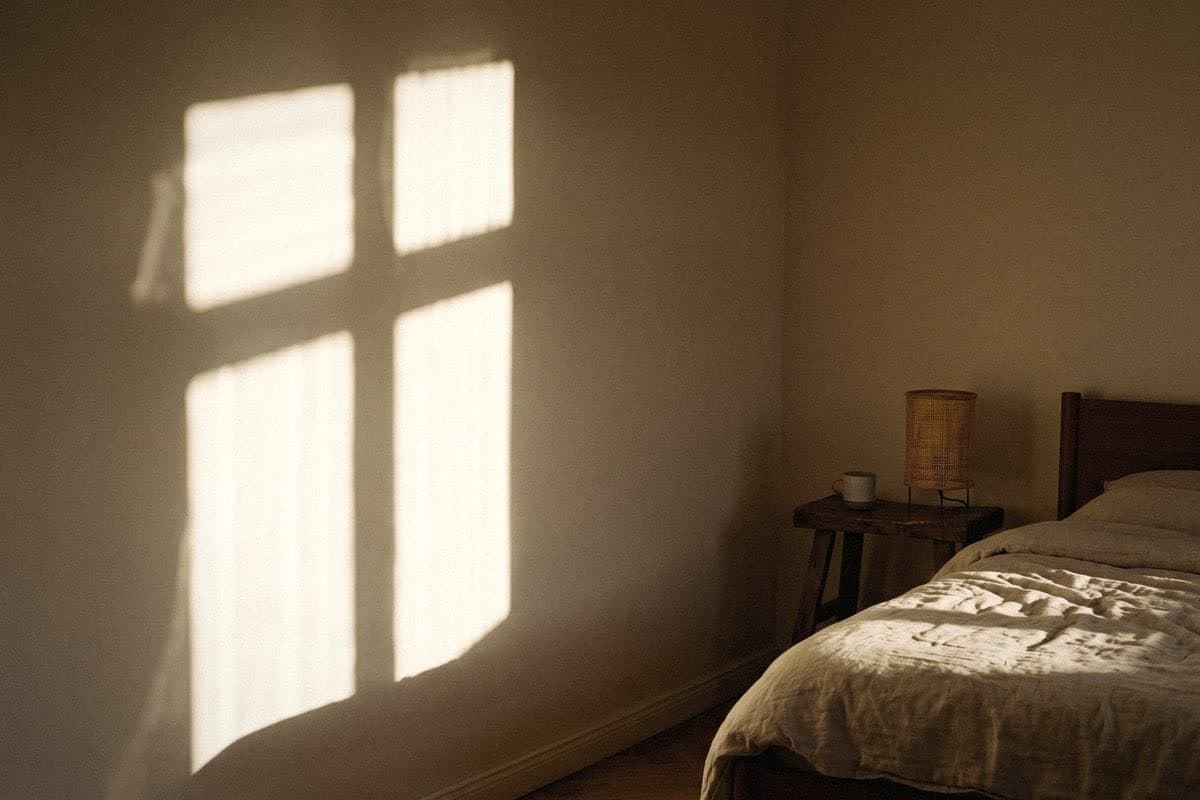
White isn't just one colour. There's clean white with almost nothing else mixed in, soft white with a faint warmth, and cream that's clearly warm. The right choice depends on the light coming into the room, because light is what mixes the colour on the wall in the end.
A west-facing bedroom gets strong orange afternoon sun, and a deep cream will look even more yellow and hot; a soft white or Pearl White will sit better. A room facing north, or up against the next building, gets soft but cool light, and a clean white can look dull and grey; a warm cream such as Ivory or Coconut Ice Cream brings it to life. A room with east-facing morning sun can take almost any shade, but look at it at night under the lights too, because a bedroom is really used in the evening.
Before you decide, paint two or three shades as large patches on the wall behind the bed and the wall beside the window, and look at them in the morning, afternoon and at night. Whites differ only slightly on a screen, but a great deal on a real wall.
- Strong afternoon sun (west-facing): soft white or Pearl White
- Little or cool light (north-facing, next to a building): a warm cream such as Ivory or Coconut Ice Cream
- Morning sun (east-facing): almost any shade; look at it at night before you decide
- For the cleanest white: Snowflake, paired with warm white lighting
- For a cream that isn't yellow: a cream with a touch of beige, such as Oatmeal or Linen
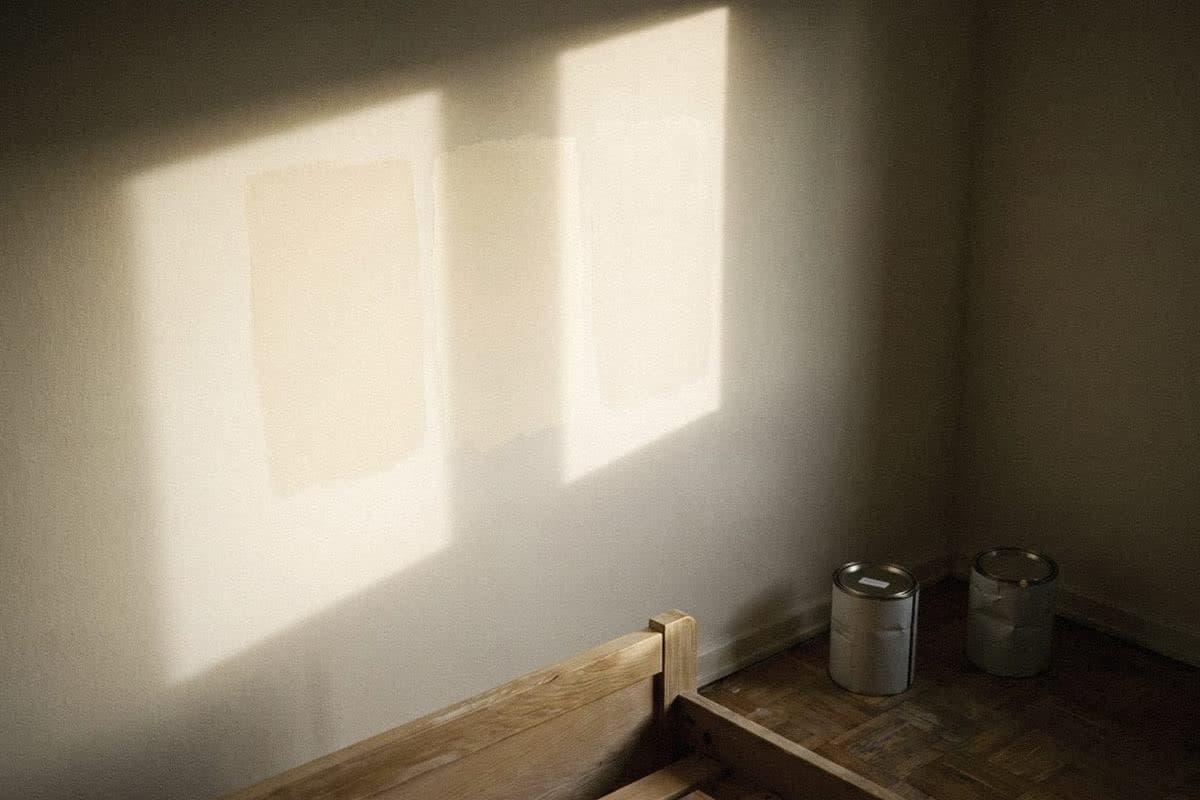
A cream bedroom: layer textures for hotel-like softness
The beautiful cream bedrooms in magazines don't have many colours, but they have plenty of texture: slightly creased linen, a chunky knit blanket, a short-pile rug, wood with visible grain, hand-thrown ceramics. Everything is in close tones but catches the light differently, so the room has depth without any bright colour.
Think in layers, from large to small. The cream walls are the first layer, the curtains and rug the second, the sheets and blanket the third, finishing with small things such as cushions and vases. Use cream and white in different weights in each layer, and the room won't look flat as paper.
- Walls: one shade of cream or soft white
- Curtains: linen or cotton slightly lighter than the walls, almost to the floor
- Rug: short pile or a woven rug in beige
- Bed: soft white sheets, with a knit blanket or a throw in a cream deeper than the walls
- Small things: matt ceramics, rattan baskets, dried branches
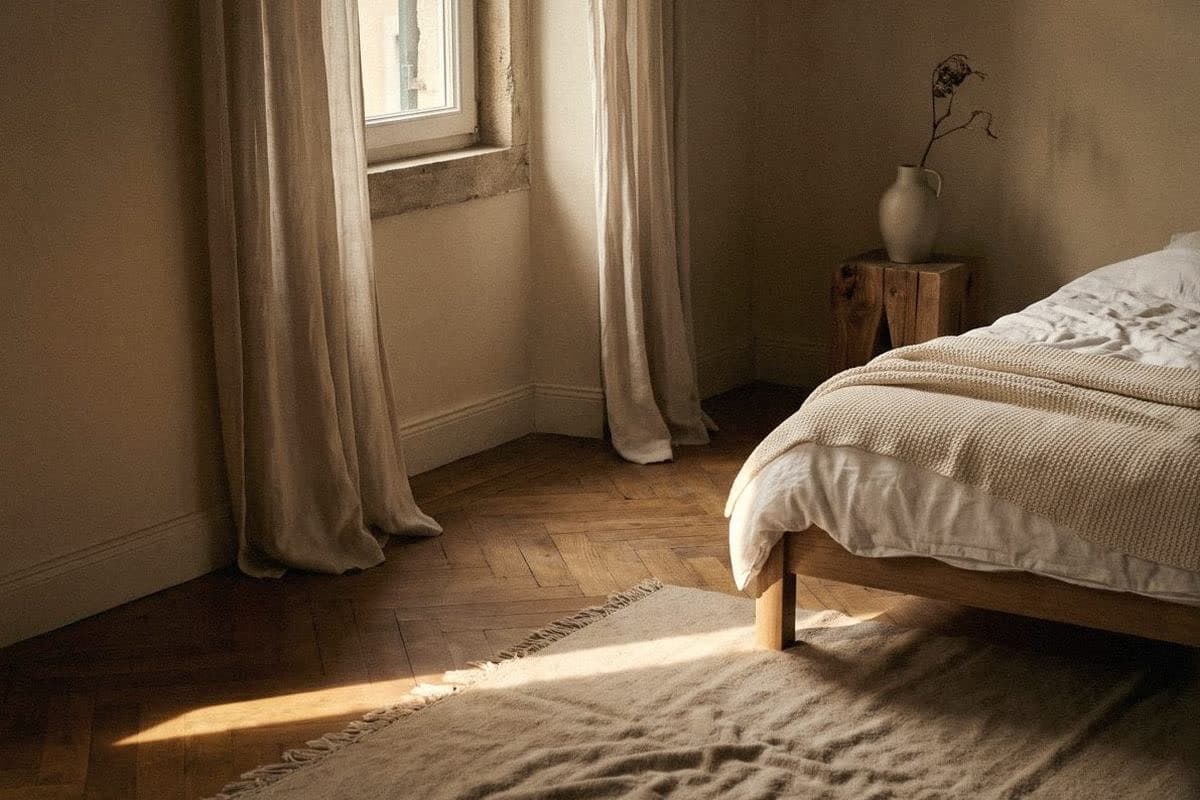
Wood, linen and one soft accent colour
Wood is a white or cream bedroom's best friend. Pale woods such as oak or ash make the room look fresh in a Nordic way; dark woods such as walnut or teak instantly make it look more grown-up and warmer. Just a wooden headboard or one wooden bedside table can change the room.
If you want to add colour without breaking the calm, choose one soft accent colour and use it in two or three places, such as Tea Leaf on the cushions and throw, or Old Rose on a blanket and a vase. Another route is to paint the wall behind the bed in a plaster-textured beige, for depth that stays within the cream family.
If you want a wall behind the bed with the depth of old plaster, Voqe Mineral Finish in Chill Beige gives a soft matt surface that goes well with a white and cream room.
- Pale wood: the room looks airy and fresh
- Dark wood: the room looks warm and grown-up
- Soft accents: grey-green, Old Rose, Coconut Sugar or a plaster-textured beige
- Use the accent in two or three places, not just one, and it will look deliberate
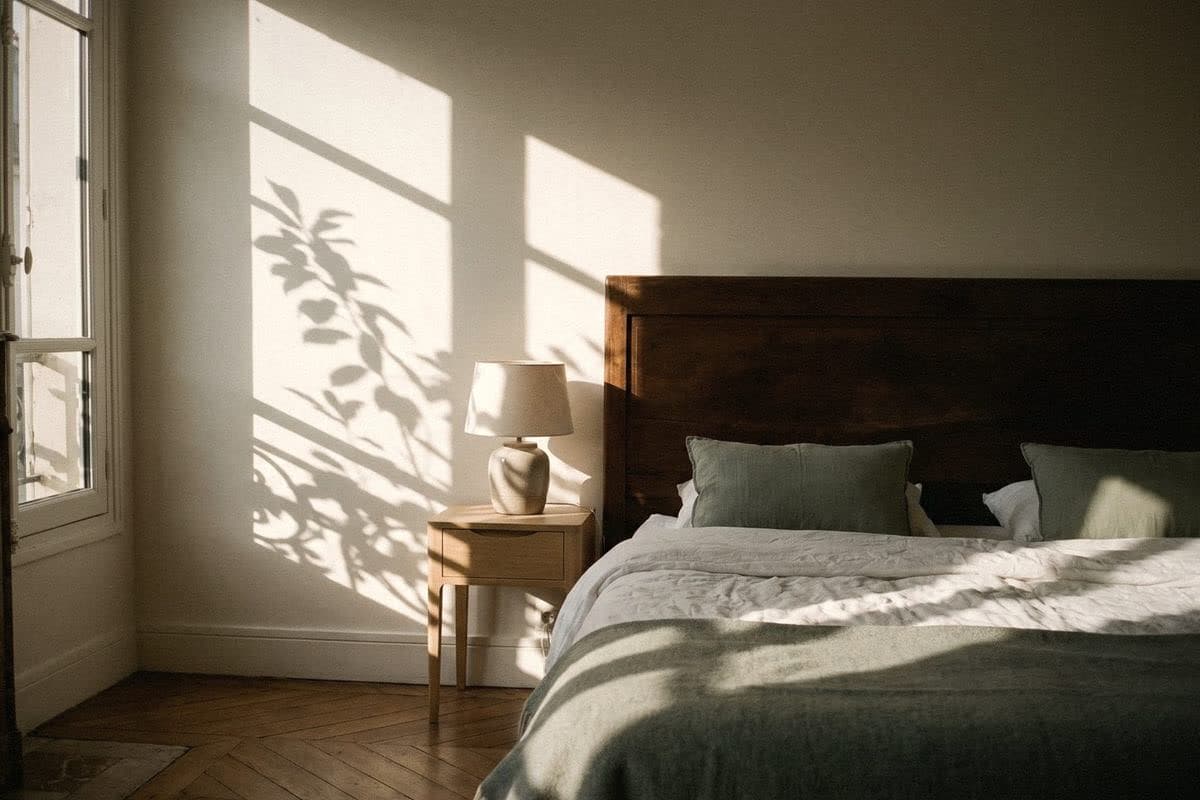
Lighting, ceiling and trim: the details that make a white bedroom look expensive
Bedroom lighting should be warm white, around 2700–3000K, which makes white and cream look as soft as candlelight. Cool white light instantly turns white into hospital white. Add bedside lamps or a hidden light behind the headboard, then switch off the ceiling light before bed, and the room becomes a different room.
For the ceiling, use a white one shade lighter than the walls, or the same colour as the walls if you want the room to feel enveloping. As for skirting, door frames and doors: if they're a different white from the walls, the room looks unintentional. Use either the same shade as the walls, or a shade from the same family that's clearly different.
Sheen matters too. Bedroom walls are usually matt or low-sheen, such as Eggshell, which reflects light softly and hides uneven walls better than gloss. For woodwork and doors that get touched often, use a glossier finish so they're easy to wipe.
- Warm white bulbs, around 2700–3000K
- Bedside lamps or hidden lighting instead of the ceiling light in the evening
- A ceiling white one shade lighter than the walls, or the same colour as the walls
- Skirting and door frames: the same shade as the walls, or clearly different
- Low-sheen walls, glossier woodwork
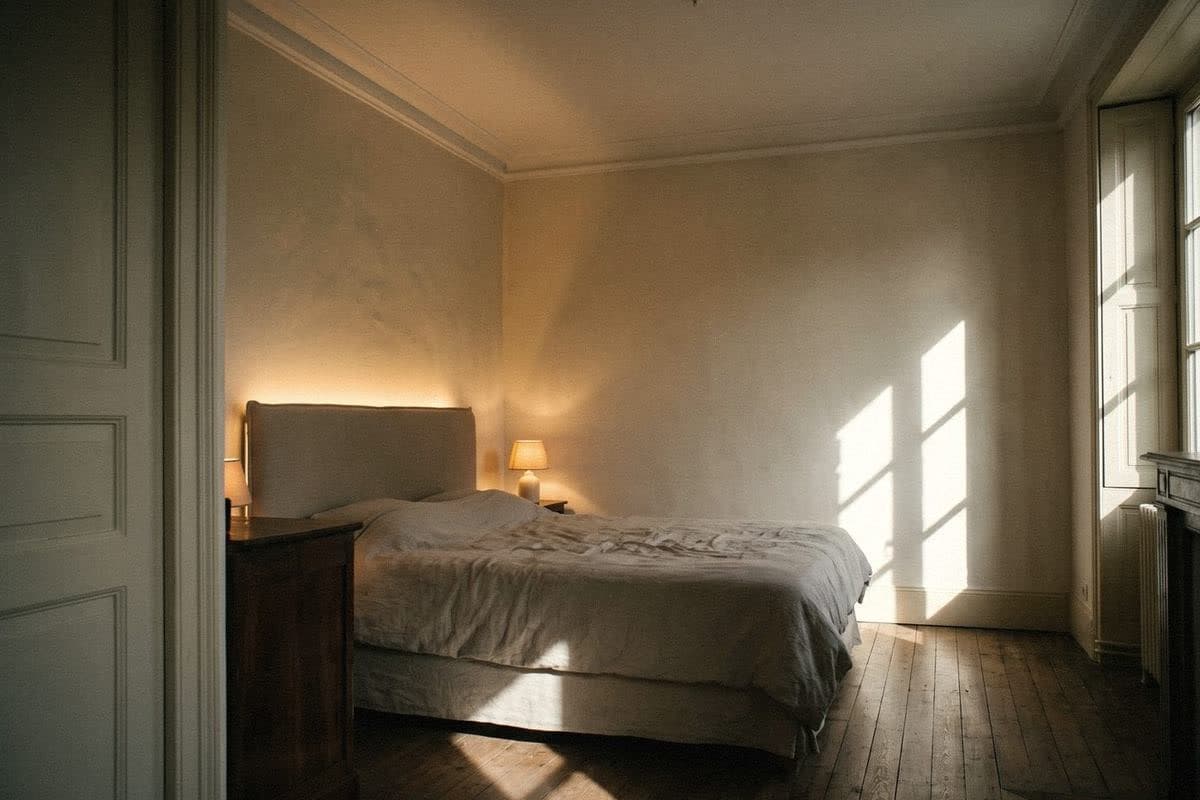
A white bedroom in real life: marks, damp and upkeep
A white bedroom fears two things: handprints by the light switch and the headboard, and mould in damp, stuffy corners. The first you can solve with a washable paint, keeping a pot to touch up small marks. The second has to be solved at the source: ventilate, open the curtains to let the sun in, and check that no water is seeping in from behind the wall or from the air conditioner.
White and cream bedrooms also have an advantage many people overlook: they're the easiest to change the mood of. A soft white wall is a backdrop for bedding in any colour. Use warm-toned fabrics in the rainy season and switch to airy white linen in the hot season: the same room, but it feels like a new one.
- Keep leftover paint for touch-ups, labelled with the shade name and the room
- Wipe handprints around switches and the headboard with a well-wrung damp cloth
- Open the windows to air the room every day
- If there's mould in a corner, find the cause of the damp before you repaint
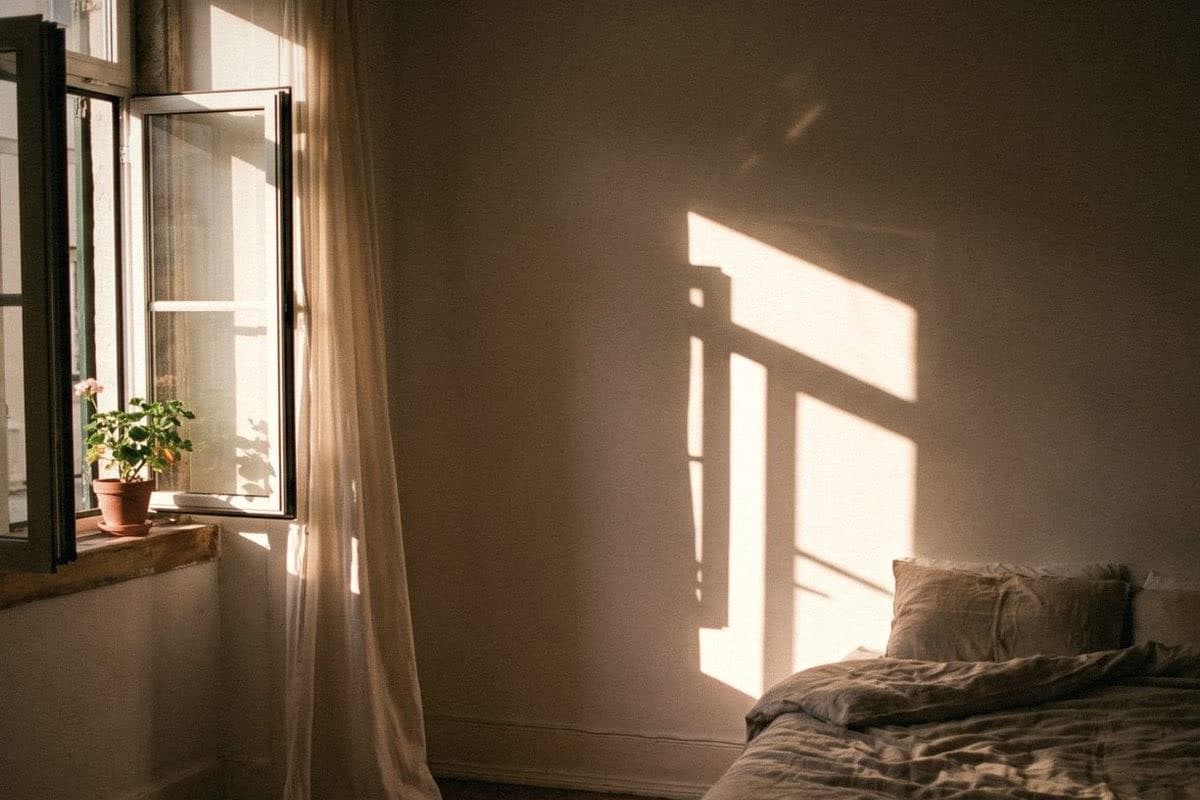
“A good white isn't the whitest white. It's the white that suits the light in your room.”
Frequently asked questions
Is a white bedroom a good idea?
Yes, if you choose a white that matches the room's light, use warm white lighting and add textures such as wood and linen. The room will look clean, airy and calm. But use a cool white with white light throughout, and it will look like a hospital.
What goes with a cream bedroom?
Wood in any tone, linen, rattan, matt ceramics and soft accent colours such as grey-green, Old Rose, light brown or a plaster-textured beige.
White or cream bedroom: which is better?
It depends on the light. A room with strong afternoon sun suits soft white, because cream will look yellow. A room with little or cool light suits a warm cream, because a clean white can look dull and grey.
What colour lighting suits a white bedroom?
Warm white, around 2700–3000K, is recommended, with bedside lamps or hidden lighting in the evening. Cool white light makes white walls look harsh and not relaxing.
How do I stop a cream bedroom from looking yellow?
Choose a cream with a slight touch of grey, not a bright yellow cream. Avoid deep creams in rooms that get afternoon sun, and test samples on the real wall both by day and at night.

Colour on a screen never matches colour on a wall
Order a sample to paint at home, or come and see the full shade library at Voqe Studio, Bang Phli.
Order white and cream sample jarsRead next
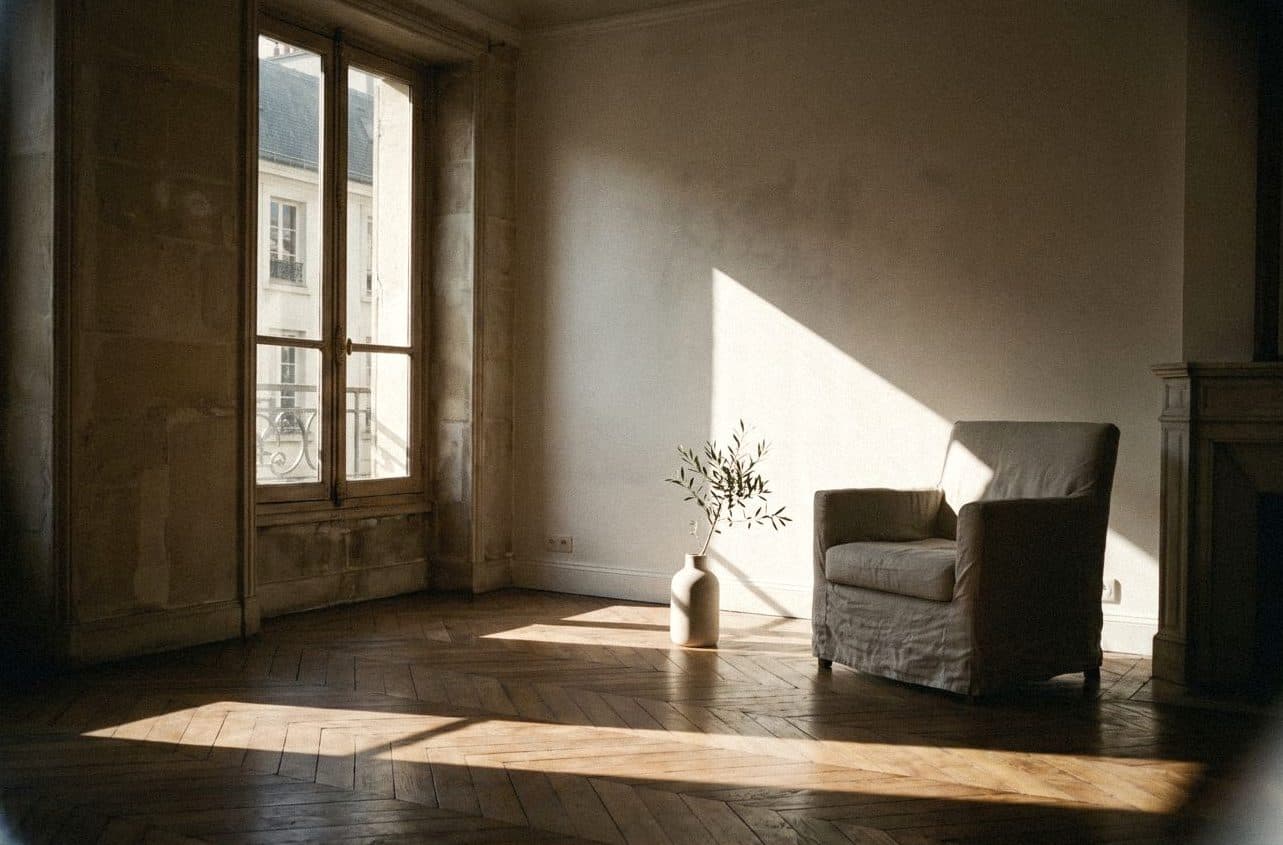
White: how to choose one that won't turn yellow, grey or hospital-white on your walls
The white in the shop and the white on your wall are not the same white. A guide to choosing white for Thai sunlight, the way your windows face and the bulbs in your room.
Read article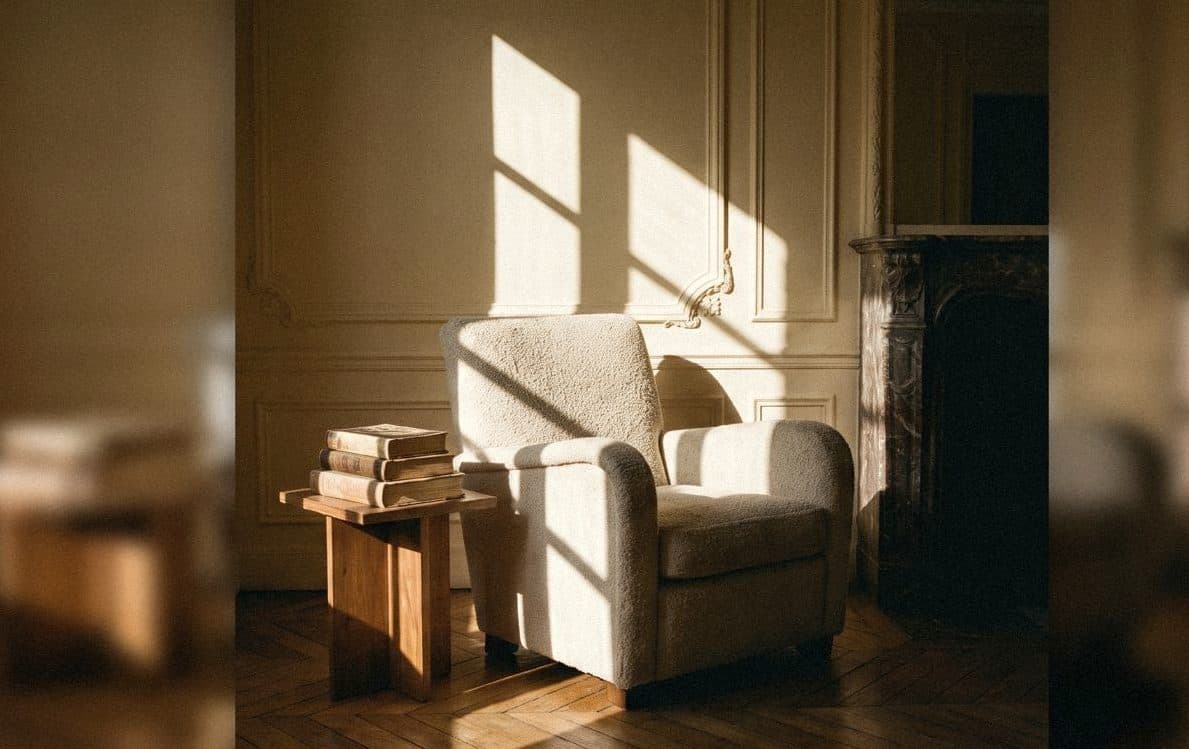
Cream: a slightly kinder white for a home that feels soft all day
Cream is white with a kinder heart: warmer than white, brighter than beige. Voqe's cream shades, and how to choose one without turning your room yellow.
Read article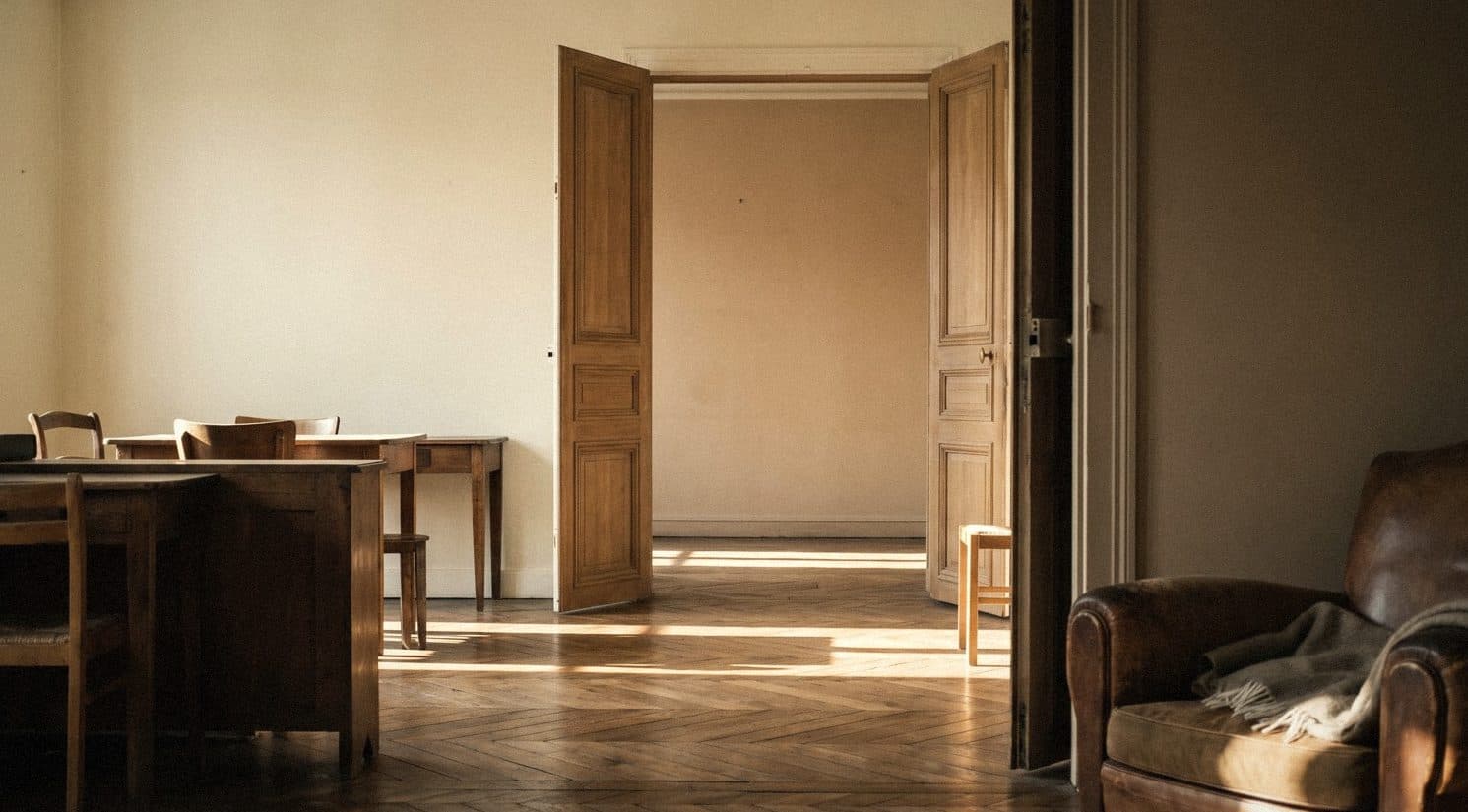
Cream vs beige: what's the difference, and which should your room use?
Cream is warm milk in the morning; beige is a latte in the afternoon. They look alike, but they give a room very different moods.
Read article