


Beautiful TV walls: which colours don't fight the screen, and ideas that work in a condo too
The TV screen is the biggest black rectangle in the room. The wall behind it can help it disappear on purpose, or make it stand out in the wrong way, depending on the colour you choose.
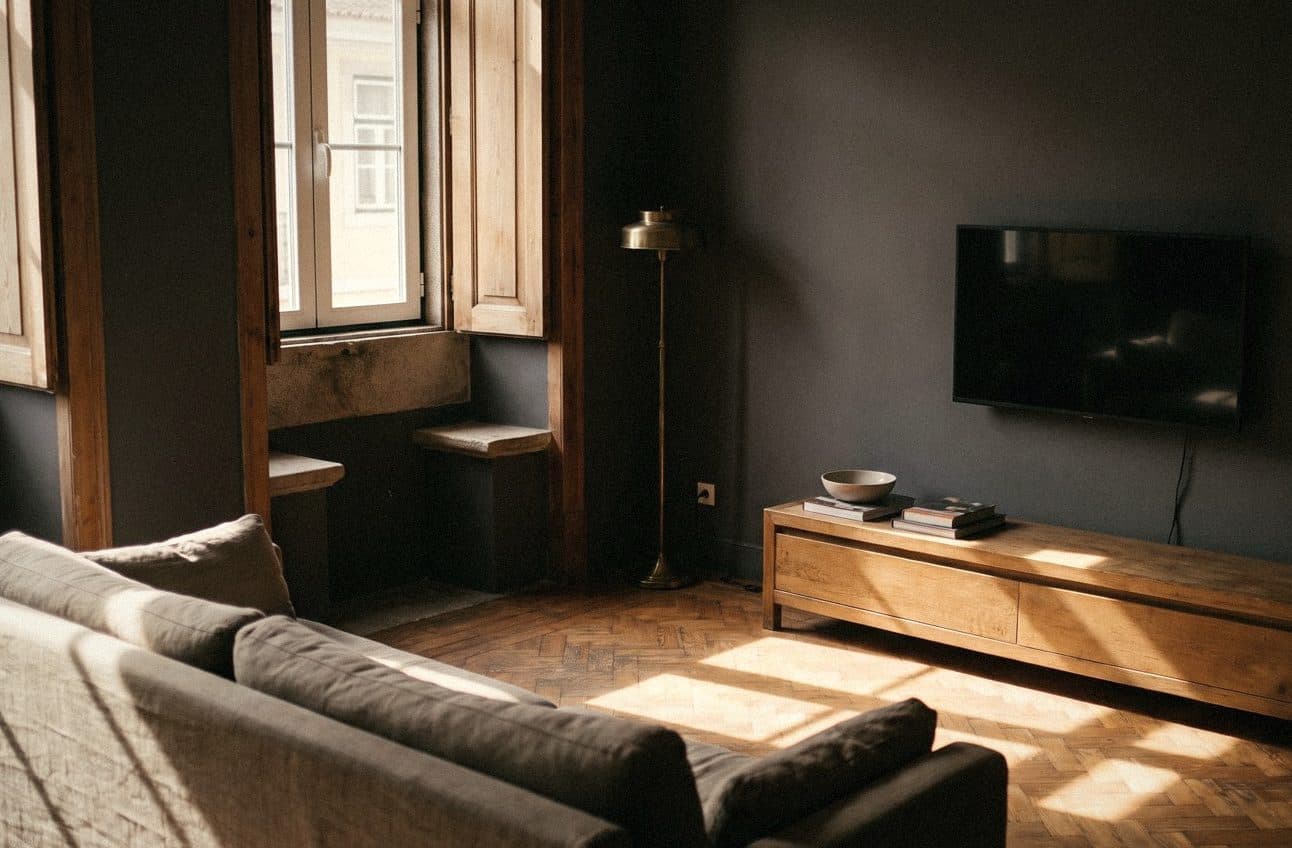
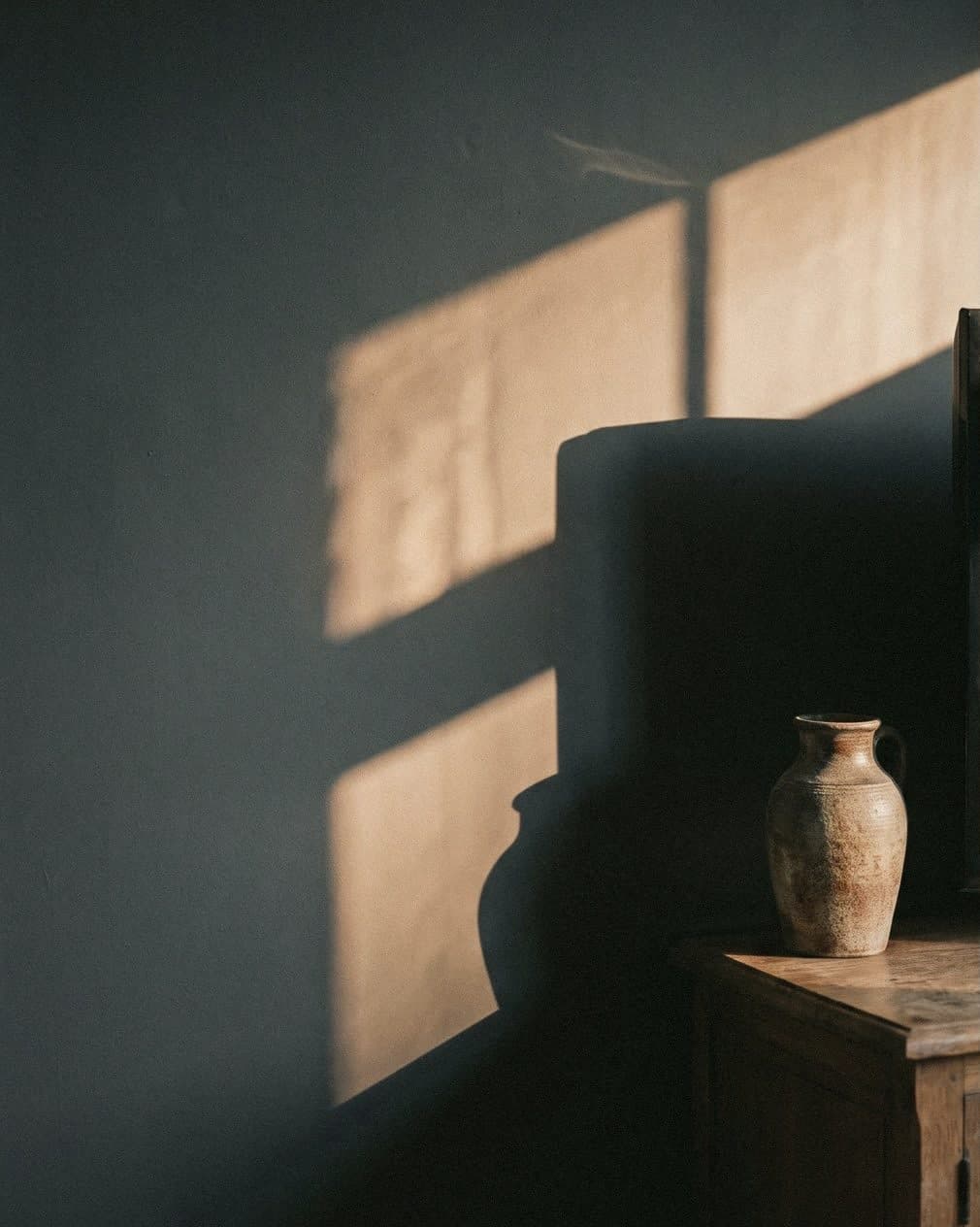
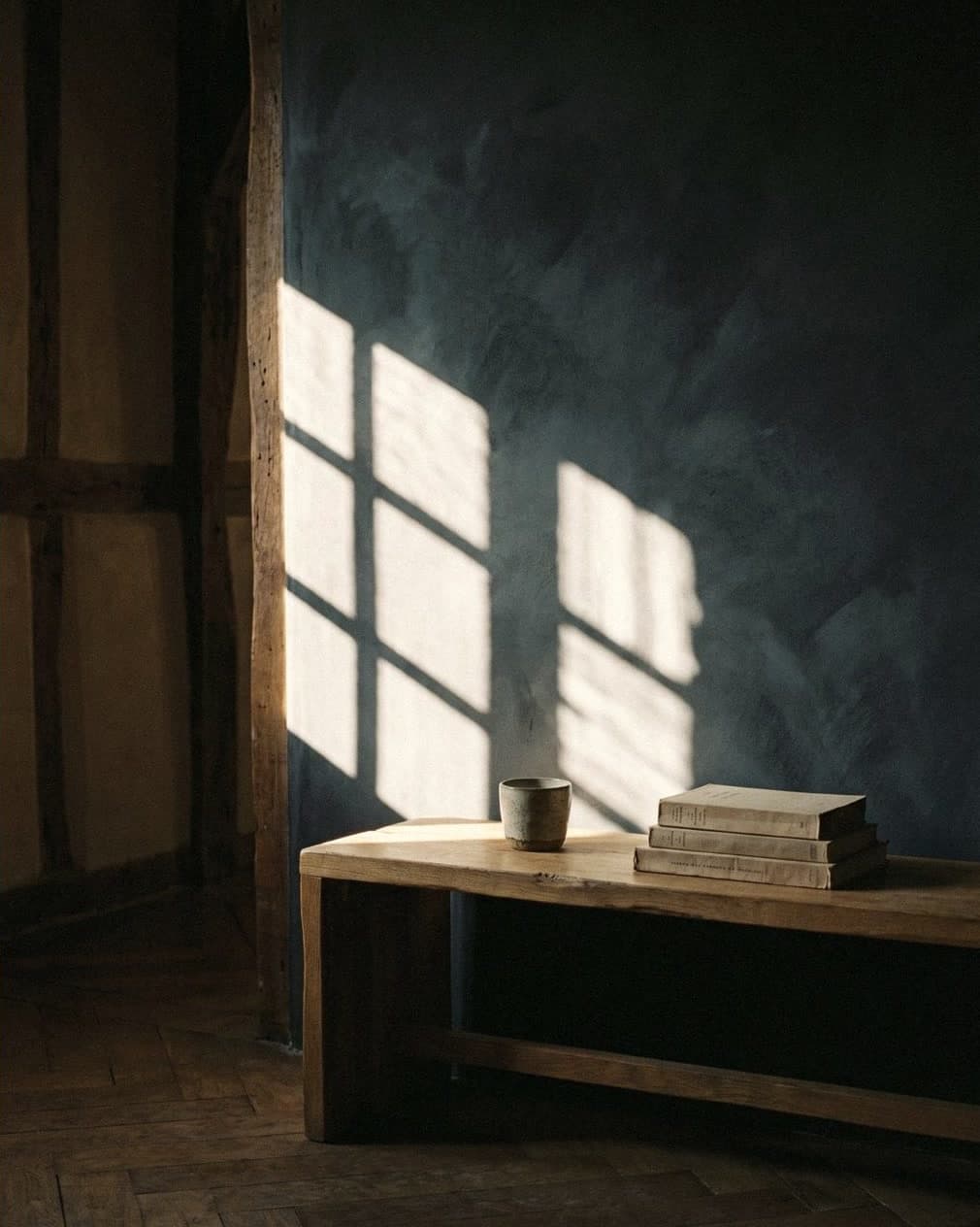
A TV wall that looks good and is easy to watch is a mid-to-dark colour in a matt finish, such as charcoal grey, deep green, navy or coffee brown. It helps the black screen blend into the wall when it's switched off, and reduces the contrast between a bright picture and the wall when you're watching. Position the TV so it doesn't face a window, hide the cables in conduit or a trunking painted the same colour as the wall, and if you live in a condo, check the wall type and the building management's rules before drilling.
A beautiful TV wall starts with a colour that doesn't fight the screen
Switch the TV off and look at it. The screen is the biggest black rectangle in the room. On a stark white wall it looks like a black hole; on a mid-dark wall it blends in like a deliberately hung picture frame. That's why the TV walls in beautiful homes are so often dark.
It matters just as much when the TV is on. A mid-to-dark wall means your eyes don't have to keep adjusting between a bright picture and a glaring wall, so you can watch for longer without tiring. Very bright colours, like strong red or yellow, pull your eye away from the picture and may reflect colour onto the screen when the lights are on.
The finish matters too. Gloss paint reflects lamplight and light from the screen back into your eyes, so a TV wall should have a matt or low-sheen finish.
- Charcoal grey or Volcanic Rock: blends with the screen best, looks modern
- Deep green: warmer than grey, goes with wood and plants
- Navy: deep and luxurious, goes with a light sofa
- Coffee brown: warm, like a screening room in an old house
- If you prefer light colours: choose a warm grey or muted beige instead of stark white
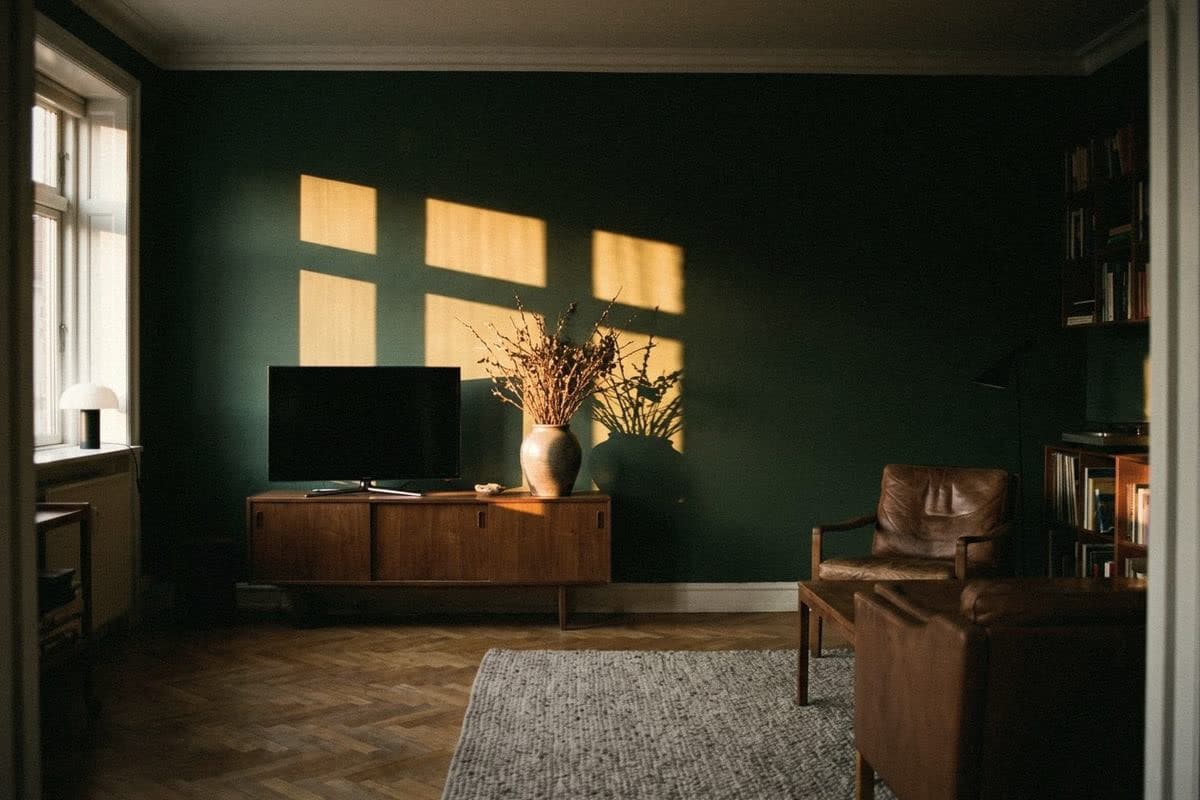
Glare on the screen: fix the position before the colour
Wall colour helps, but if the TV faces a big window, no colour can save it. In the afternoon the screen turns into a mirror. And with a window behind the TV, your eyes are fighting glare around the screen the whole time. The best position is a wall where the window is to the side of the TV.
Another trick that's kind to your eyes is soft light behind the TV. A strip of warm light shining up the wall from behind the screen keeps the wall around it from going completely dark when you watch at night. Your eyes won't tire as much as they do watching in a dark room, and a dark wall looks even better with a gentle glow.
- Don't position the TV facing a window
- Don't put the TV on a wall with a window behind the screen
- Use curtains or sheers to control the afternoon light
- Fit warm lighting behind the screen to reduce eye strain at night
- Choose a matt finish, not gloss, for the TV wall
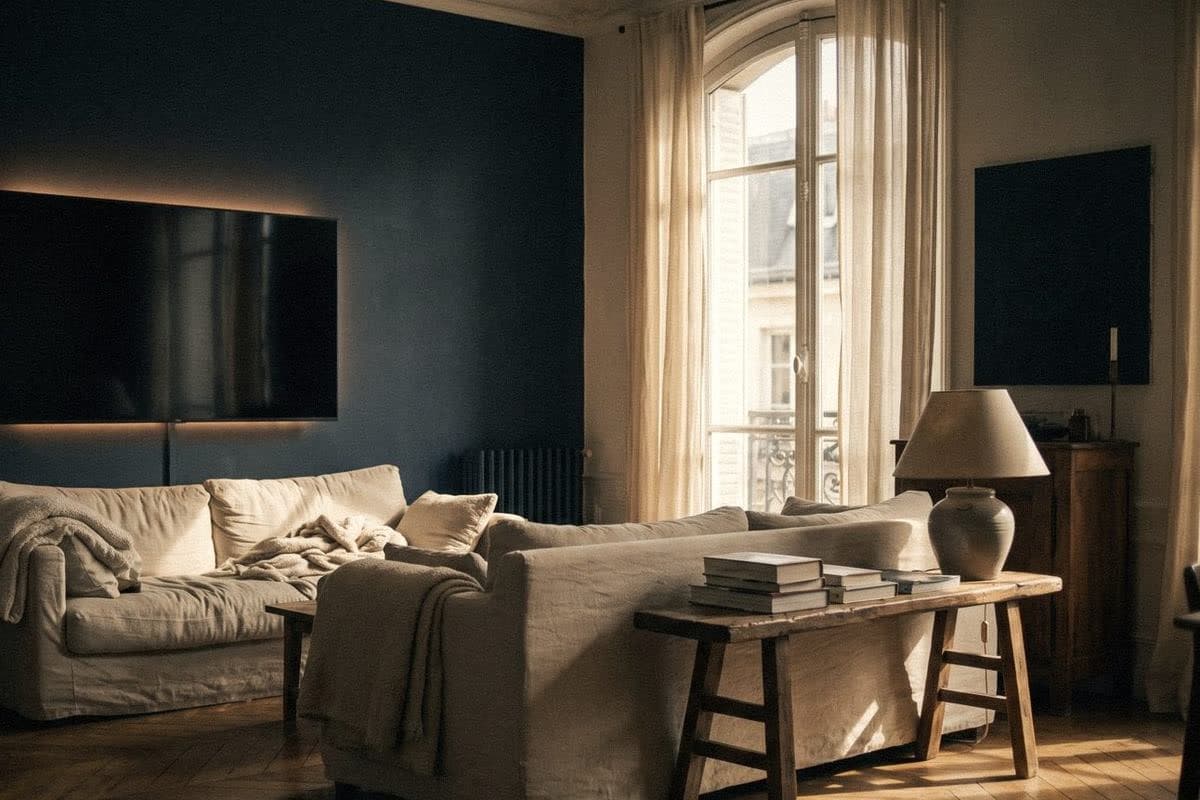
A textured wall behind the TV still looks good with the screen off
The TV is off for most of the day, so the wall behind it should look good even without a picture. A textured wall does this well. A textured finish in stone grey or ink black has the depth of an old stone wall, and whenever the evening sun falls across it at an angle, you can see the surface play with the light. If you want this look, Voqe Mineral Finish has grey and dark tones that are just right for a TV wall.
Other options are vertical timber slats, which add warmth and help hide joins, or thin faux-stone panels for a solid look. But both are heavier and harder to change than paint. If you think you'll move the TV in a few years, a painted wall or a textured finish is more flexible.
- A textured finish in grey or dark tones: has depth, no extra materials to fix on
- Timber slats: warm, hide joins, need moisture-resistant materials
- Faux stone: looks solid but is heavy, check that the wall can take the weight

A built-in TV wall or a painted one: which to choose
A full-wall built-in TV unit looks neat and stores a lot, but it's a big job, it costs more and it's hard to change. If one day you buy a bigger TV, the space you built may no longer fit.
Painting the wall and using a floating or freestanding TV unit is far more flexible. You can change the screen, move the unit and repaint the wall in a single day off, and you still get the clean look many people are after anyway.
- Built-in: neat, lots of storage, expensive, hard to change
- Paint + floating unit: looks light, easy to clean the floor, must be fixed to a solid wall
- Paint + freestanding unit: the most flexible, suits rentals and condos
- A colour block just for the TV zone: clearly marks out the TV corner in an open-plan room

Hiding the cables on a TV wall, so the wall is truly clear
However beautiful the wall colour, three dangling cables can ruin it. The neatest method is to run conduit inside the wall and move the socket up behind the screen. That's a job for an electrician, and it should be done before painting, not after.
If you can't cut into the wall, surface-mounted cable trunking is your best friend. Choose one that can be painted over, then paint it the same colour as the wall, and it will almost disappear. The darker the wall, the less you'll see it.
- 1. Decide the TV height first. Generally, the centre of the screen should be at about eye level when you're sitting on the sofa
- 2. Have an electrician move the socket or run conduit inside the wall before painting
- 3. If you can't drill, use cable trunking that can be painted over
- 4. Paint the trunking the same colour as the wall
- 5. Gather the cables behind the unit with a cable box or Velcro ties

A condo TV wall: what to do when you can't or don't want to drill
Many condos use lightweight or plasterboard partition walls, and some have rules about drilling. Hanging a TV on walls like these needs the right type of fixings, or reinforcement inside the wall. Don't guess: check with the building management or a tradesperson before you drill.
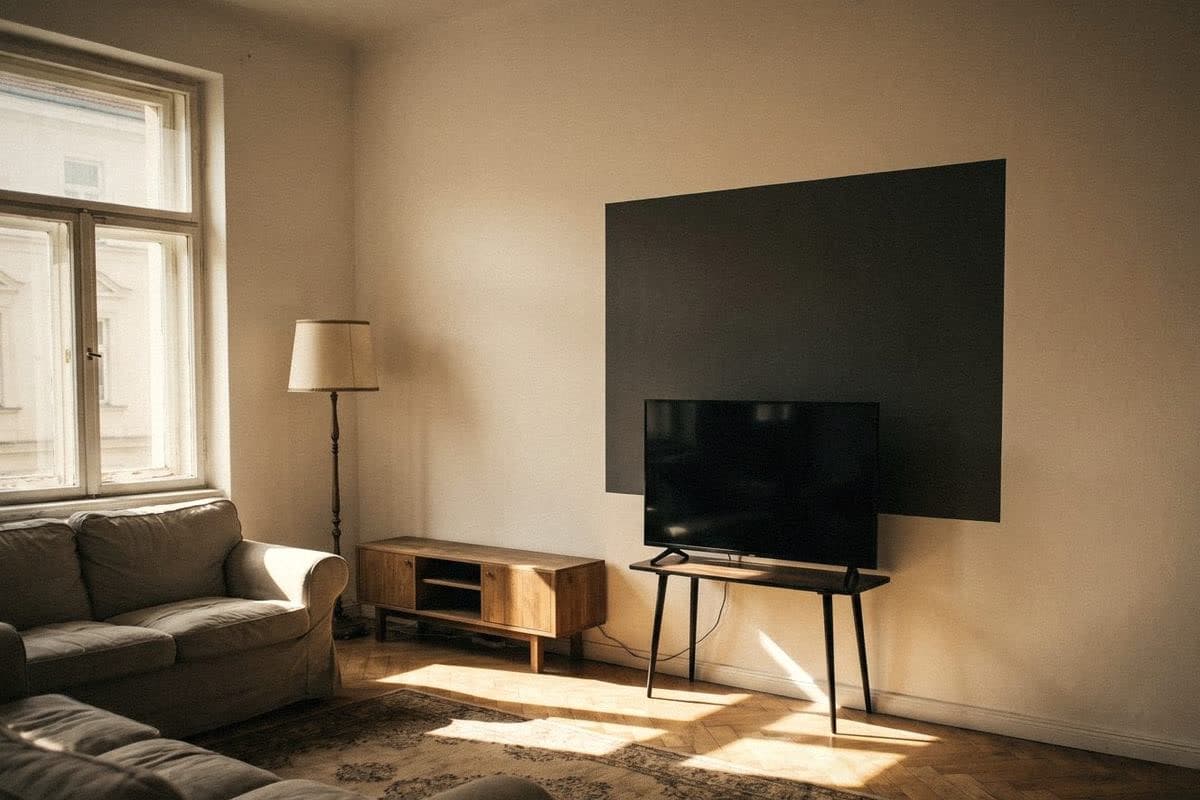
The good news is that a beautiful TV wall doesn't need drilling. A dark colour block just around the TV, a low freestanding unit, the TV on a stand and a floor lamp give you a look close to a built-in on a very different budget.
- A dark colour block behind the TV, slightly wider than the unit on each side
- A TV on a floor stand, no drilling needed
- A long, low freestanding unit, which helps the wall look wider
- Always check the wall type and the building rules before drilling
“The TV is off twenty hours a day. The wall behind it has to look good for all twenty of them.”
Frequently asked questions
What colour should I paint a TV wall?
A mid-to-dark colour in a matt finish, such as charcoal grey, deep green, navy or coffee brown, helps the screen blend into the wall and is easy on the eyes when you watch. If you prefer light colours, choose a warm grey or muted beige instead of stark white.
Is a white TV wall a good idea?
It works, but a black screen on a stark white wall stands out like a black hole, and the contrast between the picture and the wall tires your eyes faster at night. If you want a light colour, a soft white or warm grey is better.
Can I hide TV cables without drilling into the wall?
Yes. Use surface-mounted cable trunking that can be painted over, and paint it the same colour as the wall. Or put the TV on its stand on a unit, so you can hide almost all the cables behind the unit.
Can I wall-mount a TV in a condo?
It depends on the wall type and the building management's rules. Lightweight or plasterboard walls need special fixings or reinforcement. Ask the building management and have a tradesperson check before you drill.
How high should a TV be mounted?
Generally, the centre of the screen should be at about eye level when you're sitting on the sofa. The actual height depends on the height of the sofa and the size of the screen. Sit down and measure your eye level before you drill.

Colour on a screen never matches colour on a wall
Order a sample to paint at home, or come and see the full shade library at Voqe Studio, Bang Phli.
Order dark-shade sample jarsRead next
Living room colours: warm enough to live in all day, good enough that friends ask
The living room is the room everyone in the house uses, and the one guests see first. Choose a colour warm enough to live with all day, with just a little to talk about.
Read article
Feature walls, painting one wall, or two-tone walls: ideas that make a room look intentional
One feature wall turns an ordinary room into one that looks intentional. Just choose the right wall, then be a little braver.
Read article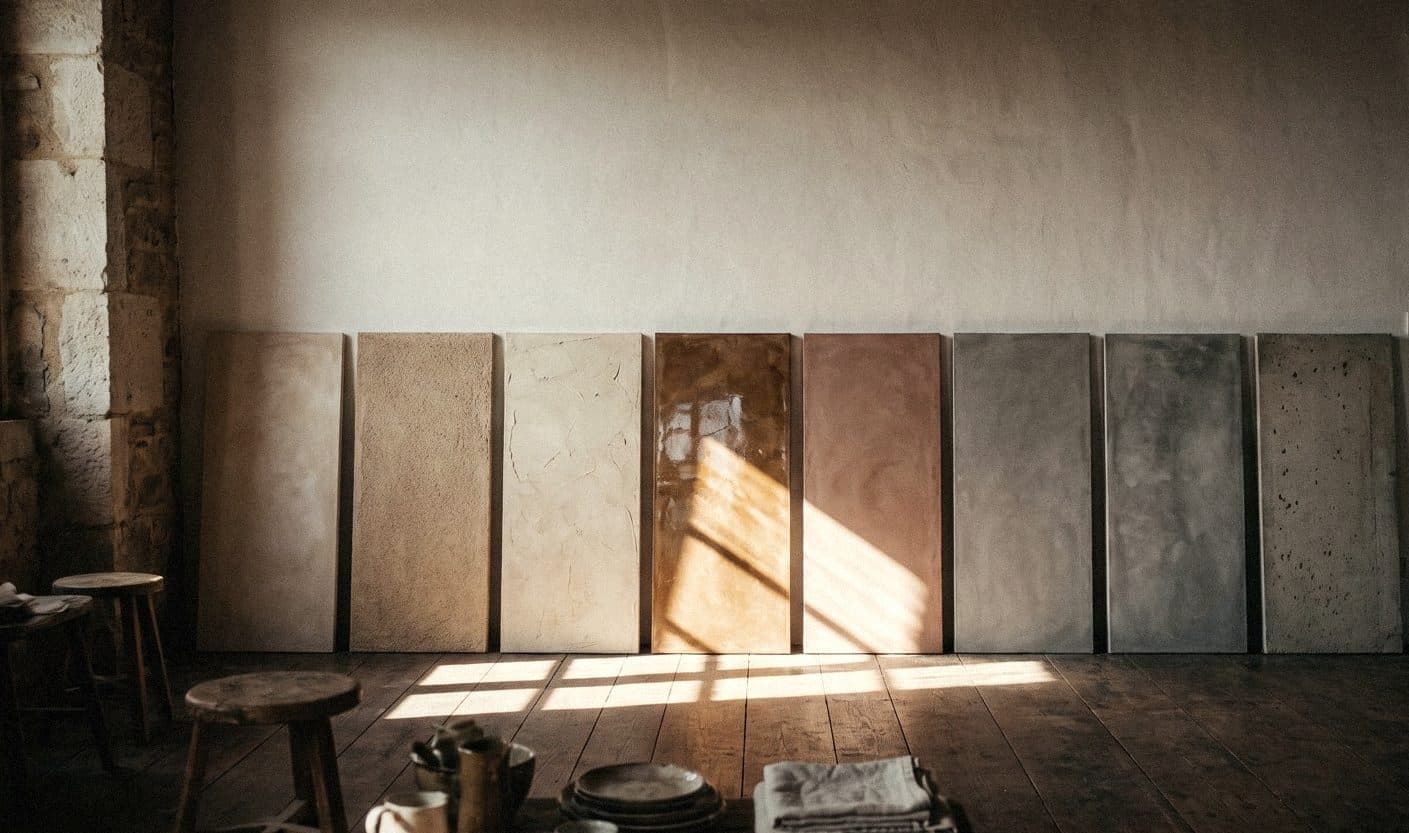
How many types of textured wall are there? 8 popular finishes, how they look, where to use them and how to care for them
Brush, trowel or formwork; matt or polished. A guide that sorts out eight textured walls on a single page.
Read article