


How many types of textured wall are there? 8 popular finishes, how they look, where to use them and how to care for them
Brush, trowel or formwork; matt or polished. A guide that sorts out eight textured walls on a single page.
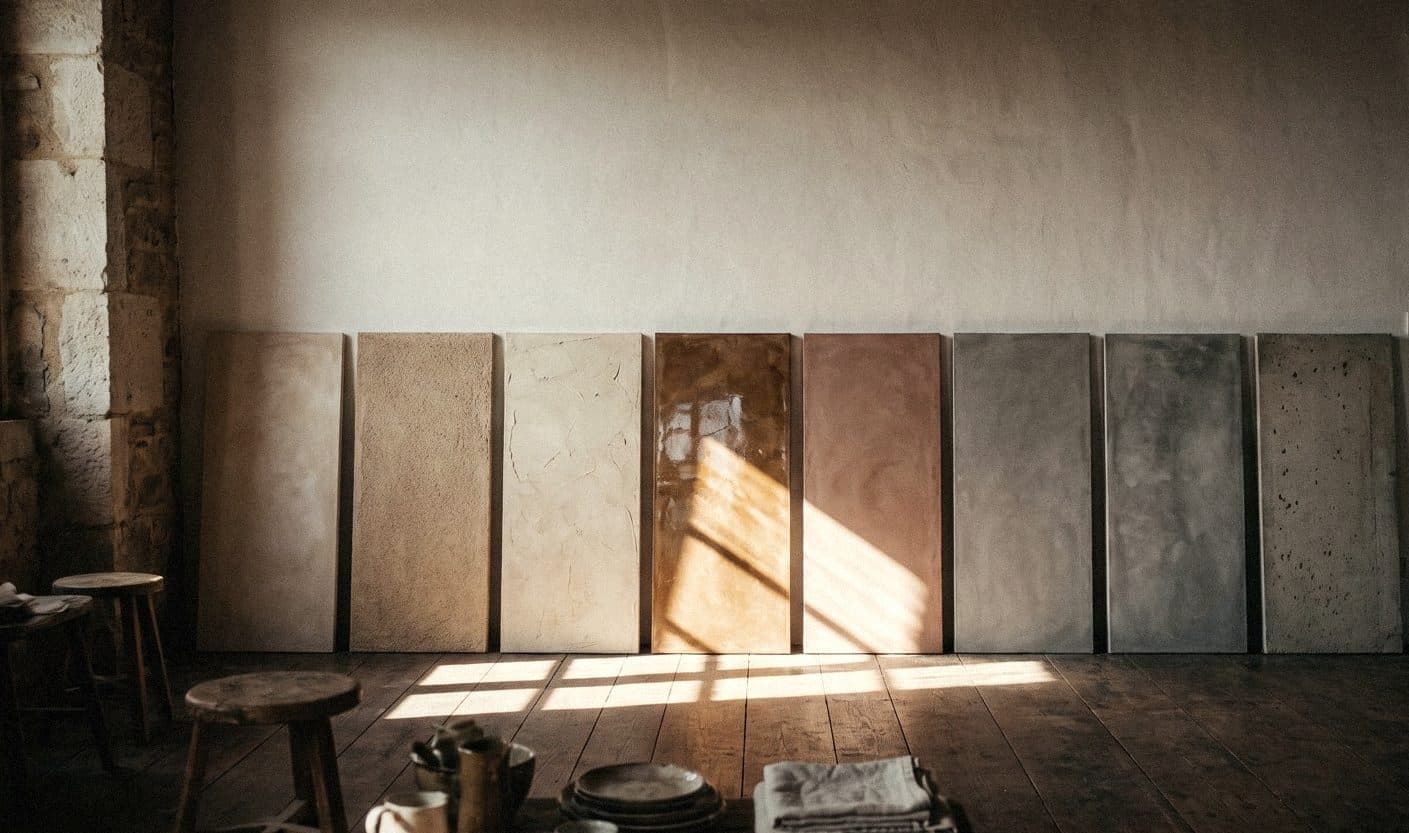

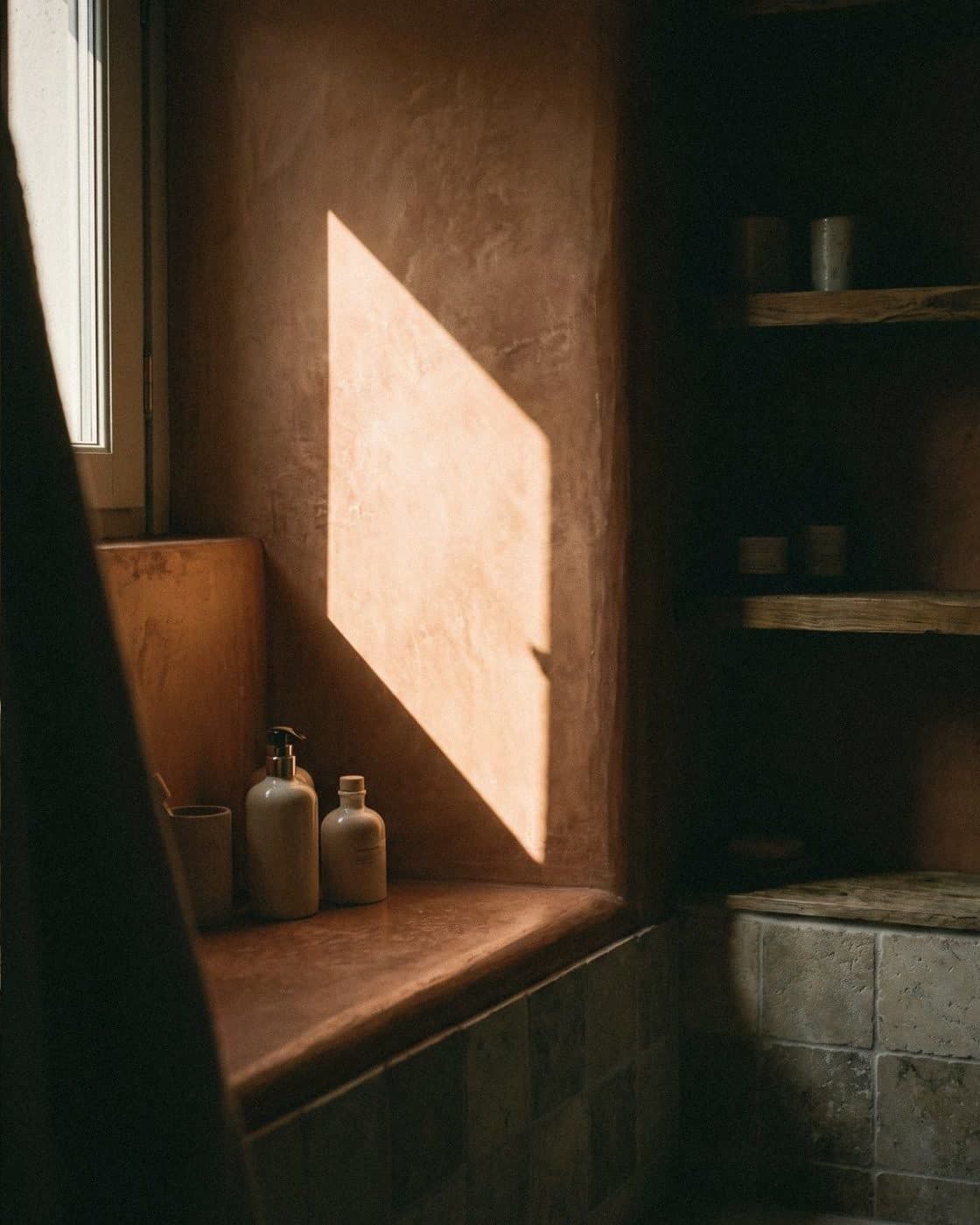
The textured walls popular in homes today fall roughly into 8 types: limewash, lime plaster, Venetian plaster, microcement, tadelakt, roman clay, sand texture paint, and bare cement plaster or exposed concrete. They differ in material, tools and level of sheen, from a cloudy matt finish applied with a brush to a polished surface laid on with a trowel. So choose by the look, where the wall is, and the care it will need over the long term.
How many types of textured wall are there, and an easy way to sort them
There are so many names for textured walls now that it feels like a coffee shop menu: latte, flat white, cortado. It's confusing. But sort them with two questions and everything falls into place. First, what is it applied with: a brush, a trowel, or is it the result of casting? Second, is the final surface matt or glossy?
This article sorts 8 wall finishes into four groups using those two questions. For each one you'll find how it looks, where it suits and how to care for it, so you can talk to a builder or designer and be understood from the first sentence.
- Applied with a brush or roller: limewash and sand texture paint
- Trowelled plasters: lime plaster, Venetian plaster and roman clay
- Seamless surfaces that stand up better to water: microcement and tadelakt
- Raw structural surfaces: bare cement plaster and exposed concrete
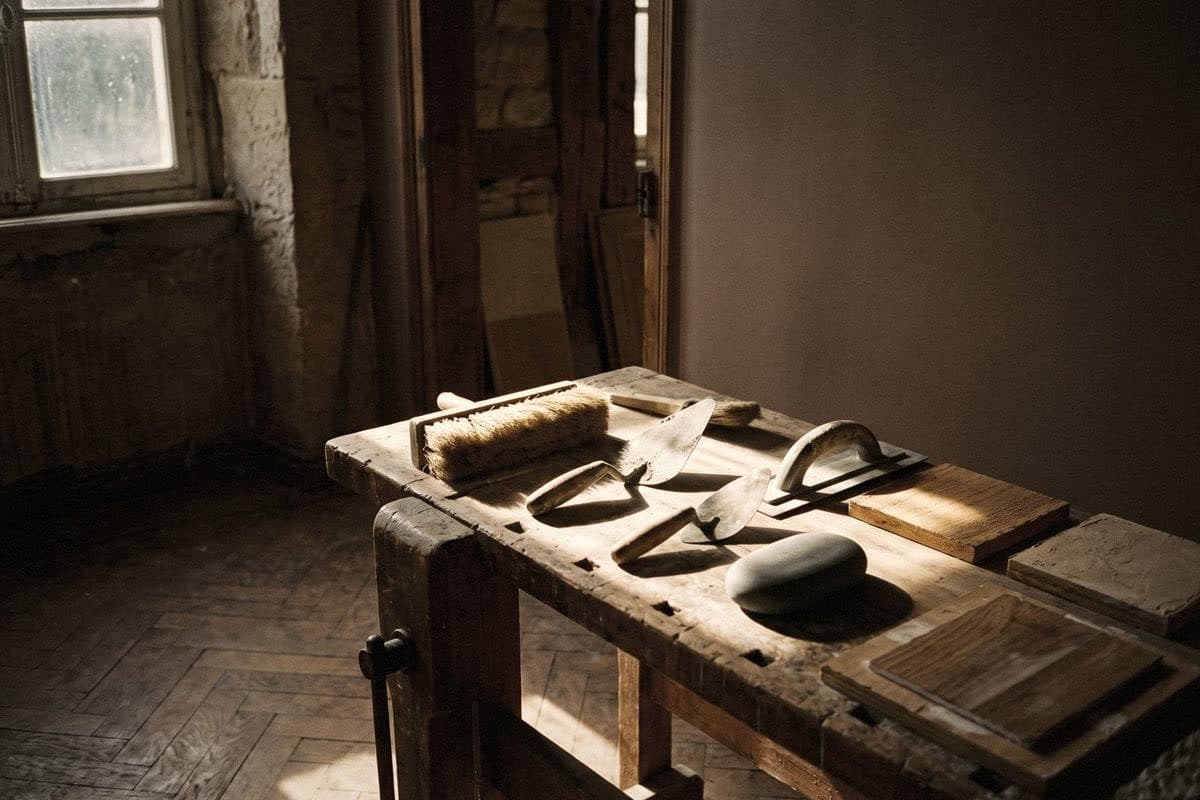
Brushed on: limewash and sand texture paint
Limewash is a paint made from lime, water and pigment, applied in several thin coats with a large brush. It gives a chalky matt surface with cloud-like shading. The surface has no thickness you can feel; the texture comes from the shading rather than from relief.
Sand texture paint is another world. The paint has grains of sand or mineral powder mixed in, and once brushed or sprayed on it leaves a rough surface you can feel with your hand. You see it often on the outside walls of houses and buildings, because it is good at disguising uneven walls.
- Limewash. Look: matt, cloudy, soft on the eye / Where: porous plaster or brick walls, inside and out / Care: dust lightly, don't scrub, recoat from time to time
- Sand texture paint. Look: rough and grainy, most visible when light falls across it / Where: outside walls, fences, walls where you want to hide marks / Care: dust and dirt settle in the grooves more easily than on smooth surfaces; wash with low-pressure water and a soft brush
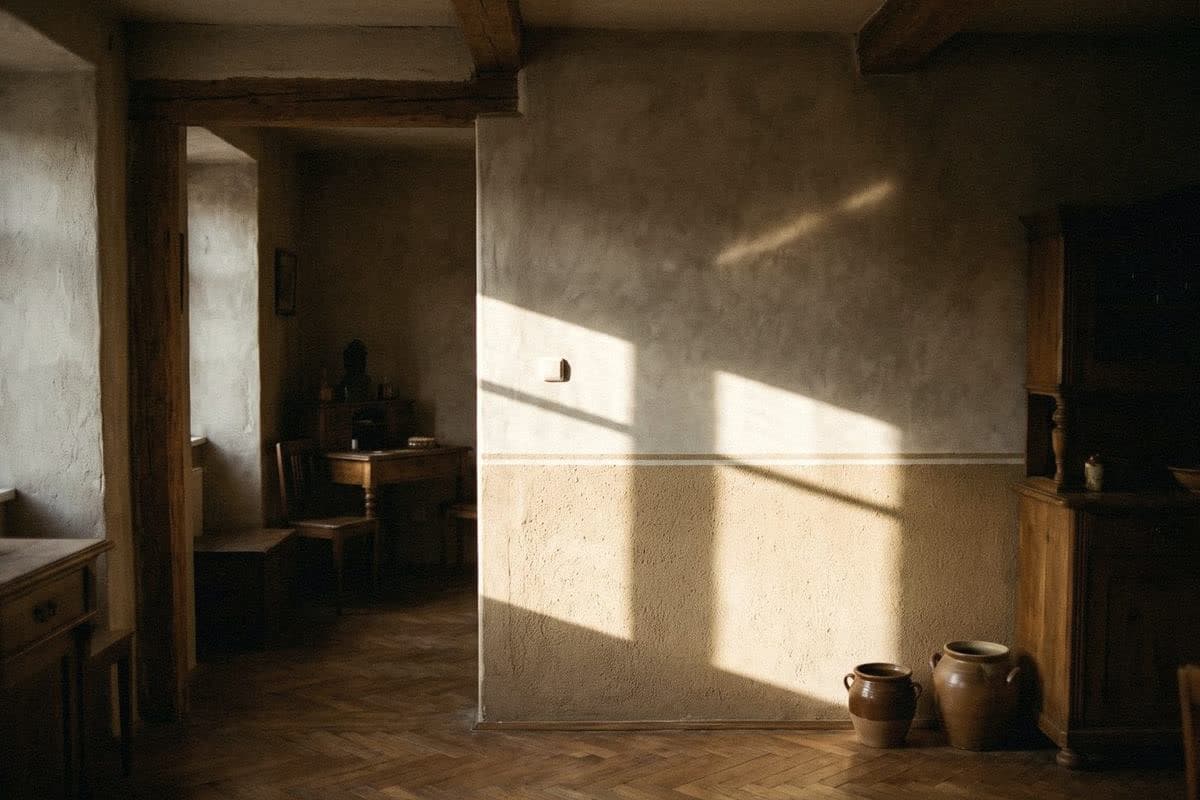
Trowelled plasters: lime plaster, Venetian plaster and roman clay
This group is made with a trowel. The surface has more thickness and depth than paint and relies mostly on the plasterer's skill. The more passes and the more polishing, the smoother and glossier the surface becomes.
Lime plaster means rendering a wall with lime mixed with sand, as has been done since ancient times, in Europe and in Thai temples alike. Venetian plaster is an Italian plaster, usually lime-based with marble dust, laid in several coats and then polished until it shines like marble. Roman clay is the name for a fine, thin trowelled plaster with a smooth finish that ranges from matt to a soft semi-gloss. The recipe varies from maker to maker.
- Lime plaster. Look: matt, with gentle waves from the plasterer's hand / Where: interior and exterior walls, old buildings / Care: lets moisture out well; repair with compatible materials
- Venetian plaster. Look: smooth and glossy, with deep marble-like veining / Where: feature walls in living rooms, halls and shops / Care: can be wiped gently; knocks are hard to repair and need the original plasterer
- Roman clay. Look: soft and smooth, matt to semi-gloss, shade shifting with the trowel marks / Where: interior walls where you want quiet luxury / Care: depends on the recipe and sealer used

Seamless surfaces: microcement and tadelakt
Microcement is a cement-based material mixed with polymers and trowelled on thinly, one layer at a time. It can cover walls and floors in one continuous surface with no tile joints. It always needs a sealing system, and if you use it in a bathroom, the waterproofing has to be done properly from the bottom layer up.
Tadelakt is a Moroccan lime plaster. The plasterer compacts the surface and polishes it with a smooth stone, then seals it with black soap made from olive oil. That makes it smooth and lustrous, and more water-resistant than ordinary lime. It was traditionally used in hammam bathhouses, and it is specialist craft work; finding someone who can do it isn't easy.
- Microcement. Look: smooth cement, modern, seamless / Where: walls, floors, counters, and bathrooms when the system is done properly / Care: can be wiped; look after the sealer as the applicator advises
- Tadelakt. Look: smooth and lustrous like polished stone, with soft undulations / Where: bathrooms, plaster basins, feature walls / Care: use mild soap and avoid acidic cleaners

Raw surfaces: bare cement plaster and exposed concrete
In Thailand people often use these two terms interchangeably, but they are not the same thing. Exposed concrete is the structural concrete surface left as it is once the formwork comes off, showing the board marks, the joints and the formwork tie holes. It has to be planned from the construction stage. Bare cement plaster, popular in loft-style homes, usually means a rendered wall left unpainted, or rendered to look deliberately raw.
The charm of this group is real rawness, with no make-up. But raw cement absorbs stains and sheds dust, so it's worth sealing it with a clear coat to make it easier to look after.
- Exposed concrete. Look: cool grey, with formwork marks / Where: structural walls, columns, ceilings / Care: clear-seal against stains; hard to alter later
- Bare cement plaster. Look: grey, with the natural mottling of cement / Where: loft-style homes and shops / Care: clear-seal against dust and stains; watch out for water marks and handprints

Which textured wall suits a Thai home
Start by asking what the wall has to face day to day: sun, rain, steam, children's hands, or just the gaze of someone on the sofa. Then pick the look you like from the group that can cope.
If you want a matt limewash look on an ordinary plastered wall at home, without trowels or handling wet lime, Voqe Mineral Finish is a limewash-style mineral paint applied with a brush, roller or sponge. You use two tones in crossing directions to build depth, and it can go on both interior and exterior walls.
- Doing it yourself: limewash or limewash-style paint is easiest; any trowel work is best left to a professional
- Exterior walls: sand texture paint or a mineral finish specified for exterior use
- Wet zones in bathrooms: microcement or tadelakt with waterproofing done by a specialist
- Walls that get touched a lot: choose a finish with a sealer over it and avoid bare chalky surfaces
- Condos or rented homes: a painted finish that's easy to paint over beats thick plaster that's hard to remove
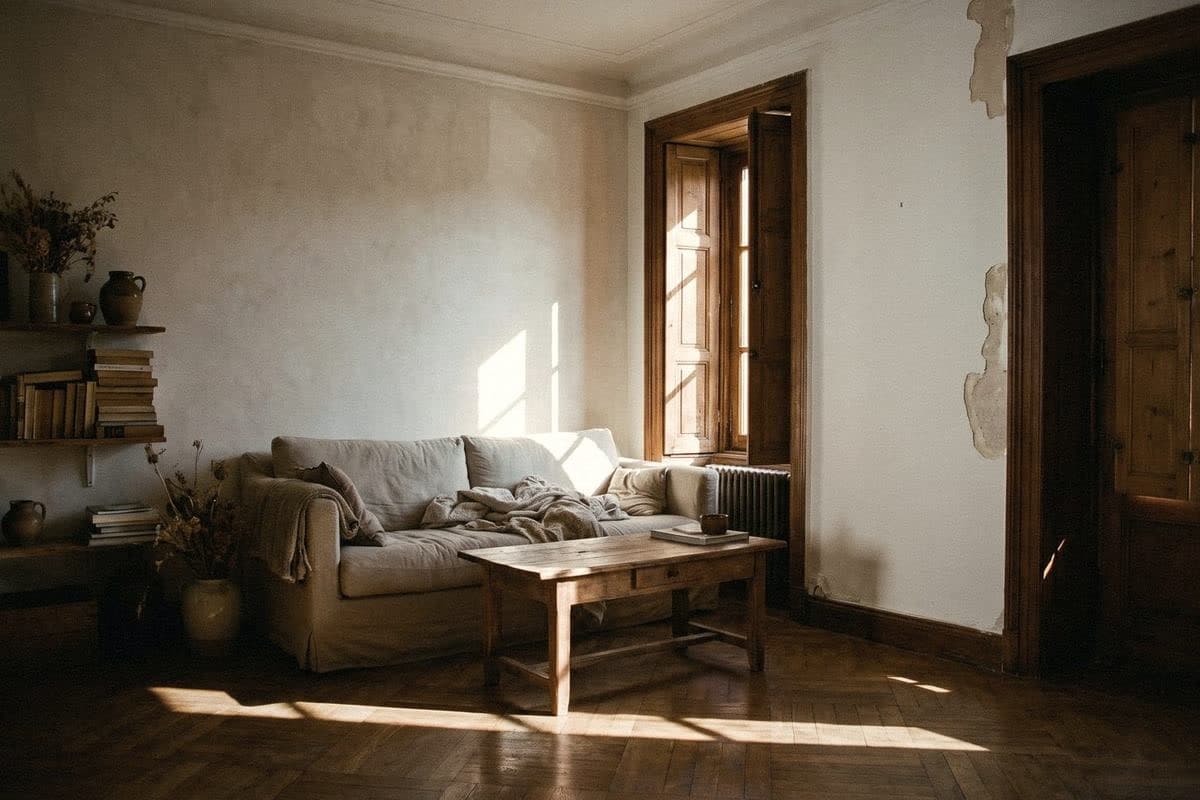
“The best textured wall is the one that survives real life in your home, not just the photo.”
Frequently asked questions
How many types of textured wall are there?
The popular ones fall roughly into 8 types: limewash, lime plaster, Venetian plaster, microcement, tadelakt, roman clay, sand texture paint, and bare cement plaster or exposed concrete. They differ in material, tools and level of sheen.
What is a textured wall?
It's a wall whose surface isn't evenly smooth like ordinary house paint. The texture may be something you can actually feel, such as sand or plaster, or a visual texture from lighter and darker shading, such as limewash.
What is tadelakt?
Tadelakt is a Moroccan lime plaster. The plasterer compacts it and polishes it with a smooth stone, then seals it with black soap made from olive oil, giving a smooth, lustrous surface that is more water-resistant than ordinary lime. It was traditionally used in bathhouses.
Which textured walls can I do myself?
Finishes applied with a brush or roller, such as limewash, limewash-style paint and some texture paints, are the easiest to do yourself. Venetian plaster, microcement and tadelakt need trowelling skills and are best left to a specialist.
What's the difference between bare cement plaster and exposed concrete?
Exposed concrete is the structural concrete surface left as it is once the formwork comes off. Bare cement plaster usually means a rendered wall left unpainted, or rendered to look deliberately raw.

Colour on a screen never matches colour on a wall
Order a sample to paint at home, or come and see the full shade library at Voqe Studio, Bang Phli.
Order sample bottles to try the real finishRead next
What is limewash? The traditional lime wall coating, how it works, and which homes it suits
The lime we know from building sites is the same material as those beautiful walls in European homes. From limestone to your wall, explained.
Read article
How is limewash different from house paint? A point-by-point comparison before you choose for your walls
One is like a raincoat over your wall, the other like skin tanned by the sun. A comparison that takes no sides.
Read article
Slaked lime, pounded lime plaster and Thai temple walls: the wisdom of lime that grows more beautiful with age
Long before the word limewash, Thai craftsmen plastered temple walls with lime for hundreds of years. The story of walls that age with grace.
Read article