


Mediterranean-style homes: whitewashed walls, arches and terracotta, made for hot weather
Matt white walls that take in the sun and give it back as softness, arches, terracotta tiles and a touch of sea blue. The style of people who have lived with fierce sun for centuries.

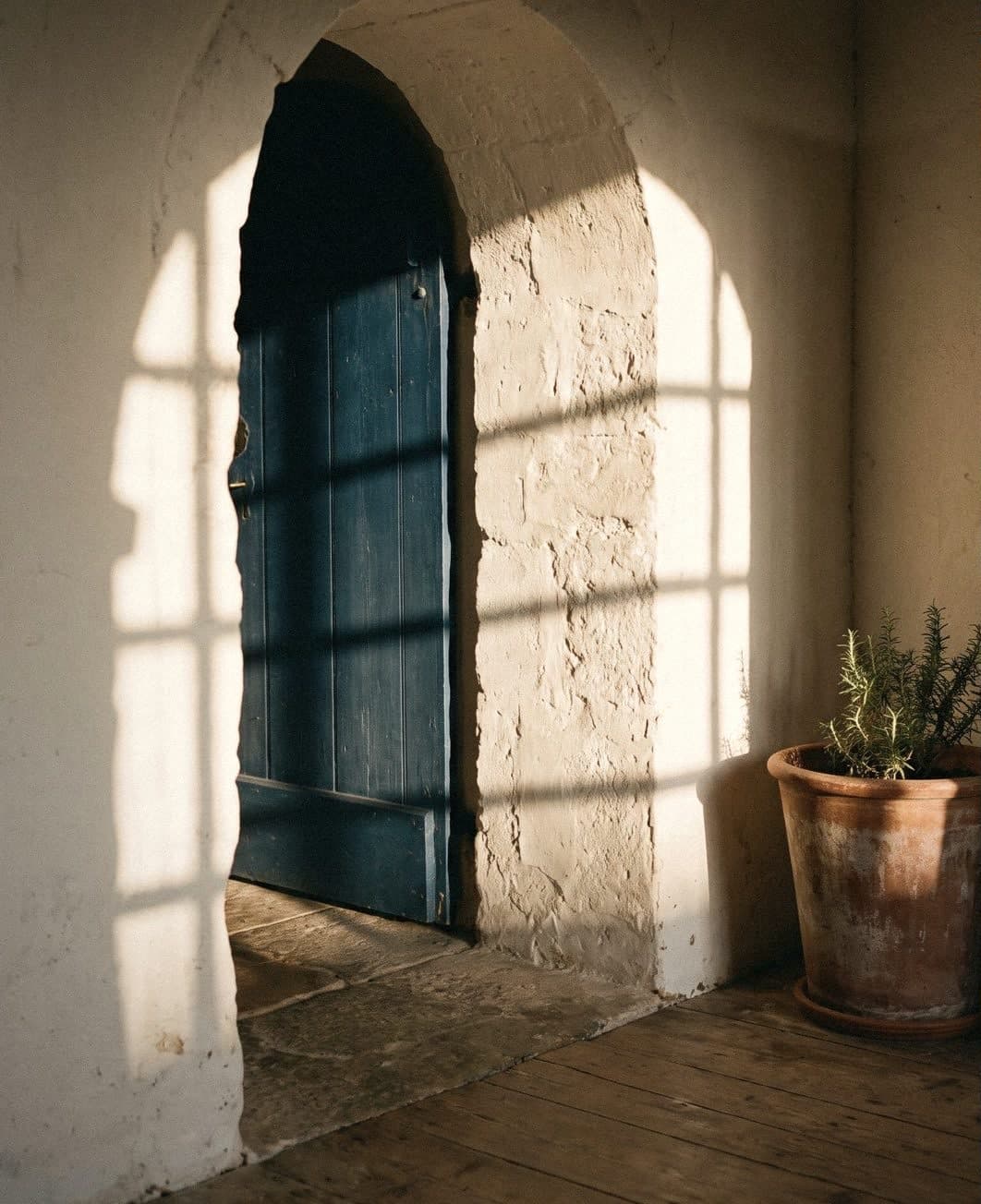
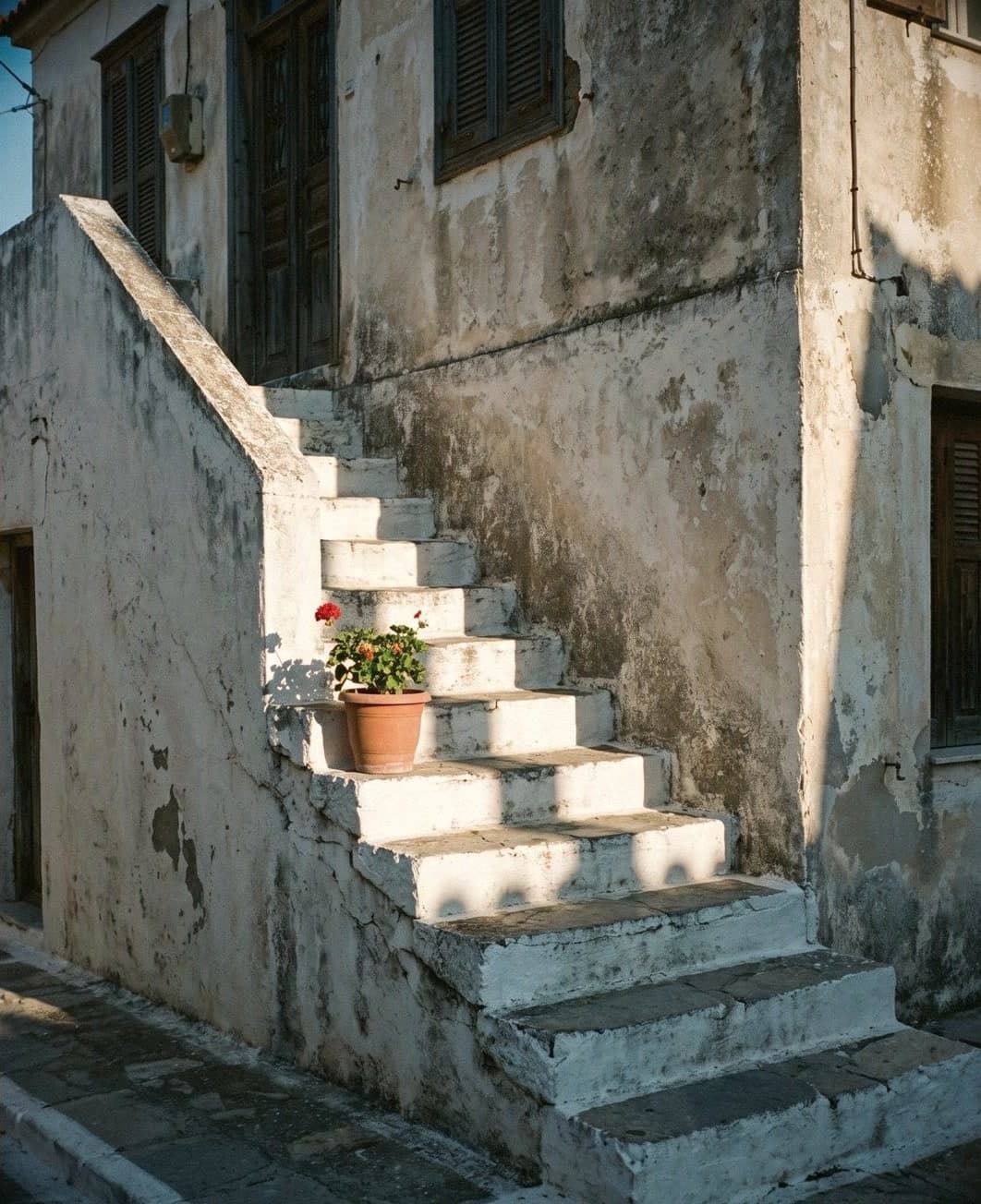
A Mediterranean-style home takes its inspiration from towns along the Mediterranean Sea, such as the Greek islands, southern Spain and Italy. It is known for matt walls in lime or limewash, rounded corners, arches, terracotta floors and roofs, wood, wrought iron and sea blue as an accent. The style grew out of coping with strong sun and heat, so it suits homes in hot climates well; it just needs extra adapting for rain and humidity.
What is a Mediterranean-style home? Three flavours from one sea
Mediterranean isn't one style. It's a family of seaside homes under the same sun, each country interpreting it through its own local materials. In food terms, it's like rice stir-fried three ways: with holy basil (kra pao), with red curry paste, or with roasted chilli paste. The same base, different flavours.
- Greek island: white box-shaped houses stepping up the hillside, blue doors, windows and domes, rounded walls; simple, plain and dazzlingly bright
- Southern Spain: arches, central courtyards, terracotta and patterned tiles, wrought iron, influenced by Moorish architecture
- Italy and Tuscany: plaster walls in yellow-orange and earth colours, terracotta roof tiles, wooden beams and natural stone; warmer than the Greek style
Why Mediterranean homes suit hot weather
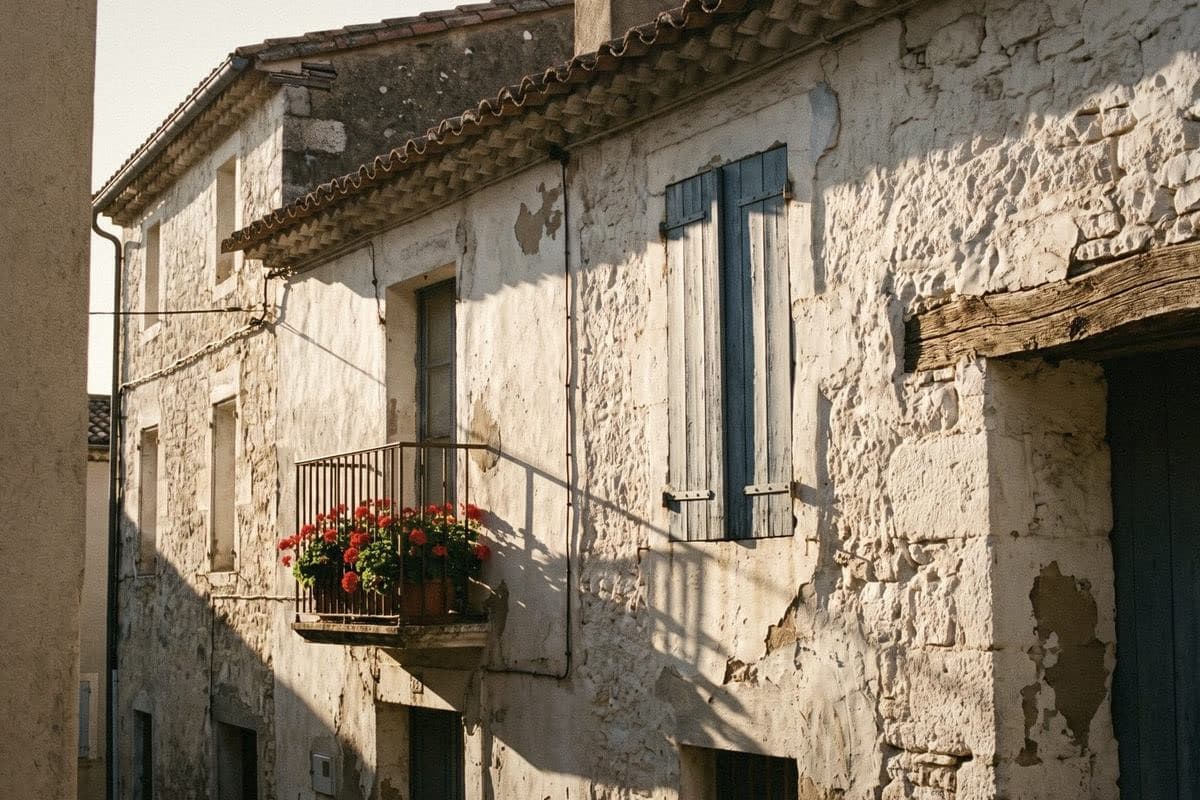
This style didn't start with beauty. It started with surviving the summer. Every element we find beautiful in pictures has a job behind it.
Lime is also alkaline, and easy to find and inexpensive, so in many places houses were repainted with it every year, until white walls simply became the signature of seaside towns.
- White walls reflect the sun, so the house builds up less heat
- Thick masonry walls slow the daytime heat from reaching the rooms too quickly
- Deep windows and wooden shutters block direct sun but still let the breeze through
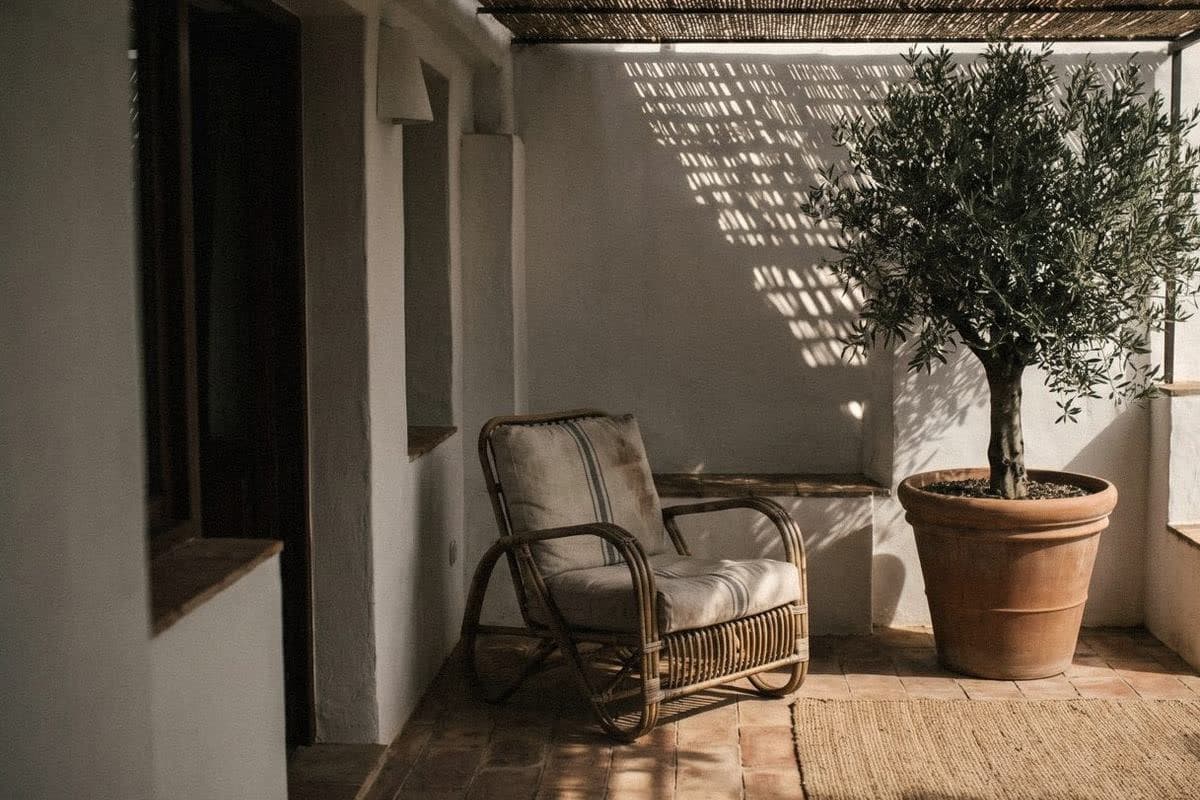
- Courtyards, covered terraces and pergolas with climbing plants create shade so people can sit outside
- Terracotta and stone floors feel cool underfoot on hot days
Matt whitewashed walls: the heart of the Mediterranean-style home
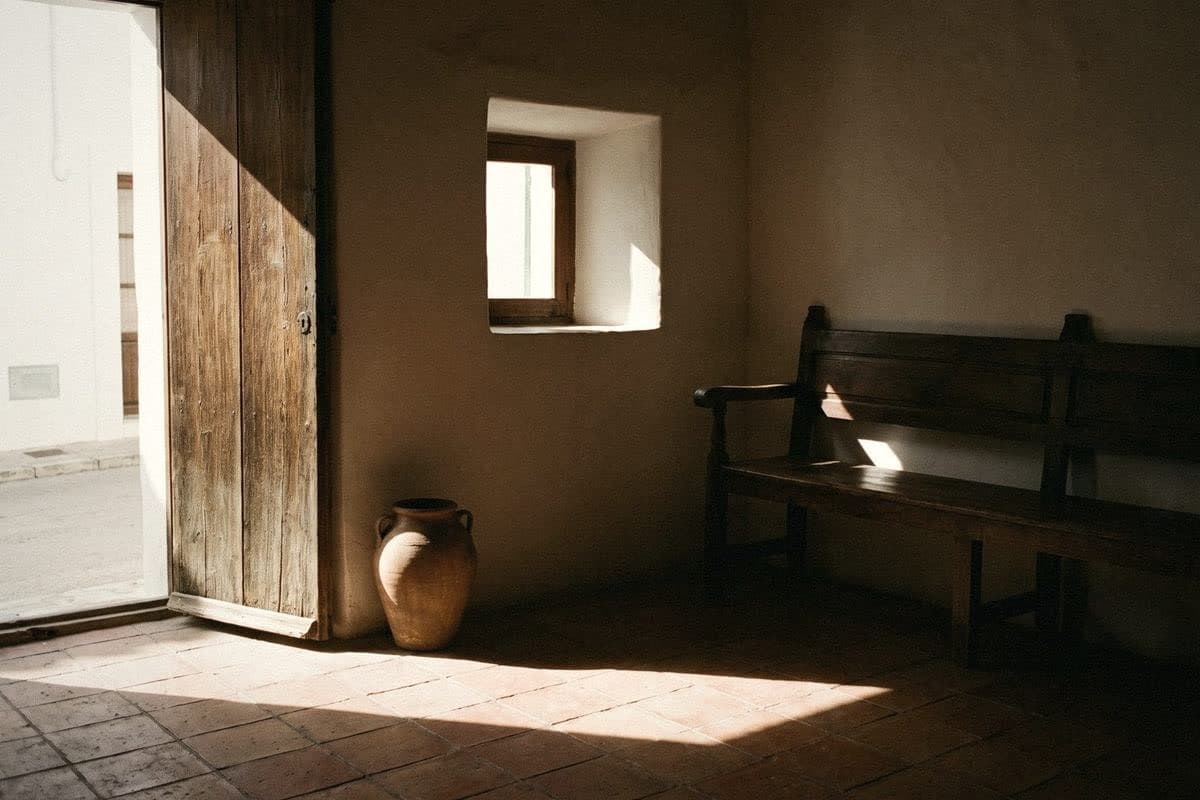
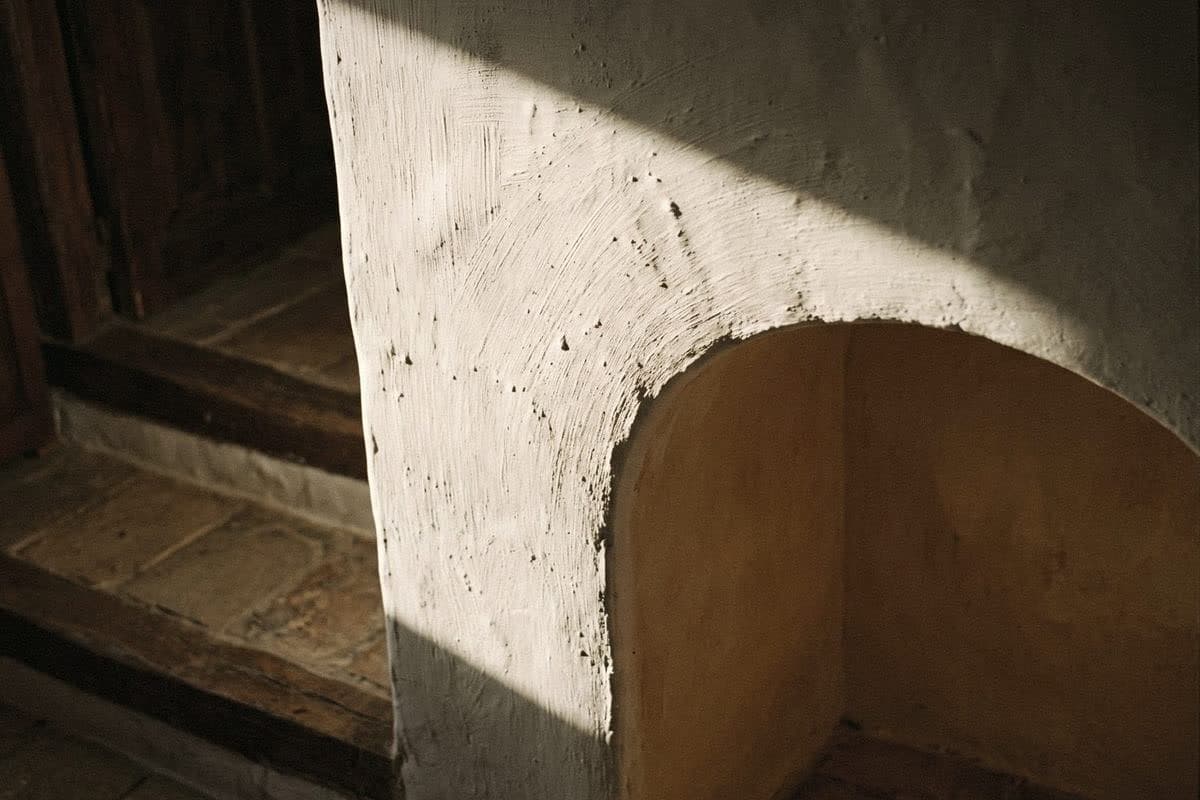
If you had to pick just one thing that makes a home look Mediterranean, the answer is the walls. They aren't perfectly smooth like the walls of a new condo. They have gentle waves and lighter and darker patches from many layers of repainting, and rounded corners instead of right angles. When the late sun slants across, the wall looks as soft as cotton sheets that have dried in the sun all day.
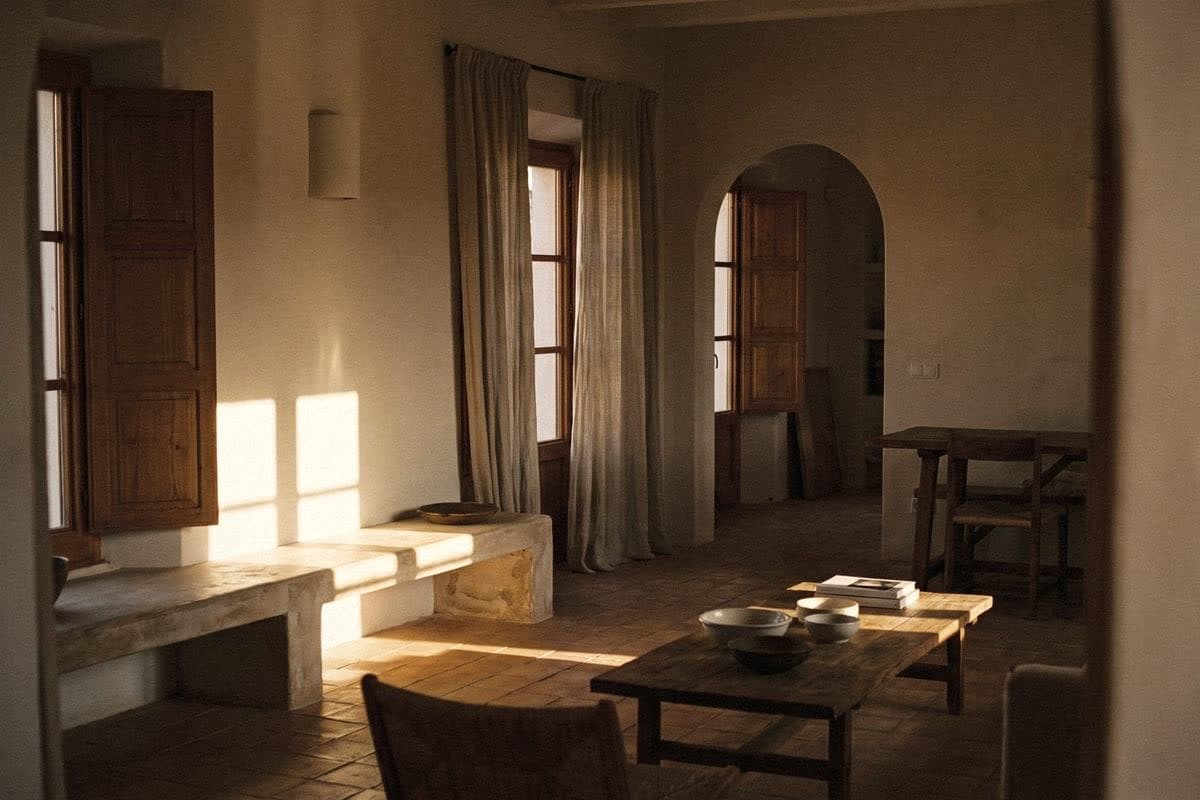
Another thing that makes the style feel real is building furniture from plaster: benches built into the wall, arched display niches, plaster shelves in the kitchen, all finished in the same surface as the walls. The house looks as if it has been sculpted in one piece. If you want this kind of surface on a plastered wall at home, a limewash-style mineral paint such as Voqe Mineral Finish gives a similar matt surface with depth, on both interior and exterior walls.
What colours does a Mediterranean-style home use?
This style's palette comes from the nature around it: lime white, beach sand, terracotta, olive leaves and the sea. Use white or sand as the base for about two-thirds of the space, then add other colours as touches here and there.
The white should be a warm white or one with a hint of yellow rather than a blue-white, because our sun is strong already. A white that's too cool looks glaring at midday and dull in the evening.
- Base: warm white, ivory, light sand
- Earth colours: terracotta, old brick, orange-brown, for floors, pots and the odd wall
- Sea colours: azure and cobalt blue, for doors, shutters or patterned tiles
- Plant colours: grey olive green, for fabrics or the walls of a small room
Materials, furniture and plants that really work in Thailand
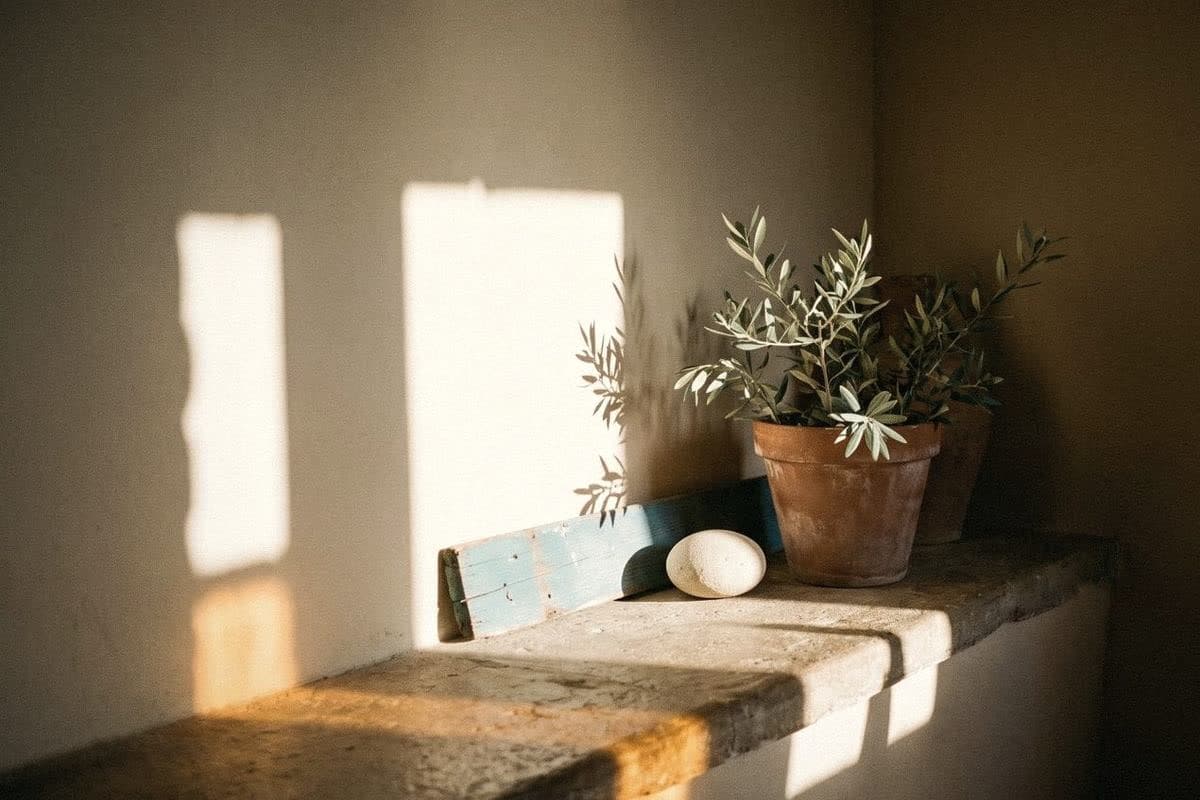
Decoration in this style favours handwork and natural materials. It doesn't need to be a lot, but it does need to be real. Raw wood is better than glossy varnished wood, and crumpled linen better than shiny fabric.
As for plants, the olive trees you see in pictures of European homes like dry air and are hard to grow here. But don't be sad: bougainvillea is also a signature plant of Mediterranean seaside towns, and it thrives in Thai sun. Frangipani gives a holiday-home mood too.
- Floors: terracotta tiles, patterned cement tiles or stone
- Furniture: raw wood, rattan, woven rope, wooden chairs with woven seats
- Fabrics: linen, cotton, blue-and-white stripes
- Accessories: pottery, wrought-iron lanterns, arched mirrors, woven baskets
- Plants: bougainvillea, frangipani, lime trees in terracotta pots, herbs on the kitchen windowsill
Adapting it to a Thai home, and what to watch out for
Let's be honest: the Mediterranean climate isn't the Thai climate. There it's hot but the summers are dry. Here it's hot and humid, with a season of heavy rain. White exterior walls pick up rain stains and algae faster, and flat Greek-style roofs need more attention to drainage.
The answer is to keep the look but add what Thai homes have long known: deeper eaves, more ventilation openings, a sandy white rather than a bright white for exterior walls, and a plan to repaint the walls from time to time.
- Don't use blue everywhere. The best blue appears in just two or three places, such as the front door and the kitchen tiles
- Don't use gloss white. Mediterranean walls must be matt
- Don't put every element into one house. Arches on every door and patterned tiles on every floor turn a home into a theme park
- Condos can do it too: use matt-finish walls, paint an arch on the wall behind the bed, and switch fabrics and pots to terracotta tones
“The sun isn't a home's enemy, as long as the walls know how to take it.”
Frequently asked questions
What is Mediterranean style?
It's a home style inspired by towns along the Mediterranean Sea, such as the Greek islands, Spain and Italy, known for matt whitewashed walls, arches, terracotta, wood, wrought iron and sea blue as an accent.
What colours does a Mediterranean-style home use?
Warm white or light sand as the base, with terracotta, old brick, olive green, and azure or cobalt blue as accents on doors, windows or tiles.
Does a Mediterranean-style home suit a Thai house?
It suits the way it copes with sun and heat, but it needs adapting for rain and humidity: deeper eaves, more ventilation, a sandy white outside so stains don't show easily, and repainting the walls from time to time.
How do I create a Greek, Santorini-style home?
Start with matt white walls, rounded corners, blue doors and windows, and plaster furniture built into the walls. Keep decoration minimal and simple, and use blue in only a few places so the white takes the lead.
How is a Mediterranean-style home different from a European-style home?
A Mediterranean home is a hot-climate seaside home of matt plaster walls, terracotta and raw materials. The European style popular in Thailand usually means the classic French look, with plaster mouldings, wall panelling and herringbone wood floors.

Colour on a screen never matches colour on a wall
Order a sample to paint at home, or come and see the full shade library at Voqe Studio, Bang Phli.
Order sample bottles to try on a real wallRead next

What home decor styles are there? 12 popular styles, all on one page
Minimal, Nordic, Muji, loft: they sound alike but they are not the same. Here are 12 interior styles on one page, with the materials and wall colours that suit each.
Read article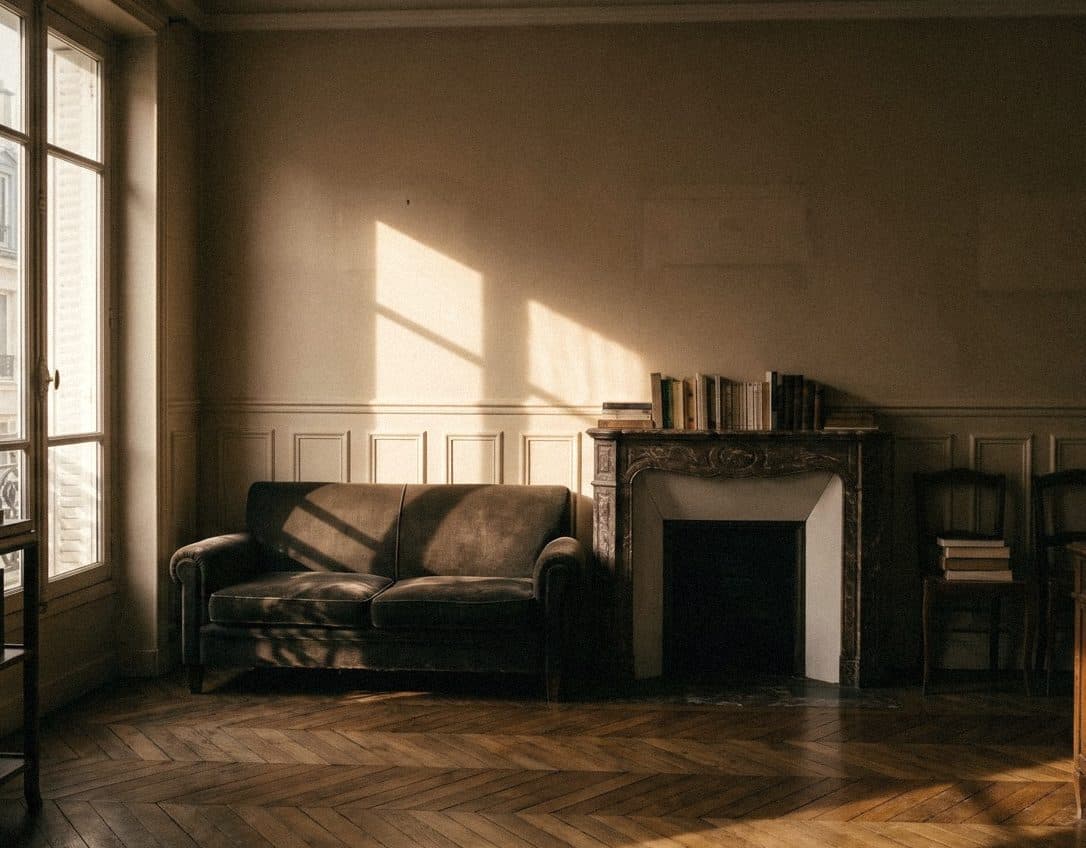
European-style homes: mouldings, panelling, herringbone floors and Parisian plaster walls, luxurious but not overdone
Forget a chandelier in every room. Today's European home is elegant like a white shirt and a single pair of pearl earrings.
Read article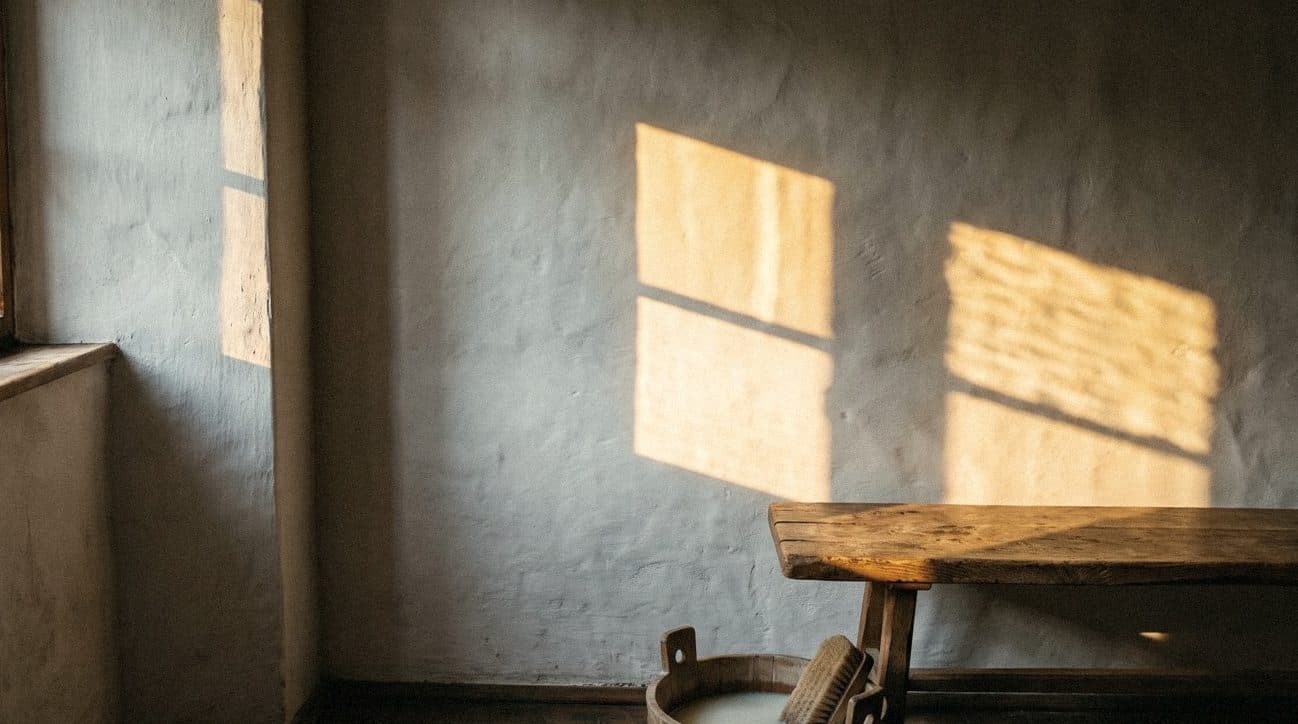
What is limewash? The traditional lime wall coating, how it works, and which homes it suits
The lime we know from building sites is the same material as those beautiful walls in European homes. From limestone to your wall, explained.
Read article